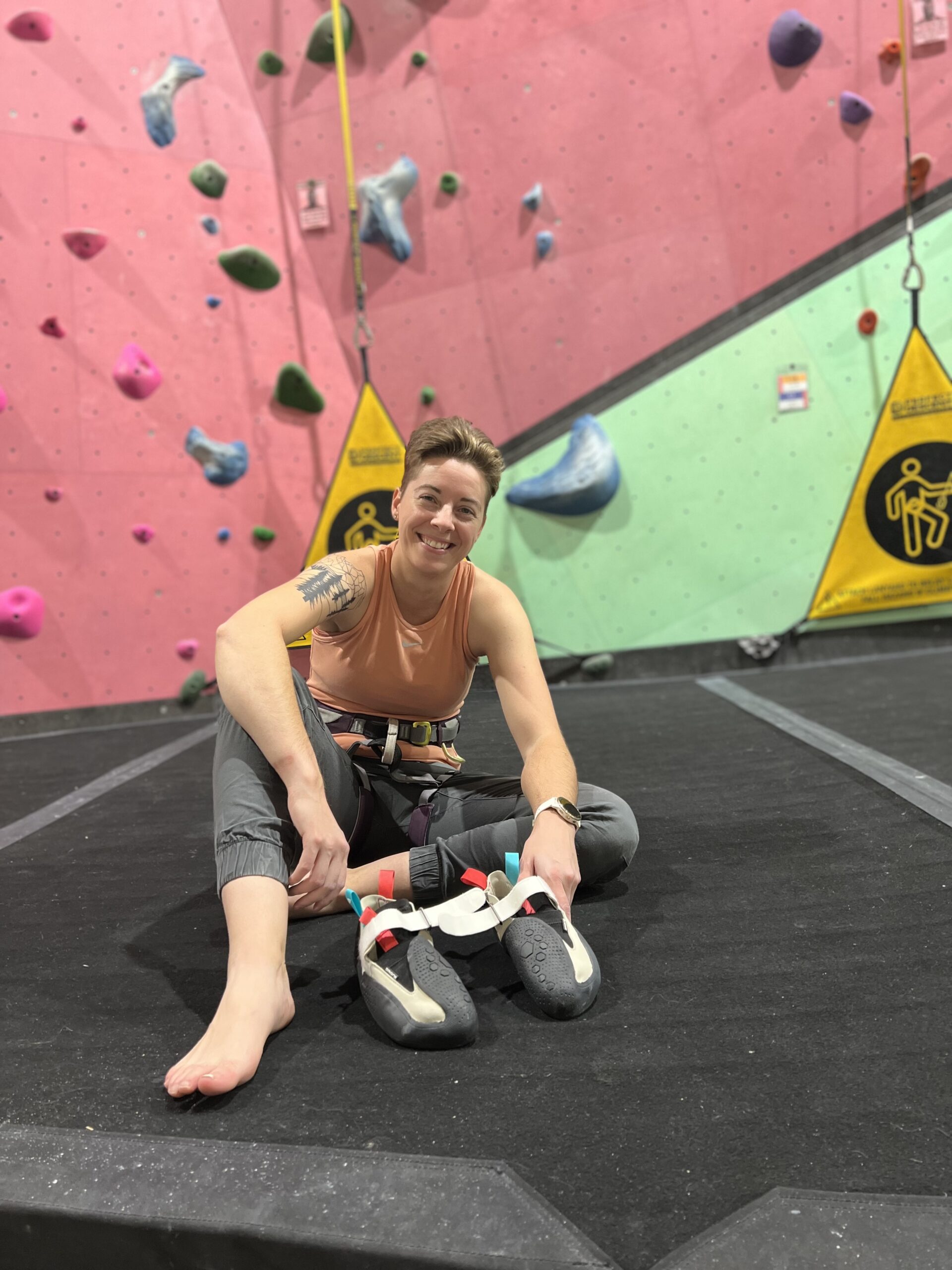
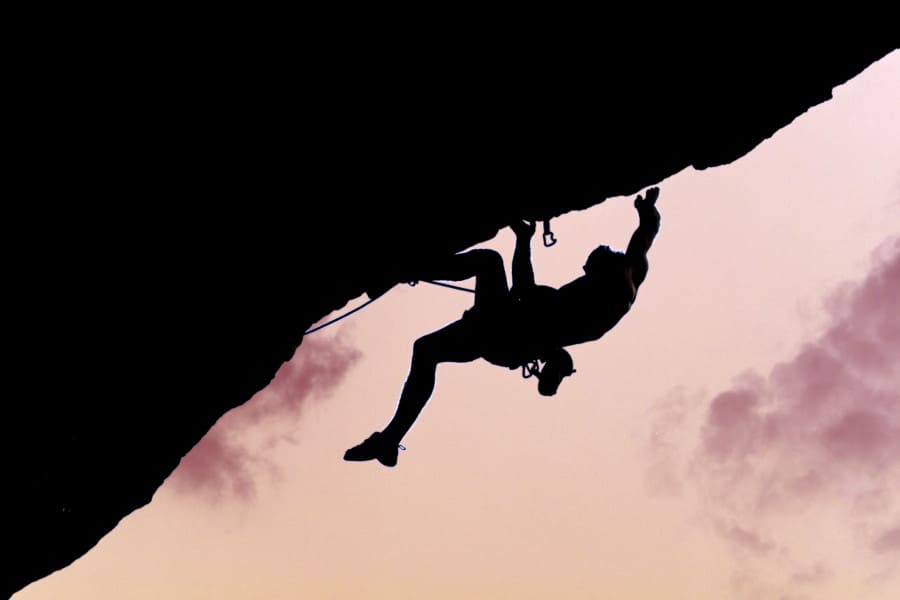
Right before I shifted my body to jump down from a hard move last week, strangers started cheering me on, and pretty soon half the bouldering area was telling me I could do it. And I did. That got me thinking about mental training for climbing, and how little of it most of us actually do.
Some coaches suggest that mental strength and skill is about 33% of climbing. But when hundreds of climbers at all levels got surveyed, they put mental capacity at 80% or more. The gap is telling. Climbers know the mind is a huge part of climbing, yet they still spend only a fraction of their time working on it, if they work on it at all.
In an interview I did with Dr. Don McGrath, a leading expert in mental training for climbing, Dr. McGrath told me that when he was researching his book, Vertical Mind, he realized “without the right mind set, it doesn’t matter how strong or flexible you are. It doesn’t matter how good your technique is. It just doesn’t matter.”
When I think about how often I’ve jumped off a route, or only put half my effort into reaching for a hold before letting myself fall, I realized this is a big deal that we should talk about way more often.
Pro climbers often have sport psychologists who help train them. Most of us don’t have that kind of access, but that doesn’t leave us stuck. There are plenty of things any climber can do to train their mental skills on their own.
“Without the right mind set, it doesn’t matter how strong or flexible you are. It doesn’t matter how good your technique is. It just doesn’t matter.” Dr. McGrath said.
How do you know if you need to train mental skills?
Everyone can and should start training mental skills right now, even if it’s your first time on the wall. If you’re not convinced, think about this.
Climbers can’t send their project on the first try. That’s why we call it a project. But a lot of the time, they get it done by the end of the night. Is that because they got stronger as the session went on? Clearly not, since you burn a ton of energy and strength on every burn (climber talk for “attempt”).
It also isn’t because you learned a new technique. Technique takes hours and multiple sessions to build, not one night.
So if it wasn’t strength and it wasn’t technique, was it mental? In most cases, yes.
It was your mind reassuring you that yes, you can grab that hold, and yes, you can hold on one moment longer.
A great example is when you stick a dyno (the big climbing moves where you jump, cut both feet, and often throw for the next hold with both hands). The first few tries make the move feel impossible. Then, once you finally stick it, it feels easier every time you try it again. It isn’t because you got stronger with each go. You probably got weaker and more tired. It’s because your mind made the connection that the move is possible. Once that connection clicks, the rest gets a lot easier.
So how do you know if it’s mental and not physical? “Because I reached the top on my third burn,” said Dr. McGrath.
Common mental challenges with climbers
Climbers work through a lot of things, but two show up for almost everyone: the fear of falling and the fear of failure.
The fear of falling
The fear of falling is most common for beginners, because your mind knows there’s a risk of injury and pain if you come off. Avoiding injury and pain is something evolution built into us to keep us alive, so it’s not something you want to erase. But it’s absolutely something you can work through and shrink.
The most common, and probably the easiest way to overcome the fear of falling is to learn how to fall safely and then take a lot of falls in a controlled environment like a climbing gym. If you want to go deeper on this, we wrote a whole guide on how to deal with the fear of falling.
Falling safely means rolling out when you’re bouldering, and bending your knees and keeping your hands clear of the rope when you’re sport or top rope climbing. Do that enough and your mind starts to recognize how much control you actually have over avoiding injury and pain when you fall.
Climbers with thousands of falls under their belt have learned when a fall is going to be dangerous versus when it’ll be fine and recoverable. So on top of learning to fall safely, you also need a big bank of falls behind you. Many gyms run falling classes if you want to work with a pro. The other option is to take hundreds of controlled falls in a safe spot on your own.
The more falls you take, the better your mind gets at reading risk accurately, and that’s what brings your fear of falling down.
The easiest way to overcome the fear of falling is to learn how to fall safely and then take many falls in a controlled environment such as a climbing gym.
The fear of failure
This one is more common in experienced climbers. It’s usually tied to the worry that someone will judge you, or won’t get it, if you miss that hold. It hits pro climbers hardest, since they carry the extra pressure of landing moves to keep their sponsors and their fans.
“One of the worst things you can do while figuring out how to make a move, is to allow yourself to wonder ‘what will my mom think if I fail,’” said Dr. McGrath.
Instead, focus on the position you need to get into and the movement you need to make so you can stick the hold. The fear of failure pulls you away from exactly that.
To work through the fear of failure, a lot of climbers focus on one move at a time, because that’s the only thing they can actually control in that moment.
If you catch yourself thinking “what if I don’t make this move,” start listing what your body is doing right then. Check your foot placement, your arm direction and tension, and your grip. Then list what you need to do to make the move. That pulls your focus back and helps you send.
“One of the worst things you can do while figuring out how to make a move, is to allow yourself to wonder ‘what will my mom think if I fail.’” Dr. McGrath said.
Other fears in climbing
For the most part, if you talk to someone at the gym or the crag about the fears they’re working through, you can usually boil them down to the fear of falling and the fear of failure. But there are other fears that show up less often and are still very real for the person feeling them.
According to Vertical Mind, rewriting the scripts you run in your head when those fears hit, so your mind focuses on the reality of what’s happening and what you need to do, will help you work through them.
Rewriting the scripts takes effort, but not a ton of time. Dr. McGrath explained that many climbers are able to rewrite their scripts within a matter of hours and feel the benefits of the new scripts within one climbing session.
Many climbers are able to rewrite their scripts within a matter of hours and have the benefits of the new scripts within one climbing session.
How to start mental training for climbing
The best way to start mental training for climbing is to listen to what you’re telling yourself when you get challenged on the wall, and take note of it. That builds awareness. Keeping a climbing journal makes this easy, since you can look back and spot the patterns. From there, you work through whatever fears or mental blocks keep coming up, so the next time you’re in that spot, you’re ready for it.
It’s worth remembering that the mind is part of the whole picture, right alongside movement and stamina. If you want to see how it fits with the physical side, we break that down in our piece on climbing endurance for muscle, skin, and the mind.
I’d recommend reading books like Vertical Mind that give you drills and activities to get mentally stronger as a climber.
Other books for climbers about mental training that I’d recommend include The Rock Warrior’s Way and Max Climbing.
If you want more climbing tips like these landing in your inbox, the free Send Edition newsletter sends you one climbing drill a week that takes about 15 minutes. You can sign up here and start leveling up in short, focused sessions.
And when you want your training in one place between sessions, the Grip & Grind app is where a lot of climbers put in the reps.
More About Training for Climbing:
- How To Climb More Often Without Getting Injured | Tried And Tested Methods For Recovery
- Lower Body Mobility And Flexibility Challenge
- Neglected Techniques Necessary For V4-V5 Progression
- 17 Footwork Drills For Climbing
- Mental Training For Climbing
- How Often And Hard Should You Climb To Get Gains?
- When Should You Start Hangboarding For Boulder’s
- Is Bouldering When Sore Bad?
- The Top 22 Climbing Techniques And Skills And How To Do Them
- 23 Tips For Climbing Slabs
- When To Flag In Climbing And How-To-Do It (With Videos)
- How To Learn Climbing Technique For Beginners
- What Should You Record In A Climbing Journal?
- Climbing Endurance: Muscle, Skin And Mental Training
- How To Deal With Fear Of Falling
- How Many Days Should You Climb Per Week?
- 5-10 Minute Warm-Up For Climbing
- What Is A Dyno And How To Do It
- What Is A Gaston In Climbing? Powerful Moves For Beginners
- Can Foam Rolling Improve Rock Climbing Performance?
- 7 Things Climbers Should Do On Rest Days For Better Performance
- When Do You Need A Rest Day?
- How To Climb Your Best – Pros And Cons Of Rest Days
- Static Vs Dynamic Climbing Movement: Pros And Cons
- 5 Habits For Healthy Climbing That You Haven’t Thought Of
- 5 Things To Improve Climbing Performance And Sustainability
- 10 Minute Workout Routines For Post Climbing Sessions
- How To Use Climbing Holds: Techniques For Improved Climbing
- A Guide For Climbers: Bouldering Drills 101
- 12 Easy Workouts To Increase Hand And Grip Strength For Climbers
- What Are Undercling Climbing Holds And Why Climbers Love/Hate Them
- What Is A Crimp In Rock Climbing And How To Train For Them
- 7 Common Mistakes in Rock Climbing For Beginners
Frequently asked questions
What is mental training for climbing?
Mental training for climbing is the work you put into the mind side of the sport, like managing the fear of falling and the fear of failure, staying focused on one move at a time, and rewriting the negative scripts you run in your head. Coaches peg mental skill at roughly 33% of climbing, while surveyed climbers put it at 80% or more.
How do I know if my problem is mental and not physical?
A good clue is when you send a project by the end of the night without getting stronger or learning new technique that day. As Dr. Don McGrath put it, you know it was mental “because I reached the top on my third burn.” If you got weaker with each attempt but still stuck the move, your mind made the connection, not your muscles.
How do you overcome the fear of falling?
The easiest way is to learn how to fall safely and then take a lot of falls in a controlled environment like a climbing gym. Roll out when bouldering, bend your knees and keep your hands clear of the rope when roped up, and stack up enough falls that your mind starts reading risk accurately. Many gyms run falling classes if you want to work with a pro.
How long does mental training take to work?
Faster than most climbers expect. Dr. McGrath explained that many climbers can rewrite their mental scripts within a matter of hours and feel the benefits within one climbing session. It takes effort, but not a ton of time.
Do I need a sports psychologist to train mentally?
No. Pro climbers often work with sport psychologists, but the average climber doesn’t need one. Building awareness of your self-talk, learning to fall safely, focusing on one move at a time, and reading books like Vertical Mind will get you a long way on your own.