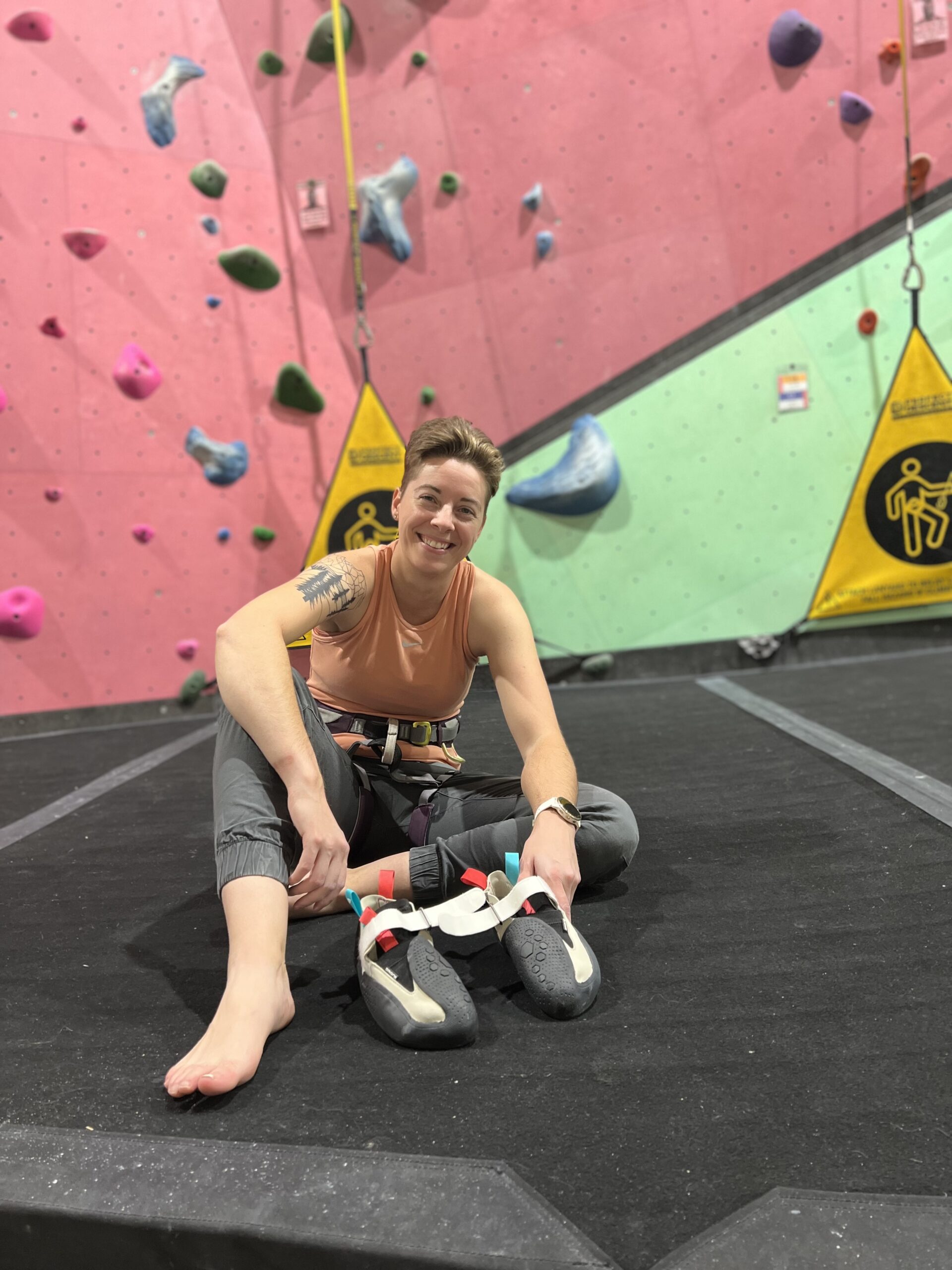

One of the reasons I got into gym climbing back in college was that I was bored stiff at the regular gym and wanted a way to stay active that actually felt fun. If you’re after an exciting way to stay fit without the monotony of the weight room, climbing is a great alternative to a traditional workout, and here’s why it hooks so many of us.
Climbing mixes a real physical challenge with mental engagement, so you get a full-body workout that keeps you moving and keeps your head in the game.
The first time I stepped into a climbing gym, I was hooked. The community, the buzz of scaling a wall, and the plain joy of tagging the top hold felt like nothing I’d found at a traditional gym.
And it wasn’t just me. Research shows climbing gives you a well-rounded workout that builds strength, flexibility, and mental focus. Let’s walk through the main reasons climbing works so well for anyone who wants a fitness routine they’ll actually look forward to. If you want the full rundown, we broke down the benefits of rock climbing in its own guide too.

Full-Body Workout: Why Climbing Is a Great Alternative to a Traditional Workout
Climbing pulls together physical and mental demands in a way most gym routines just don’t. The first time I tried it, I was struck by how much of my body was working at once.
Every climb asked for strength, flexibility, and endurance all together, from crimping tiny holds to balancing on a narrow ledge. It wasn’t just a workout, it was a full-body puzzle that left me feeling worked and a little proud.
That whole-body load is backed by research. Studies show climbing builds muscular strength and endurance, especially in the core, upper body, and legs.
On top of that, the reachy, dynamic movements climbing asks for improve your flexibility and coordination, which feeds right back into your overall fitness.
The mental side matters just as much. Every climb is a puzzle that needs strategy and problem-solving before your hands even move.
I still remember getting stuck halfway up a hard route. The only way I got to the top was to calm my head and plan the next few moves one at a time. That kind of focus is where climbing quietly sharpens your attention, cuts stress, and builds confidence.
Research lines up with that, showing climbing can ease symptoms of anxiety and depression, likely from the mix of hard physical effort and the calm, focused headspace climbers drop into.
Whether you’re on indoor walls or outdoor cliffs, climbing gives you a full workout that pays off for both body and mind.
For a deeper dive into the numerous benefits of rock climbing, check out this detailed guide: The Incredible Benefits of Rock Climbing.

Core Strength: How Climbing Can Sculpt Your Abs
One of the biggest surprises when I started climbing was how hard it worked my core. Regular ab routines can feel repetitive and isolated, but climbing folds core strength into pretty much every move.
I remember my first time on an overhang, where the wall leaned out over me and forced me to fire my core just to keep my hips close to the holds. Every pull, I could feel my abs fighting to keep me stable.
This isn’t just my personal experience; research supports the core-strengthening benefits of climbing. Studies have shown that rock climbing significantly activates the rectus abdominis and obliques, the primary muscles responsible for a strong core.
Because you’re constantly holding body tension and balance on the wall, those muscles stay switched on for the whole session. That steady engagement builds strength and endurance in the core, so your abs get stronger and more defined over time (MDPI).
Climbing also throws in dynamic moves that challenge your core in ways a crunch never will. Reaching for a far hold or throwing a dyno, a big dynamic move that launches your body up or sideways, takes a burst of core power to control.
Those varied moves hit the core from a bunch of angles, which builds balanced, usable strength instead of one-note bracing.
If you want a strong, sculpted core without grinding through endless crunches and planks, climbing is a genuinely fun way to get there.
If you’re curious to learn more about how climbing can transform your core strength, check out this comprehensive guide: Can Climbing Build Abs?.
Muscle Building: Climbing vs. Weight Training
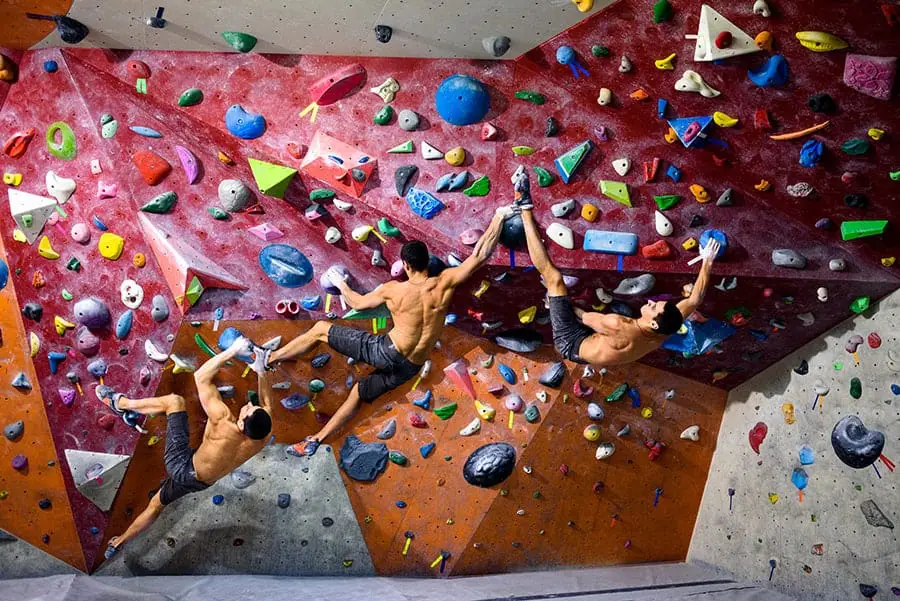
When I first swapped traditional weight training for climbing, I was surprised how much muscle it built, and in a way that felt more natural and useful. Instead of isolating one muscle at a time with bicep curls or leg presses, climbing works a bunch of muscle groups at once.
Every climb pulled strength from my whole body, from the grip in my forearms to the drive in my legs to the pull through my back. That full-body effort made sessions more interesting and left me feeling stronger and more balanced.
Research supports the idea that climbing can be an effective muscle-building workout. A study published in the Journal of Sports Sciences found that rock climbing significantly activates major muscle groups, including the latissimus dorsi, biceps, and forearm flexors, which are crucial for upper body strength (BMJ Open Sport & Exercise Medicine).
On top of that, the constant need to stabilize and balance fires up your core, which rounds out a well-built physique. Where traditional weight training tends to isolate muscles, climbing builds functional strength and better body coordination, so the muscles learn to work together.
One of the big differences between climbing and weight training is how varied and unpredictable the movement is.
In the weight room, most exercises follow a fixed, repetitive path, like a dumbbell moving the same way every rep. Climbing is never the same twice, so you’re always adapting and calling on different muscles with each move.
That variety can build better muscle endurance and a more balanced body. A systematic review in the International Journal of Environmental Research and Public Health pointed out that complex, multi-joint activities like climbing can drive more muscle activation than traditional isolated exercises (MDPI).
If you want to build muscle but the repetition of lifting bores you, climbing is an engaging and just-as-effective alternative.
That said, climbing does lean hard on your grip and fingers, and those take time to build safely. If you want structured off-the-wall training for exactly that, the Grip & Grind app runs you through short, climbing-specific sessions. And chasing new routes and topping harder problems keeps the whole thing exciting instead of a chore.
If you’re interested in how climbing can fit into your muscle-building routine, check out this detailed comparison: Can Climbing Build Muscle and Replace Weight Training?.

Calorie Burn: How Effective Is Climbing for Weight Loss?
When I first started climbing, I just wanted a fun way to stay active without slogging through traditional cardio. To my surprise, climbing gave me a real challenge and torched a good number of calories at the same time.
Every session left me feeling thoroughly worked, a lot like a high-intensity interval session, except with new scenery and new problems to solve the whole time.
Research indicates that rock climbing is an excellent way to burn calories and can be highly effective for weight loss.
A study published in the British Journal of Sports Medicine found that rock climbing can burn roughly 8 to 10 calories per minute, depending on the intensity and the climber’s weight (BMJ Open Sport & Exercise Medicine).
That’s in the same ballpark as high-intensity activities like running and swimming. The mix of strength, endurance, and aerobic work in climbing is what gives it that high calorie-burning potential.
A big reason climbing burns so well is that it works multiple muscle groups at once. Each climb blends pulling, pushing, and stabilizing, which raises the metabolic demand on your body.
That full-body effort means you’re not just working your arms and legs, but your core, back, and all the little stabilizing muscles too.
A systematic review in the International Journal of Environmental Research and Public Health supports this, showing that activities engaging multiple muscle groups tend to have higher energy expenditure compared to those that focus on isolated muscles (MDPI).
On top of that, climbing’s stop-and-go intensity, big bursts of effort followed by rests while you read the next move, mimics interval training, which is known for burning calories efficiently.
That back-and-forth can trigger a bigger afterburn effect, where your body keeps burning calories at a raised rate even after you’ve pulled off the wall.
If you’re trying to lose weight or hold a healthy weight, climbing is a fun and effective way to get it done.
If you’re curious to learn more about how many calories you can burn from climbing, check out this comprehensive guide: How Many Calories Do You Burn From Climbing?.
Cardio Workout: Is Climbing Good for Your Heart?
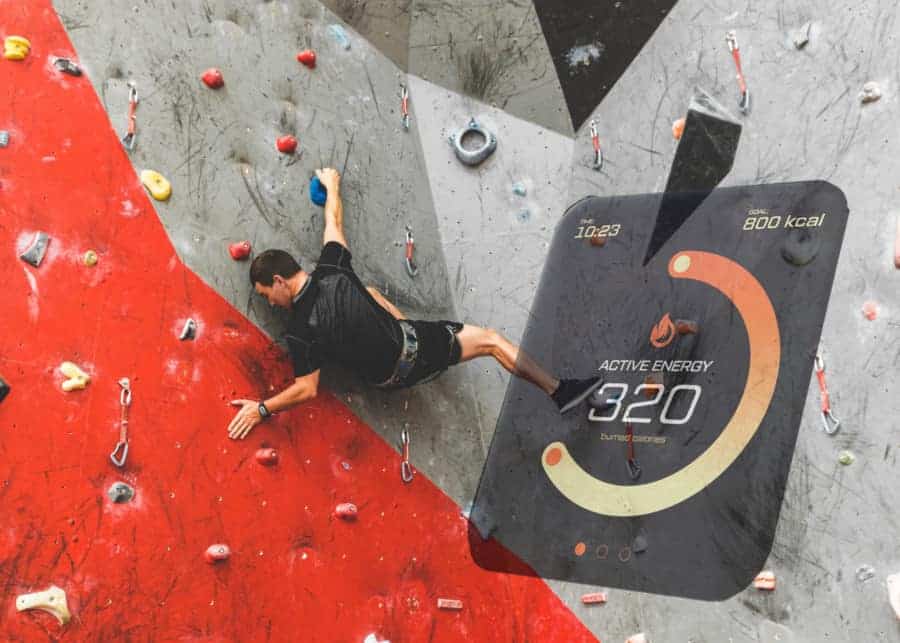
When I first took up climbing, my heart rate would spike as I worked through hard routes, the same cardio rush I used to get from high-intensity interval sessions.
The effort of moving up the wall, plus the focus it takes to read each move, made for an intense workout that I found genuinely rewarding.
Research backs up these observations, showing that climbing can significantly benefit cardiovascular health.
According to a study published in the Journal of Sports Sciences, climbing can push heart rates to 70 to 85% of their maximum, which sits in the moderate to vigorous range recommended for improving cardiovascular fitness (BMJ Open Sport & Exercise Medicine).
That’s on par with running and cycling, which makes climbing a solid cardio workout.
A big part of what makes climbing good for your heart is its stop-and-go intensity. Unlike steady jogging, climbing throws bursts of hard effort at you, followed by short rests while you plan the next move.
That pattern looks a lot like high-intensity interval training, which has been shown to be especially good for cardiovascular health and endurance.
A review in the International Journal of Environmental Research and Public Health highlights that activities with fluctuating intensities can improve heart health by making the cardiovascular system more efficient and boosting overall stamina (MDPI).
Beyond that, the pulling, pushing, and balancing climbing demands take real oxygen, which helps build lung capacity and efficiency. That, in turn, supports better overall cardiovascular function.
Climbing’s constant movement also gets your blood flowing, which supports lower blood pressure and a healthier heart.
If you want cardio that breaks away from the monotony of traditional exercise, climbing keeps your heart working while keeping you hooked. The blend of physical effort and mental focus means you get a real workout and actually want to come back.
If you’re interested in exploring the cardiovascular benefits of climbing in more detail, check out this comprehensive guide: Is Climbing and Bouldering Good for Cardio?.
Want to get more out of every session without adding a bunch of gym time? Send Edition sends one short, doable climbing drill to your inbox each week, about 15 minutes, free. Join the free newsletter here and level up your climbing 15 minutes at a time.
Frequently asked questions
Is climbing a good alternative to a traditional workout?
Yes. Climbing gives you a full-body workout that builds strength, flexibility, and endurance while also working your focus and problem-solving, so it replaces the monotony of the regular gym with something most people actually enjoy. If you want the wider picture, here’s a rundown of the benefits of rock climbing.
Does climbing count as a full-body workout?
It does. A single climb pulls in your forearms, back, legs, and core all at once, and the constant balancing keeps your stabilizing muscles working the whole time. Research shows climbing builds muscular strength and endurance across the core, upper body, and legs.
How many calories does climbing burn?
Studies suggest rock climbing burns roughly 8 to 10 calories per minute, depending on intensity and body weight, which is in the same range as running or swimming. For the full breakdown, see how many calories you burn from climbing.
Can climbing replace weight training?
For a lot of people, yes. Climbing activates major muscle groups like the lats, biceps, and forearm flexors, and it builds functional, coordinated strength instead of isolating one muscle at a time. We compared the two in detail in can climbing build muscle and replace weight training.
Is climbing good cardio?
Yes. Climbing can push your heart rate to 70 to 85% of its maximum, which is the moderate to vigorous range recommended for cardio fitness, and its bursts of effort work a lot like interval training. There’s more on this in is climbing and bouldering good for cardio.