
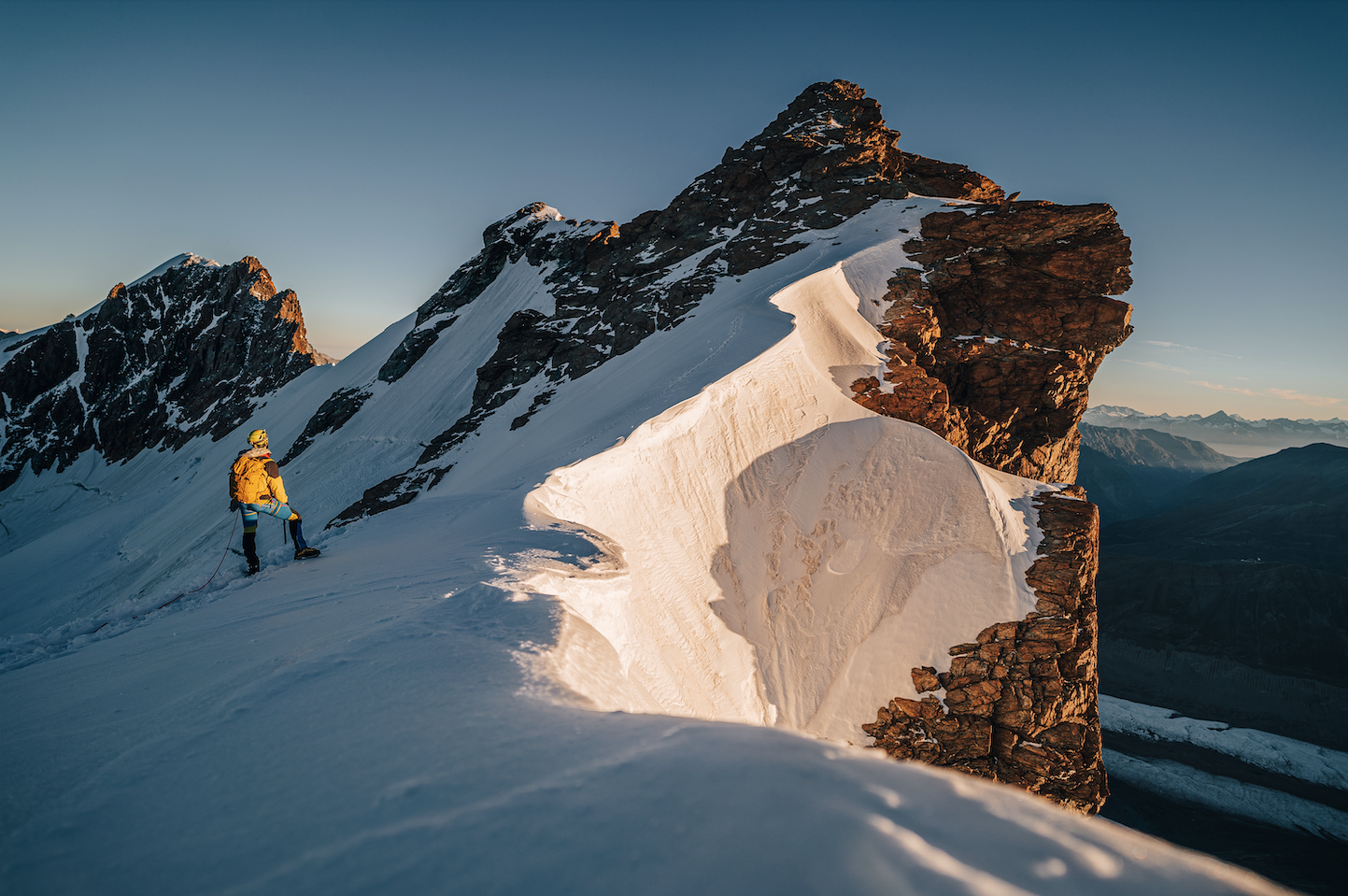
If you’re wondering how Alex Honnold got down, a lot of those climbs finish on a walk off a different path than the ascent. Alpinists more broadly mix four methods: walking off, lowering, rappelling, and downclimbing.
Alpinists typically get down from the peak by walking down, getting lowered on ropes, rappelling or abseiling, downclimbing, or in most cases a mix of all of these techniques. Getting down isn’t as flashy or as talked about as getting up, which is probably why nobody documents it much. But it is far from safe. Famous climbers like Marc-Andre Leclerc died on the descent, caught in an avalanche, so the way back to the ground carries real risk. That is exactly why “how do alpinists get down” is a question worth taking seriously.
How Do Alpinists Get Down?
People love picturing a climber standing on the summit of a huge mountain. But getting down safely matters just as much as getting up. Alpinists have four basic ways to descend a mountain. They can rappel, downclimb, walk off, or get lowered. On a complicated descent, a climber might end up using all four before their boots hit flat ground. More often than not, rappelling is the go to method over any of the others.
Walking Down
Plenty of climbers will tell you walking off is the best way to get down a mountain. If there is a walking route, it is almost always the least technical option, and it gets you down quick and easy. A walk off usually means picking your way through bushes and scrambling down gullies, but you are on your feet the whole time instead of hanging off a rope.
Lowering
Lowering is a safe way to get off a high mountain. One climber lowers the other down the cliff on the climbing rope. It is quick and simple, which is why people reach for it. That said, there is still risk, because plenty can go wrong. Make sure the rope is long enough for the pitch, and tie a stopper knot in the free end so the rope can’t slip through the belay device. If you want to nerd out on the hardware that makes this work, here is a look at the evolution of climbing belay devices.
Rappelling and Abseiling
Rappelling and abseiling are the exact same thing. It is a controlled descent where the climber slides down a rope. In North America, people usually say rappel. In the UK and across Europe, you will hear abseil far more often. Rappel is a French word that means “to recall or withdraw.” Abseil comes from the German abseilen, which means “to lower on a rope,” and it is the older of the two terms.
Lowering Versus Rappelling
Both lowering and rappelling use the rope to get a climber down a mountain fast. The difference is who does the work. Lowering takes two people, with one person paying out the rope to bring the other down. When you rappel, you slide down your own rope under your own control. A lot of climbers see lowering as the safer of the two, and it is often the quickest way to get an injured partner down to the ground.
Down Climbing
Sometimes the way down runs straight through steep rock or sections full of loose, broken stone. On solid rock, a confident climber can downclimb without a safety line. On loose or crumbly ground, it is smarter to stay tied in and use the rope, so a slip doesn’t turn into a fall. Downclimbing is a real skill, and it is one of the reasons climbing is such a mental sport, because you are reading holds you can barely see below your own feet.
How Do Climbers Get Their Ropes Back?
Climbers usually don’t tie the rope off at the top anchor. Instead the rope is doubled and threaded through the anchor, with a figure eight keeping it from sliding through the two anchor points. The anchor is built from nylon webbing with a couple of opposed carabiners clipped to it. The rope runs through those carabiners, and the climber rappels down on one strand. Once they reach the bottom, they just pull one end of the rope, and it feeds back through the anchor and drops free.
High-Risk Exposure
Alpinism is a genuinely risky sport. Climbing high peaks throws you into bad weather and dangerous situations, and that goes double for a winter ascent. Many climbers have been seriously hurt or killed going up and down the world’s highest mountains. They deal with thin air, wrecked muscles, and slick, treacherous footing just to reach the top. On a winter climb you also have to be ready for avalanches and frostbite. Managing all of that starts long before summit day, and steering clear of a few common climbing mistakes goes a long way toward getting home in one piece.
Marc-Andre Leclerc
Marc-Andre Leclerc was a Canadian-born rock climber and alpinist known for solo mixed climbing. In 2015, after Leclerc, then 22, made the first solo ascent of the Corkscrew on Cerro Torre, Patagonia legend Rolando Garibotti called it “an ascent of earth-shifting proportions.” In the film, after Leclerc solos Mount Robson, the holiest and scariest mountain in the Canadian Rockies, veteran expedition leader Jim Elzinga says Leclerc is “doing things people thought could never be done. (redbull.com)
He was known in climbing circles for his bold solo ascents of hard mountains all over the world, and especially in British Columbia. Leclerc was the first to complete a winter solo ascent of both the Torre Egger in Patagonia and the “Infinite Patience” route on Mount Robson’s Emperor Face. A documentary about his life and his astounding climbs, called “The Alpinist,” came out in 2021. Leclerc and his climbing partner Ryan Johnson died in March 2018 while climbing a new route on the North Face of the Mendenhall Towers. On the descent they were caught in an avalanche, and their bodies were never recovered.
Alex Honnold
American rock climber Alex Honnold is famous for free soloing big walls. His free solo of El Capitan in Yosemite National Park in 2017 grabbed the world’s attention, and he was the first person ever to free solo that wall in a single day. Honnold also holds the fastest ascent of the Yosemite triple crown, linking The Nose, Mount Watkins, and the Regular Northwest Face of Half Dome. He wrote “Alone on the Wall” in 2017, and his 2018 documentary “Free Solo” won an Academy Award and a BAFTA. For a lot of his climbs, the descent is a walk down a different path than the one he came up. El Capitan, for instance, gets hiked by plenty of people every day.
Tommy Caldwell
Tommy Caldwell is another pro who belongs in any conversation about daring alpine ascents. He has done a handful of free solos, but he has also put up plenty of ice climbs where he swung tools to reach the top. In the documentary about Marc-Andre Leclerc, Tommy talks about how he always climbs with gloves to deal with the cold and the exposure. More than anything, he has shown that experience is the real key to the hardest alpine routes.
Safe Ways to Descend Cliffs and Mountains
Nowhere is the old line “what goes up must come down” truer than in climbing. We climb up, and once we top out, whether it is a mountain summit, the tip of a sandstone spire, or the anchors on a bolted sport route, we still have to get back down to the flat earth. What counts as safe depends on where you are and what options the terrain gives you. As a rule though, if you can hike down, that is usually your safest bet. After a walk off, being lowered is generally safer than rappelling. The least safe option is downclimbing with no rope or gear to catch you if a foot slips.
Descending well comes down to solid footwork, calm decisions, and steady nerves, and those are the same skills that make you better on the way up. If you want to sharpen them a little at a time, Send Edition sends out short, practical climbing drills you can work on in about 15 minutes a week. Join the free newsletter here and level up your climbing without adding a bunch of extra gym time.
Frequently asked questions
What is the safest way for alpinists to get down?
If a walk off route exists, hiking down is usually the safest way to descend. After that, being lowered is generally safer than rappelling, and the least safe option is downclimbing with no rope or protection to catch a slip. Most descents mix these methods depending on the terrain.
What is the difference between lowering and rappelling?
Lowering takes two people, with one climber paying out the rope to bring the other down the cliff. Rappelling is done solo, with a single climber sliding down their own rope under their own control. Many climbers consider lowering the safer of the two, and it is often the quickest way to get an injured partner to the ground.
Are rappelling and abseiling the same thing?
Yes, they describe the exact same controlled rope descent. North Americans tend to say rappel, from the French word meaning “to recall or withdraw,” while climbers in the UK and Europe usually say abseil, from the older German word abseilen, meaning “to lower on a rope.”
How do climbers get their rope back after rappelling?
The rope is doubled and threaded through the anchor rather than tied off, so the climber rappels down on one strand. Once they reach the bottom, they pull one end of the rope and it feeds back through the anchor and drops free, ready to use for the next section of the descent.
Why is descending so dangerous for alpinists?
Climbers are often tired and dealing with bad weather, thin air, and loose or icy footing by the time they head down, and a winter descent adds avalanche and frostbite risk on top of that. Marc-Andre Leclerc, one of the sport’s boldest alpinists, died in an avalanche during a descent in 2018.
More Trending Topics Like This:
- What Happened During The Men’s 2021 Climbing Olympics?
- Who Are The Climbers Competing In The Tokyo Olympics 2021?
- Is Climbing A Sport?
- How Many Calories Do You Burn From Climbing?
- 17 Reasons Why Bouldering Is So Popular
- The Evolution Of Climbing Belay Devices
- 23 Storage Ideas For Your Climbing Gear
- Why Is Climbing Such A Mental Sport?
- The Best Way To Take Climbing Chalk Through Airport Security
- Is Bouldering That Hard? Yea, It’s Hard – This Is Why
- Is Climbing Considered A Sport
- Is Climbing And Bouldering Good For Cardio?
- Top 10 Home Climbing Gym Designs
- 9 Signs You’re Seriously Addicted To Climbing
- Why Do People Like Climbing?
- What You Need To Know About Climbing In The 2021 Tokyo Olympics
- Can Climbing Build Abs And Make You Look Chiseled
- How To Introduce Your Friends To Climbing (15 Steps)
- Tips For Handling Your Period While Climbing
- Is Bouldering Outdoors Harder Than Indoors?
- Can You Go Rock Climbing Outdoors During The Covid 19 Pandemic?
- 7 Reasons To Wear Socks With Climbing Shoes
- What Is Dabbing? | Climbing Vocabulary And Culture
- Bouldering Vs Climbing: Training, Skills, Strength, Grades
- Indoor Vs Outdoor Climbing: A Thorough Comparision
- 22 Health Benefits Of Climbing – Backed By Research
- Bouldering And Sports Climbing Glossary: Lingo And Language
- Quick Tips For Getting Back Into Climbing After A Long Break
- 10 Legit Reasons You Should Not Rock Climb
- Can Climbing Build Muscle And Replace Weight Training?
- Do You Wear Socks With Rock Climbing Shoes?
- Is Bouldering Dangerous?
- What Should You Record In A Climbing Journal?
- How Are Climbing Routes Graded?
- First Time At The Bouldering Gym – What You Should Know
- 7 Common Mistakes In Rock Climbing For Beginners
- How Do Alpinists Get Down?