
The sends that feel like strength problems are usually movement problems.
I’m Sara Wade, a climbing coach. I’ve spent seven years working out which drills actually move the needle, and in 10 minutes I can tell you which movement limiter is costing you the most.
Free · 10 minutes · no card, no app download
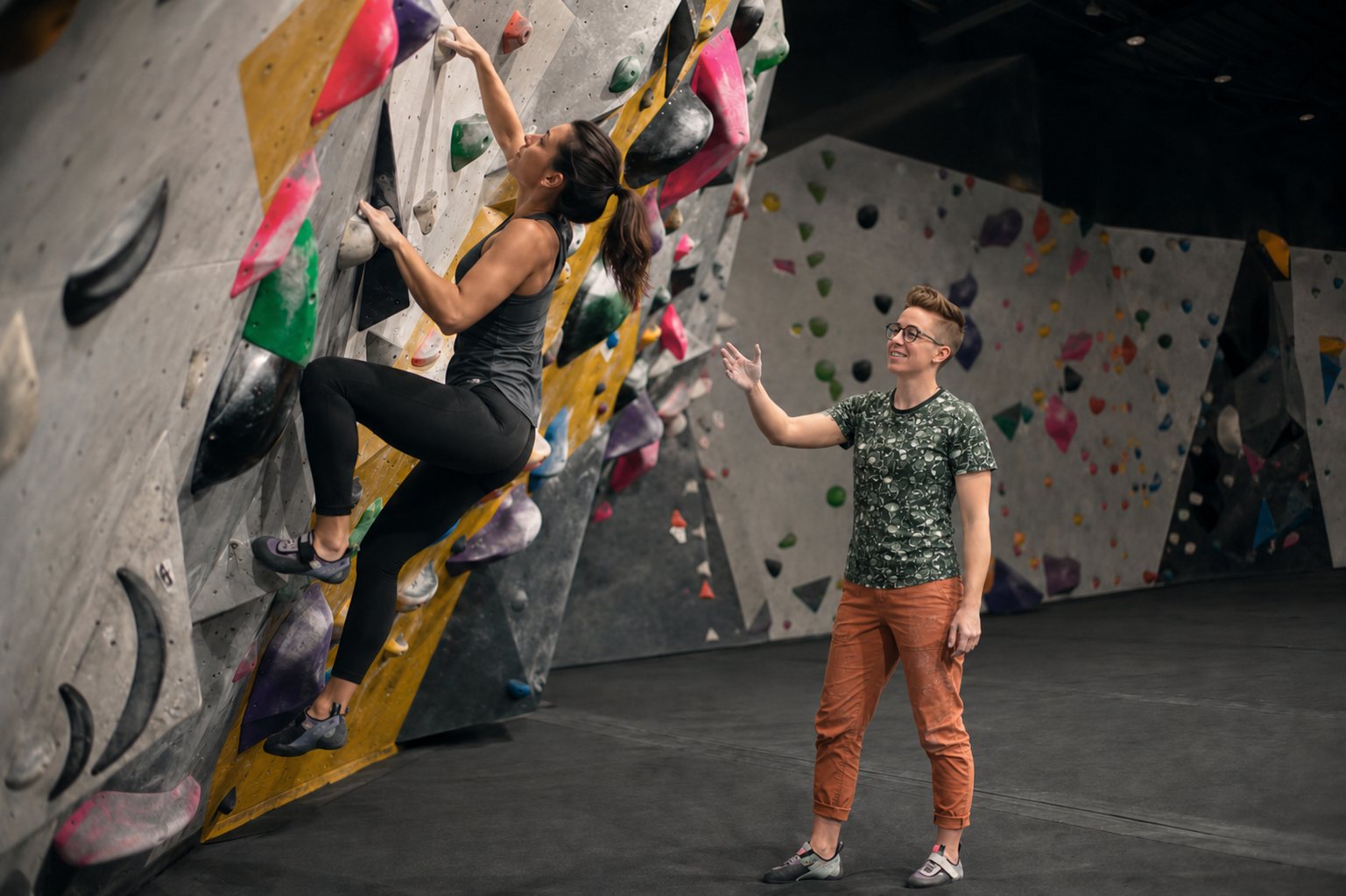
Pick the one that sounds like you
Three different climbers land on this page. Here’s where each of them should go first. All three are free.
Learn the movements before you chase grades
You don’t need a full plan yet. You need the handful of movement habits that make everything after them easier. One drill a week, 10 minutes each, in the session you were already doing.
Find out what’s actually holding you back
Most plateaus aren’t strength. They’re one movement pattern quietly costing you every session, and it’s rarely the one you’d guess. The assessment names yours in 10 minutes.
Stop deciding what to do at the gym
Grip & Grind builds each session around your limiter, adapts as you improve, and shows you the progress you can’t feel yet. Free for seven days.
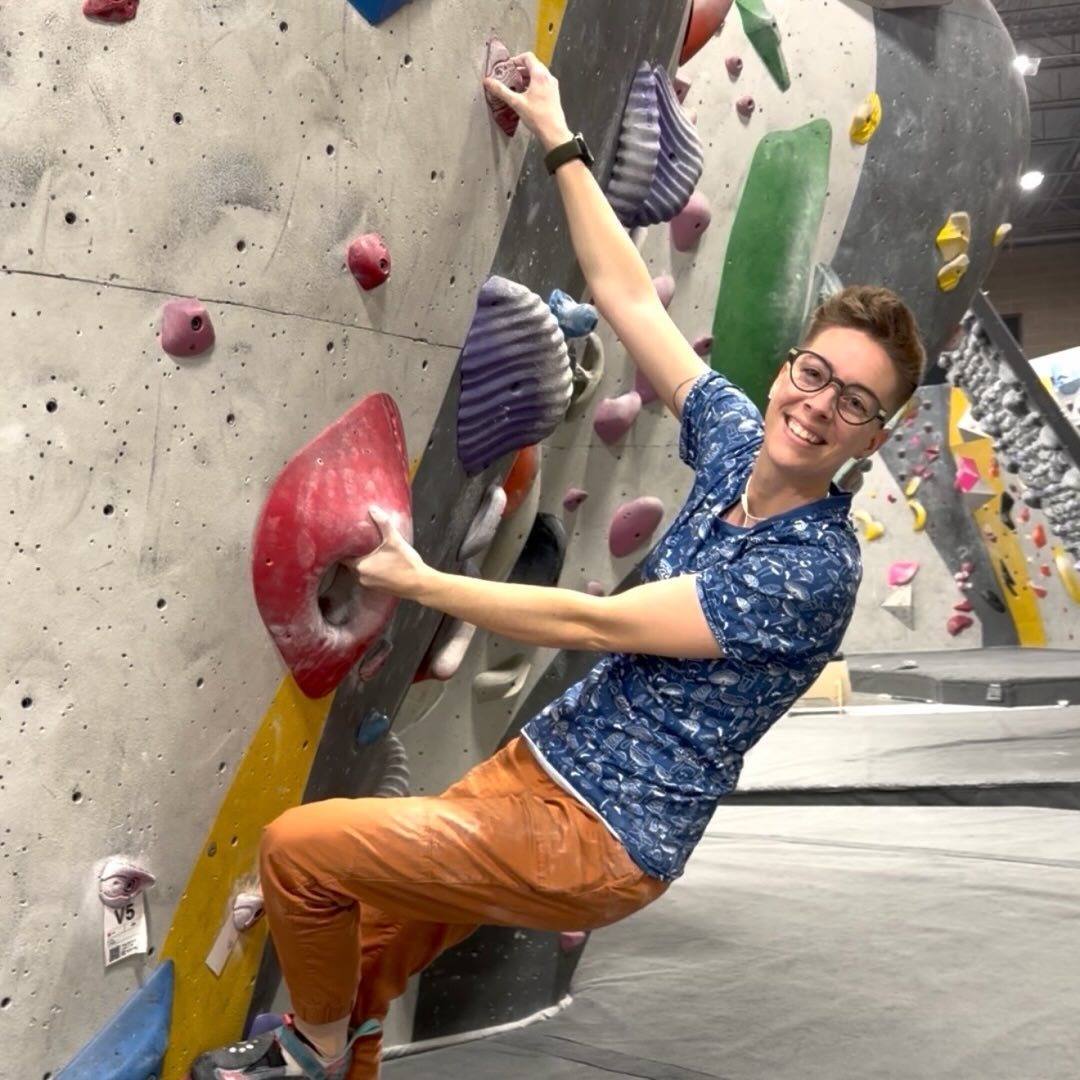
Hi, I’m Sara
I started Send Edition in 2019 because climbing had almost no structure to it. Every other sport I’d played had drills, a way to practice one specific thing on purpose. Climbing had “just climb more.” So I started building the drills I wanted.
That turned into a book of 77 of them, a training planner, a weekly drill that goes out to more than 10,000 climbers, and Grip & Grind, an app that picks the right drill for you and changes what it gives you as you improve.
I coach climbers one-on-one, teach courses at climbing gyms, and put instruction out free on YouTube and Instagram, where 210,000+ climbers follow along. I’m based in Utah. When I’m not in the gym I’m out hiking, backpacking, or canyoneering.
Gym course instructor
Author, 77 Drills
Creator, Grip & Grind
Seven things hold climbers back. Usually one of them is yours.
Every drill, plan and session on Send Edition traces back to one of these. Find the symptom that sounds most like your climbing.
Footwork Precision
Feet slip. Placements are noisy. You miss the small ones under pressure.
Grip Efficiency & Relaxation
You overgrip. Forearms pump early. You hang on far longer than the move needs.
Body Positioning & Balance
You barn-door. Hips drift off the wall. You’re pulling where you could be standing.
Core Tension & Body Control
Feet cut on steep ground. Movement gets loose exactly when it needs to be tight.
Movement Fluidity & Rhythm
Climbing feels robotic. You stop between moves and lose the rhythm.
Route Reading & Sequencing
You pick beta that doesn’t work and arrive at the crux already out of position.
Fear Management & Commitment
You hesitate on the move you can physically do. Falling is the thing in the way.
Not sure which?
That’s the normal answer, and it’s exactly what the assessment is for.
Already know what you are working on? The Climbing Training Hub collects everything on tracking, rest, drills, and strength in one place.
Climbers who trained the right thing
Their words, their grades, published with their permission.
“I’d climbed on and off for three years and couldn’t get past V3. I set a goal of sending a V4 in a month, something I’d never done, and with Grip & Grind I sent my first V4 in three weeks.”
“I can finally climb 5.11 grades now because of the drills. My footwork has improved so much that I trust my small footholds in a way I didn’t before.”
“With a structured approach to bouldering, instead of just climbing and figuring things out as I go, I went from stuck on V4 to climbing some V5s.”
“The drills made me more conscious of where my hands and feet are headed several moves ahead, and gave me the confidence to try more dynamic, powerful moves.”
“It’s helped my footwork and overall movement efficiency, and it’s like having a training partner I can work with at my own pace.”
The app, the book, and the planner
They cover the same ground on purpose. The app decides for you, the book lets you choose, the planner keeps the record. Most climbers start with one and add another later.
Grip & Grind
It picks the drill instead of you. Every session is built around your limiter, aimed at the grade you’re actually climbing, and it changes as you get better, so you never have to guess what today should be.
77 Drills to Improve Your Climbing
Every drill I use with the climbers I coach, written out with what it fixes and how to know it’s working. Paperback or Kindle.
Elevate Climbing Training Planner & Tracker
Where the drills turn into a plan you can see. Grade pyramid, monthly goals, per-session notes, and a month-end review that shows the pattern. Paperback or fillable PDF.
Free drills, videos, and gear guides
No email, no account. Start wherever your climbing feels stuck.
How-to videos
Technique and movement taught on camera, free.
Watch →
Drills
Footwork, flagging, lock-offs, body position, all with demos.
Start drilling →
New climber questions
The things nobody explains in your first month at the gym.
Get answers →
Gear, tested
Shoes, ropes, pads and belay devices, reviewed honestly.
Compare gear →
Never walk into the gym without something to work on
One drill a week, 10 minutes, done inside the session you already had planned. No extra gym days and no hangboard. The first one arrives right after you sign up.
Joining 10,000+ climbers. One email a week, unsubscribe any time.
The questions I get most
Am I too new for this?
No, and new is the best time. Drills build the movement habits that decide how fast everything after them comes. If you’ve been climbing under six months, start with the free weekly drill rather than the assessment.
Does this work for rope climbing, or just bouldering?
Both. The app asks whether you’re bouldering or on a rope and builds the session around that. The seven limiters show up in both disciplines, they just cost you different things: the footwork that slips off a foothold on a boulder problem is the footwork that burns your forearms hunting for a rest on a route. Nicole, quoted above, is a rope climber.
Do I need a gym?
A gym makes structured practice easier, but the drills work anywhere you climb. Plenty of climbers use them as a warm-up outdoors.
How long does a session take?
Around fifteen minutes of drills, then you climb like normal. The point is to fit inside the session you were already going to do, not add another one.
Do I need the book to use the app?
No. They overlap on purpose but stand alone. The book is the drills to read and choose from. The app picks and adapts them for you.
What does the assessment actually do?
It asks about how your climbing feels and where it breaks down, then names the one movement limiter costing you the most right now, plus what to do about it. 10 minutes, free, no card.
Is the free week really free?
Seven days at no charge. A card is collected up front so it rolls over without a gap; cancel any time before day eight and you’re charged nothing.
You don’t need to climb harder. You need to know what to work on.
10 minutes from now you could know exactly which movement limiter is costing you the most, and have a drill for it.