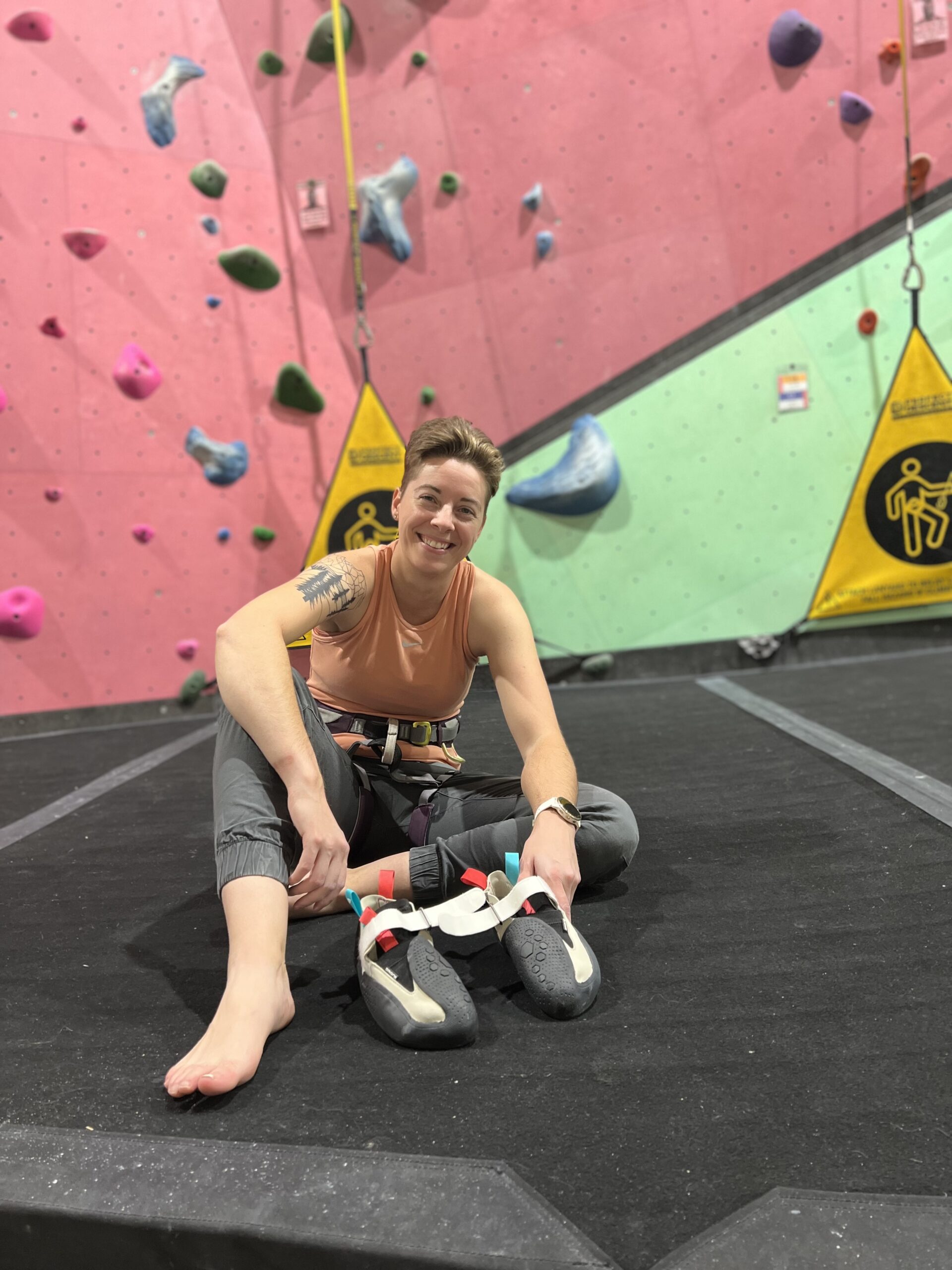
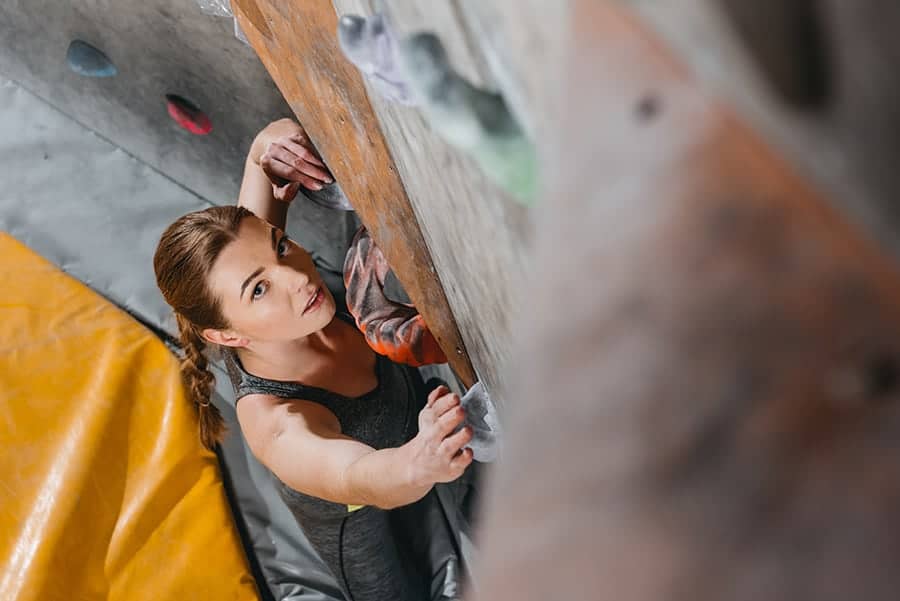
Some of my friends like bouldering, but our schedules never line up, so we don’t get to go together very often. That got me wondering whether you actually need a partner to climb at all, and honestly, bouldering alone has turned into one of the best things I’ve done for my climbing.
Unlike rope climbing, bouldering doesn’t need a belayer, so yes, you can absolutely do it on your own. Bouldering indoors alone is really common because gyms give you a ton of padding under every wall. Bouldering outdoors alone is a different story, since your safety depends on having the crash pads and spotting you’d normally get from a group wherever you are on the wall. So indoors alone is much safer than outdoors alone, and if you’re new to going solo outside, it’s worth reading up on the minimal gear needed for bouldering before you head out.
Here’s the thing though. Not only can you boulder on your own at the gym, it can actually be better for your climbing than always going with a crew. Below are eight real benefits I’ve noticed since I started bouldering alone.
Bouldering Alone Helps You Focus On Technique
Climbing with friends is a blast, but it’s rare for a group session to turn into an hour of footwork practice. For most of us, climbing with friends is all about the route, and technique ends up being a secondary way to just get to the top.
When you boulder by yourself, you can flip that around. You pick a specific technique to work on and then use the route as a way to practice it. That lets you clean up your movement a lot faster than you would just chasing sends with friends. If you want a starting point, our guide to bouldering drills is full of things you can drill solo.
Bouldering Alone Promotes Zen
According to Vertical Mind, a book about mental training for climbing, zen is reported more in bouldering than in any other climbing discipline, and significantly more than in any other sport. You lock your body and mind onto the problem, and through that focus you slip into a flow state.
When you’re climbing with friends, part of your head is on how you look and what they’re thinking. That little gap between you and the wall makes it harder to reach that quiet, dialed-in headspace.
Boulder by yourself and there’s nothing outside pulling at your attention. It’s just you and the wall, which makes it much easier to drop into that zen state.
Bouldering Alone Gives You A Great Workout
My gym sessions are solo about 75% of the time. It isn’t that I love being alone, though I don’t mind it, it’s that when I’m on my own I can train how I want, climb the routes I want, and push whatever intensity I want.
When you boulder with other people, you spend a lot of time watching each other climb. While you’re standing there watching, your heart rate drops back to normal and you lose the intensity you’d get from climbing back to back.
You also end up climbing routes you’d normally skip because they’re too easy for you, or you sit out the steep stuff you actually wanted to work, just because your friend is on a different problem.
All of that quietly lowers the quality of the workout you get from a session.
Climb by yourself and you can keep your heart rate up by getting back on the wall as fast or as slow as you like. You can hammer overhangs to work your core instead of burning time on easy routes that don’t give you the return you’re after. If you’re curious how much this counts, we dug into whether climbing and bouldering are good for cardio.
Bouldering Alone Helps You Meet New Climbers
When you show up somewhere with a certain person or group, you tend to stay glued to them the whole time. I’ve had so many gym sessions with friends where we mostly chat among ourselves and barely notice anyone else, unless they’re on the route we want next.
When you’re at the gym on your own, though, you’re way more likely to strike up a conversation with other climbers. That’s been a great way for me to grow my climbing circle, and it’s even gotten me invited to outdoor areas I’d never heard of because the folks at the gym brought me along.
Bouldering Alone Can Open You To New Ways Of Climbing
I used to assume bouldering by yourself would make it harder to pick up new movement, because you’re on your own. I figured climbing with people meant watching how they move and learning from them.
And that’s true, you will learn how your friends climb. But you also get stuck only learning how they climb, and you’re less likely to watch or talk to anyone outside your little group about how they’d solve a move.
There have been plenty of times I couldn’t figure out a specific move or finish a route. What actually worked was watching total strangers do it, then copying them or just asking how they pulled it off.
When you’re with friends, you’re much less likely to notice a stranger’s beta, let alone ask them about it.
Climbing by yourself opens that door a little wider, so it feels less awkward for the stranger to walk you through it. People are just more comfortable explaining a move to one climber than to a whole group standing around.
Bouldering Alone Can Build Your Confidence
When I started bouldering, I was climbing with people 3 to 4 grades above me, and it was a little embarrassing, even though they were super nice about it. I started bouldering alone so I could level up and eventually meet them where they climbed, and it really did wonders for my confidence.
Going solo made it easy to spend time on the lower-grade climbs that were actually at my level. That’s what let me genuinely improve, and I got the little hit of accomplishment every time I topped one out.
Feeling that progress and watching my grade climb so quickly built real confidence and kept me coming back. If you’re just getting started, our notes on your first time at a bouldering gym can take some of the nerves out of showing up solo.
Bouldering Alone Lets You Listen To Your Favorite Audiobook Or Podcast
When I climb alone, I feel like I’m getting stuff done and getting exercise at the same time.
This might sound ultra specific, but since I started bouldering by myself I’ve gotten through more than 10 books and a bunch of seasons of my favorite podcasts. Now when I head to the gym alone, I’m getting a solid workout and checking things off my reading list.
The trick is that I wear non-noise-canceling headphones (Apple AirPods) so I can hear my book over the loud music my gym blasts. If I was climbing with friends, I couldn’t exactly pop in headphones and keep my head down.
You Don’t Have To Hear Complaining When You Boulder Alone
This one sounds silly, but your mental game makes up about a third of your climbing performance, according to Eric Horst in his Training for Climbing book. That means you’ll climb better when your head is in a good spot, and one of the fastest ways to wreck that is complaining, or hearing complaining and negativity while you climb.
How many times have you gone climbing with a friend who said something like “wow, I’m really weak today” or “I can’t do that one, my feet hurt”? You’ve probably heard it more than once the last time you climbed with your crew.
Climbing culture kind of encourages putting yourself down and being negative, even though it’s terrible for your mental game, so it’s common to hear friends, or even yourself, talk that way.
When you boulder on your own, nobody’s throwing that negative vibe around. It’s just you and the wall, and that alone can help you climb better.
If you like the idea of quietly getting stronger on your own, that’s basically what Send Edition is about. You can get one climbing drill a week in about 15 minutes, free, so your solo sessions always have a focus. It pairs perfectly with the technique work above.
Frequently asked questions
Is bouldering alone safe?
Bouldering alone indoors is pretty safe because gyms pad the whole floor under every wall. Bouldering alone outdoors is riskier, since you don’t have anyone spotting you and you’re relying on your own crash pads to cover your landing, so keep the risk in mind before you go solo outside.
Do you need a partner to boulder?
No. Unlike rope climbing, bouldering doesn’t need a belayer, so you don’t need a partner at all, especially in a gym. Plenty of climbers boulder alone most of the time and use those sessions to dial in technique and fitness.
Is bouldering alone good for improving?
Yes. Bouldering alone lets you spend a whole session on one technique, keep your heart rate up, and work climbs at your level without waiting on anyone. That focus is a big reason solo sessions can improve your climbing faster than always climbing with friends.
How often should you boulder alone?
There’s no set rule. I climb solo about 75% of the time and save group sessions for fun and beta sharing. A good mix is doing focused technique or fitness work alone and keeping some sessions social so you still learn from other climbers.
More About Bouldering:
- What Is The Minimal Gear Needed For Bouldering?
- Can You Boulder Alone? The 8 Benefits Of Climbing Alone
- The Complete Guide For Bouldering Grades – What You Should Know
- Should You Wear A Helmet For Bouldering?
- Can You Boulder In The Rain Or When The Rock Is Wet?
- First Time At The Bouldering Gym – What You Should Know
- Pros And Cons Of Indoor Bouldering
- Indoor Bouldering: Do’s And Don’ts For Beginners
- Bouldering For Beginners: What You Need To Know
- A Guide For Climbers: Bouldering Drills 101
- Is Climbing and Bouldering Good For Cardio?