Trad gear overlaps a lot with sport climbing, and quickdraws are no exception. When it comes to quickdraws for trad climbing though, a few small details change what you’ll want to clip to your harness. Get those details right and your rack ends up lighter and easier to work with.
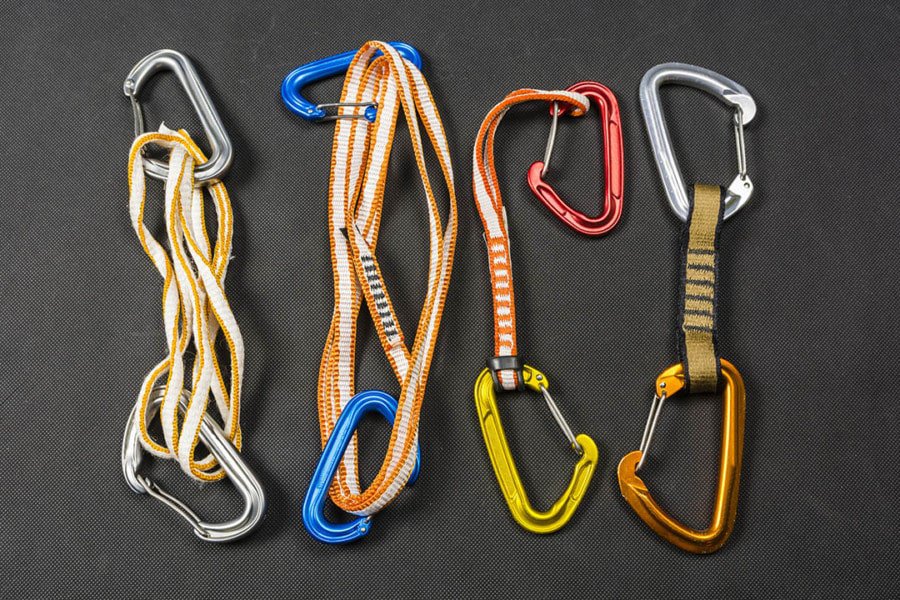
Trad draws are lighter than a typical sport quickdraw. The dogbone (the nylon material between the two carabiners) is thinner, and it’s sometimes swapped for a sling. Most trad draws run wire gate carabiners, though you’ll also find some light solid gate options.
Since trad climbers haul a full rack of nuts and cams, lighter quickdraws make the day more enjoyable and take real weight off your waist or chest. If keeping all that gear organized at home is the next problem, here are 23 storage ideas for your climbing gear.
Table of Contents:
- Quickdraws for Trad Climbing
- The Difference Between Alpine and Trad Quickdraws
- Alpine Quickdraws Overview
- Table Comparing Common Trad and Alpine Quickdraws
Quickdraws for Trad Climbing
Quickdraws for trad climbing use a thin dogbone (the nylon material between each carabiner) and usually run wire gate carabiners instead of solid gate biners.
Because the dogbone is thinner, it takes up a little less room on your harness, which leaves more space for the cams or nuts you’d rather be carrying.
When to use trad quickdraws
Reach for trad quickdraws whenever the route keeps going up in a fairly straight line. Plenty of routes wander off to the side, and that’s when you want an alpine draw instead.
Use trad draws when you want the carabiner to stay put, since they have an extra piece of rubber on one end of the dogbone (called a rubber container) that holds it in position.
Keeping the draw in position stops your biners (that’s climber slang for carabiners) from working their way loose on your gear while you climb. It also reminds you which carabiner is the rope side and which is the gear side.
Gear isn’t as rough as a bolt, but a carabiner rubbing against the edge of your protection still wears on it over time. Any wear on the carabiner can then damage the rope if the two rub together, so keeping the gear side separate from the rope side helps your rope last longer. If you’re still getting comfortable trusting your placements, it’s worth reading whether falling on cams and nuts is dangerous and how to place gear safely.
How many trad quickdraws should you carry?
Most routes call for 10 to 12 quickdraws. That number shifts with how often you place gear and how long the route is.
Most guidebooks give you a recommendation, but if you’re newer to trad climbing you’ll probably want more, since you’ll tend to place gear more often.
How much do trad quickdraws cost?
Trad quickdraws cost 11 to 30 dollars each. The price mostly comes down to the weight and the nose design of the carabiner.
Some wire gate carabiners have a specialized nose where the wire gate closes, which keeps the rope from snagging when you clean the draw. Those specialized noses usually add 10 to 15 dollars.
Can you make your own trad quickdraws?
You can buy everything to build your own trad quickdraws, but you’ll usually spend 5 to 10 dollars more per draw doing it that way. So most people buy the draws pre-made, then swap out the biners or the dogbone later if something needs replacing or they want to upgrade.
How much do trad quickdraws weigh?
| DMM Alpha Trad Quickdraw | Mad Rock Concorde Express Quickdraw | Cypher Firefly II Quickdraw | |
| Weight | 2.7 oz | 3.06 oz | 2.61 oz |
Trad draws typically weigh 2.5 oz to 3.5 oz. Most of that weight is the carabiner itself, since some have a wider gate opening than the smaller, pricier ones.
What is the difference between alpine and trad quickdraws?
The main difference is what holds the two carabiners together. Alpine draws use a sling, while trad draws use a thin dogbone with a rubber container on one end. It’s worth carrying both, because most days out you’ll end up needing each of them at some point.
Alpine Quickdraws
Alpine quickdraws are draws that swap the nylon dogbone for a sling. The upside of a sling is that you can extend the draw.
Extending your draws matters any time the route doesn’t run straight up and down. When you extend a draw with a sling on a sideways section, your rope stays straighter and you cut down on the dangers that come with falling on gear.
You can buy wire gates and slings separately, but you’ll usually save money buying an alpine quickdraw as a set.
When to use alpine quickdraws
Since the whole point of an alpine draw is the extension, pull one out when you expect the route to move sideways. The rest of the time, your standard trad quickdraw is the better call.
How many alpine quickdraws should you carry?
Carrying 2 to 4 alpine draws will cover the twists and turns on most routes. The exact number depends on the route.
Lots of guidebooks show the typical line, so you can see how much the climb wanders side to side and estimate how many you’ll need before you hop on.
Even so, it’s smart to bring a couple extra in case you end up climbing a different way than you planned.
How much do alpine quickdraws cost?
Alpine quickdraws average about 20 dollars per draw. Most sell in packs of three or more, and only a few brands sell them one at a time.
Cost mostly tracks with weight and the extension length.
Can you make your own alpine quickdraws?
An alpine quickdraw is just two wire gate carabiners on a sling, so you can absolutely build your own.
A sling runs 8 to 30 dollars depending on the length, and carabiners run 6 to 15 dollars each. That means building your own comes out to 20 to 60 dollars each.
Because of that, you usually get more length for less money buying them pre-made. You can always replace parts of the draw down the road instead of buying brand new ones.
How much do alpine quickdraws weigh?
| Trango Phase Alpine Draw | Black Diamond MiniWire Alpine Quickdraw | Cypher Ceres II Alpine Quickdraw | |
| Weight | 2.8 oz | 2.29 oz | 2.68 oz |
Alpine quickdraws weigh 2.3 oz to 3.0 oz. Weight usually drives the price here too, and the lighter the draw, the more it tends to cost.
Table Comparing Common Trad and Alpine Quickdraws
There are so many brands and quickdraw options for both trad and alpine draws that I put together this table comparing some of the most common ones available in the states.
| Trango Phase Alpine Draw 4-Pack | Black Diamond MiniWire Alpine Quickdraw 3-Pack | Cypher Ceres II Alpine Quickdraw 1-Pack | DMM Alpha Trad Quickdraw 6-Pack | Mad Rock Concorde Express Quickdraw Set 6-Pack | Cypher Firefly II Quickdraw 6-Pack | |
| Weight | 2.8 oz | 2.29oz | 2.68 oz | 2.7 oz | 3.06 oz | 2.61 |
| Carabiner | Wiregate | Wiregate | Wiregate | Wiregate | Wiregate | Wiregate |
| dogbone | Sling | Sling | Sling | Dog Bone | Dog Bone | Dog Bone |
| Sling Length | 60cm | 60cm | 60cm | NA | NA | NA |
| Link for more details | Backcountry | Backcountry REI |
Backcountry | Backcountry | Backcountry | Backcountry |
Dialing in your rack is one of those climbing skills that pays off every day out. If you want more gear and technique tips like this, join the free Send Edition newsletter and you’ll get one quick climbing drill in your inbox each week, about 15 minutes, no fluff.
Frequently asked questions
What is the difference between trad and alpine quickdraws?
Trad quickdraws use a thin dogbone with a rubber container on one end that keeps the carabiner in position. Alpine quickdraws replace that dogbone with a sling so you can extend the draw, which keeps your rope straighter when a route wanders sideways.
How many quickdraws do you need for trad climbing?
Most routes call for 10 to 12 trad quickdraws, plus 2 to 4 alpine draws for the sideways sections. Newer trad climbers usually want a few extra, since they tend to place gear more often.
How much do trad quickdraws cost?
Trad quickdraws run 11 to 30 dollars each, mostly depending on weight and nose design. A specialized nose that keeps the rope from snagging usually adds 10 to 15 dollars. Alpine draws average around 20 dollars per draw and often sell in packs.
Should you make your own quickdraws?
You can build your own, but it’s usually cheaper and simpler to buy them pre-made. Homemade trad draws tend to cost 5 to 10 dollars more per draw, and homemade alpine draws land around 20 to 60 dollars each. Buying pre-made and replacing parts later is the easier route.
How much do trad quickdraws weigh?
Trad quickdraws typically weigh 2.5 oz to 3.5 oz, and alpine quickdraws weigh 2.3 oz to 3.0 oz. Most of the weight is the carabiner, so lighter draws usually cost more.