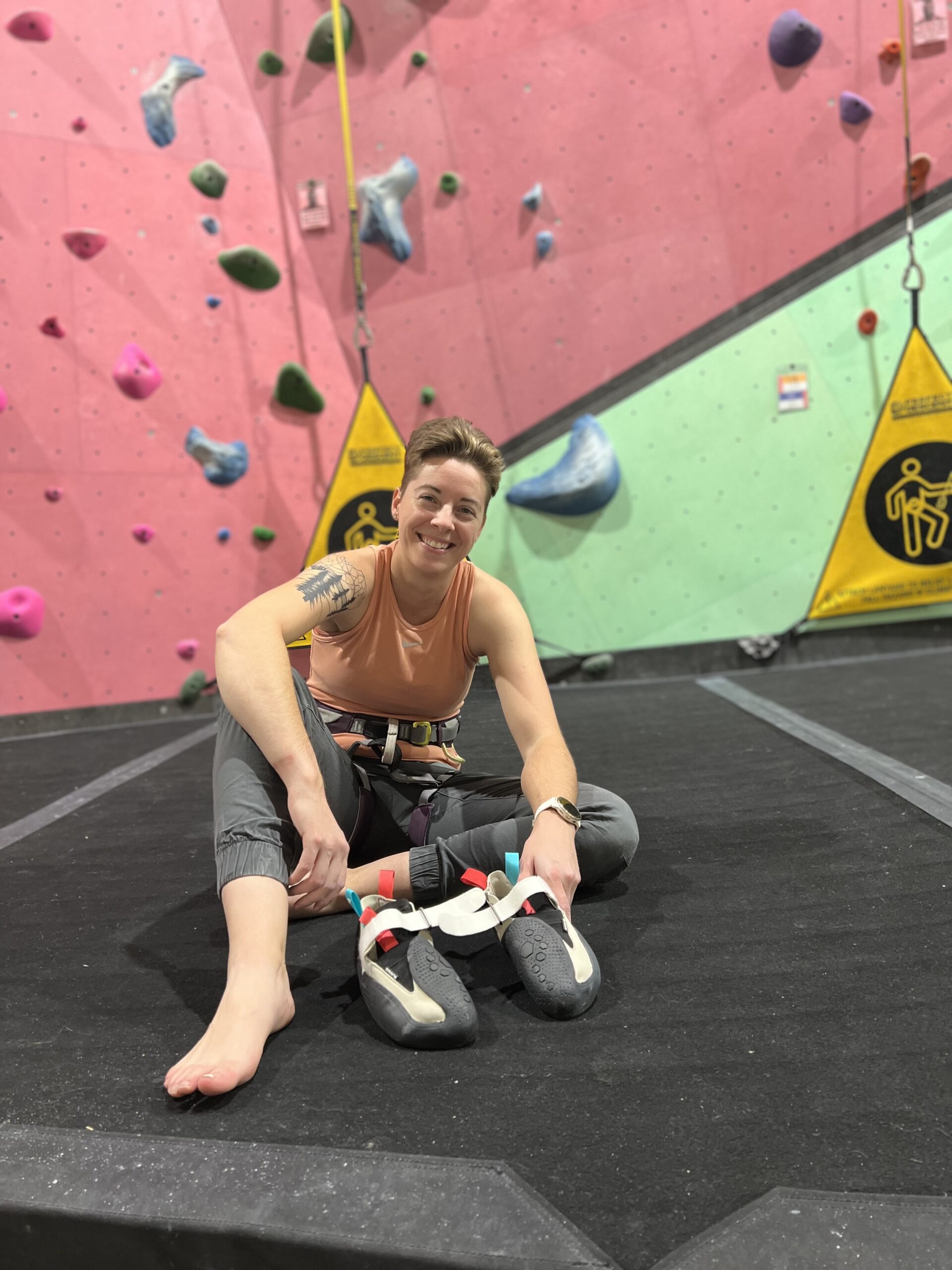
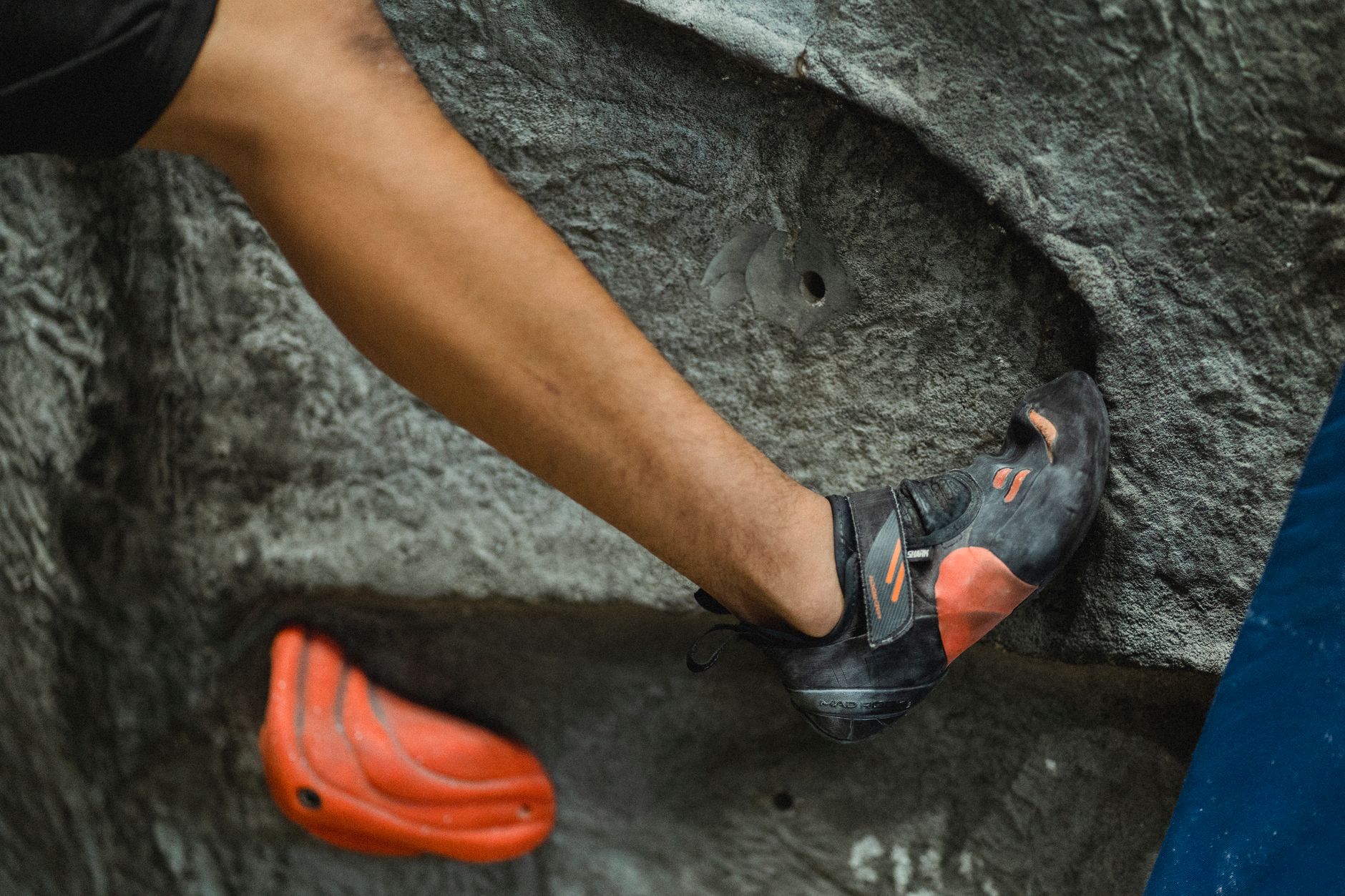
You pull onto a slab problem at the gym, trust a smear with your left foot, and watch it skate off the wall like the rubber never touched it. Ten minutes later you watch the climber next to you stick the exact same smear without blinking. Most of the time that gap comes from the shoes on your feet and whether you understand how to use them.
Bouldering shoes do a specific job: short, powerful problems with heel hooks, toe hooks, steep overhangs, and precise edges, rather than the all-day comfort a multi-pitch shoe needs. Getting the fit, rubber, and shape right changes how much you can trust your feet on small holds, and knowing how to break them in and care for them changes how long that performance lasts.
What makes bouldering shoes different
Bouldering shoes run tighter and more aggressive than a typical all-day climbing shoe. Expect a downturned shape that points your toes down and forward, a snugger fit with less dead space around the heel and toe box, and sticky rubber built for edging and smearing rather than long days of walking between pitches. The tradeoff is comfort. A shoe that performs well on a steep boulder problem usually feels tight the moment you put it on, and that’s by design, not a fit mistake.
Choosing bouldering shoes that fit how you climb
The keyword most people search is just “bouldering shoes,” but the decision tree underneath that search comes down to three things: sizing, rubber, and shape.
Sizing
Your toes should sit at the front of the shoe with a slight curl, not flat and not crushed into a claw. Beginners usually size down less than they think they need to. A shoe that’s painful to stand in for more than a few minutes distracts you from the hold instead of helping your footwork. Climbers who’ve been at it a year or two can usually handle a tighter, more downturned fit because their foot placement has gotten precise enough to use that extra sensitivity.
Rubber
Softer rubber compounds grip better on smears and small edges, but they wear down faster. Firmer rubber lasts longer and edges well on steep, small footholds, but it gives up some of that sticky feel on slab and volume. I’ve worn a lot of climbing shoes across different brands, and the shoes I wore out fastest were almost always the more affordable beginner pairs around the $100 mark. They tended to be firm, neutral shoes with thicker, less expensive rubber, and that rubber wore down fast. It felt like sanding away a firm material every session.
At first I wouldn’t have recommended the cheapest shoes for that reason. But there’s another side to it. When you’re a beginner, your foot placement usually isn’t precise yet. You drag your toes, scrape the wall, and wear through rubber no matter what you buy. There’s a real argument for starting with an affordable pair, knowing you might wear it out, rather than wearing out something far more expensive while you’re still learning where to place your feet.
Once your footwork gets more precise, that’s when I’d start looking at stickier, softer rubber. For me, that’s when spending more makes sense. Softer rubber’s value is the performance it gives once your footwork can use it, not extra durability.
Shape
Flat, neutral shoes suit vertical walls, slab, and long gym sessions where you’re on your feet for hours. Moderately downturned shoes handle steep bouldering and overhangs while staying wearable for a whole session. Aggressive, heavily downturned shoes concentrate power into the big toe for steep, technical problems, but they’re hard to stand in comfortably for long stretches and work best for short, focused burns on your project.
Breaking in bouldering shoes
New sticky rubber needs a handful of sessions before it grips the way it will for the rest of its life. Climb easier, familiar problems in a new pair before you take it onto your project, and avoid breaking in a new pair of aggressive shoes on your hardest moves. Leather uppers stretch and mold to your foot over the first few weeks, so a pair that feels snug out of the box often loosens slightly within the toe box after regular use. Synthetic uppers stretch far less, which is worth knowing if you’re choosing between the two.
Caring for bouldering shoes between sessions
Heat and sweat both soften rubber temporarily and speed up wear, so pull your shoes off between burns instead of leaving them on while you rest or chat with your crew. Let them air out fully after a session rather than stuffing them straight into a closed gym bag, since trapped moisture breaks down rubber and glue faster. Keep them out of direct sun or a hot car, which can warp the shape over time. If you climb outside on wet or sandy rock, wipe the soles before stepping back onto gym mats; grit works into rubber the same way it works into a crash pad and dulls your edges faster than normal wear.
Watch the rubber at the big toe and the edge you use most for heel hooks. Once you can see fabric or rand showing through, it’s worth getting the shoe resoled rather than waiting for a hole. A resole costs a fraction of a new pair and brings back most of the original edging performance.
Try this at your next gym session
Before you buy a new pair, or right after you break one in, run this quick check at the gym:
- Pick three problems you’ve already climbed: one slab, one vertical, one overhang.
- Climb each one again and pay attention only to your feet. Notice where the shoe grips and where it skates.
- On the overhang, try a heel hook and a toe hook back to back. A good bouldering shoe holds both without you fighting to keep your foot locked on.
- Stand on a small edge for ten seconds. If your toes go numb before the ten seconds are up, size up half a size next time.
- Check your big toe rubber after the session. Fresh wear in one spot tells you where you’re dragging your foot instead of placing it.
Next session, check whether that smear you used to skate on holds now, and whether your toe knuckle still aches by the third problem. Both tell you if the fit and rubber are working for the way you climb.
Mistakes climbers make with bouldering shoes
- Buying a size based on street shoe size instead of trying the shoe on and checking toe curl.
- Jumping straight into an aggressive, downturned shoe before footwork is precise enough to use it.
- Leaving shoes on between every attempt on a problem, which cooks the rubber in gym heat.
- Ignoring a worn big toe edge until it’s gone, instead of resoling early.
- Choosing rubber based on brand reputation alone instead of the compound and the terrain it’s meant for.
Dialing in fit and rubber matters, but it only pays off if your foot placement is precise enough to use it. Drills that sharpen where and how you place your feet, like the ones in a proper warmup routine or work on drop knee positioning, help you get more out of whatever shoe is on your foot.
Keep going
FAQ
How tight should bouldering shoes fit?
Your toes should sit at the front of the shoe with a slight curl, with no dead space around the heel or toe box. Beginners can go snug without going painful; climbers with more experience and precise footwork often go tighter and more downturned because they can use that extra sensitivity on small holds.
Do I need downturned shoes as a beginner?
Not right away. A flat or moderately downturned shoe handles most gym bouldering, vertical walls, and slab while staying comfortable enough to climb in for a full session. Save the aggressive, heavily downturned pairs for steep problems once your footwork is more precise.
Budget bouldering shoes usually use firmer, thicker rubber that lasts longer but grips less on smears and small edges. Premium pairs use softer, stickier rubber compounds that perform better once your footwork is precise, at the cost of wearing down faster.
How often should bouldering shoes be resoled?
It depends on how often you climb and how clean your footwork is, but a worn patch showing fabric or rand at the big toe is the signal to get a resole rather than waiting for a hole to form.
Should bouldering shoes feel painful?
No. Snug and precise is the goal, not sharp pain. If you can’t think about the move because your foot hurts, size up slightly or try a different last shape.