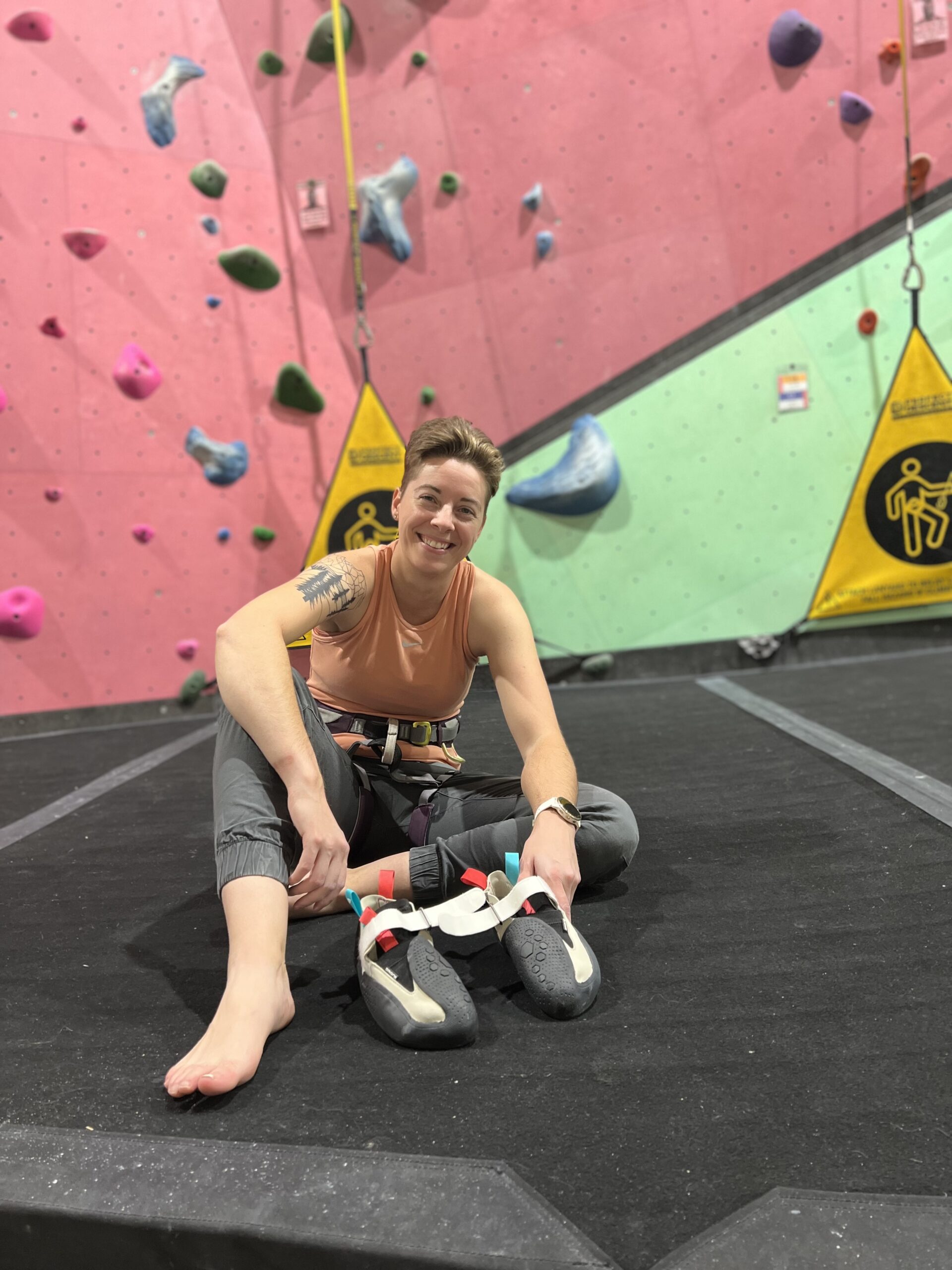
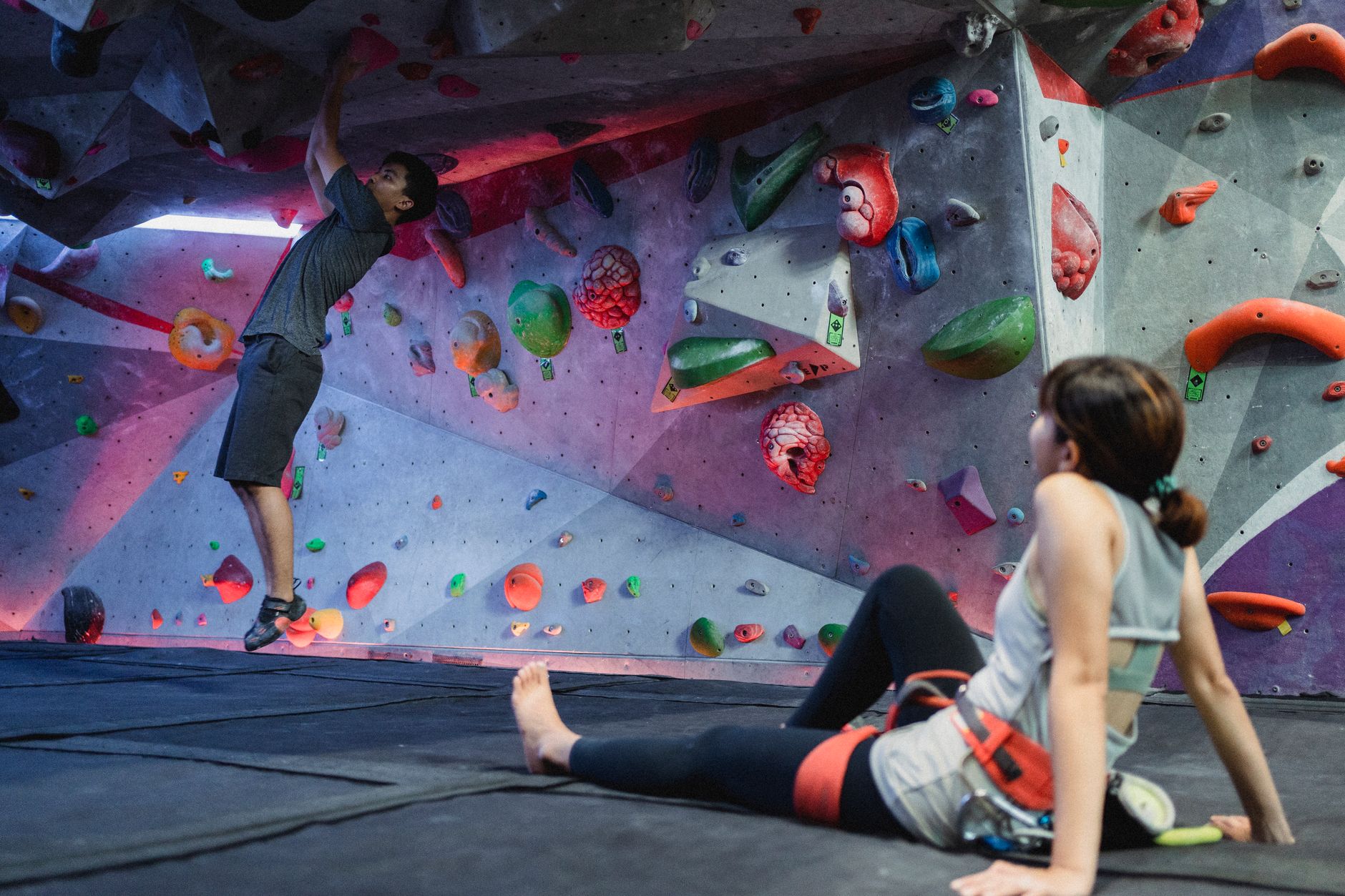
If your climbing warmup is just a couple of arm swings before you hop on your project, you are leaving movement and headspace cold. I used to do that so I would feel fresh. Then I learned my legs, hips, shoulders, forearms, and tendons needed real attention if I wanted to move well on the wall. Spending time warming up my legs and hips lets me move with more flexibility and strength than when I climb cold.
The biggest shift: a climbing warmup isn’t only blood flow. It’s also dialing in technique and focus before you start trying hard. Easy climbing plus a few body-position drills (like Hover Hands) wakes up the patterns you will need for the rest of the session. When I include those drills in my warmup, I have better body position on the rest of the climbs I do.
Why Climbers Need a Warmup
Climbing asks a lot from your body in ways that are different from running or lifting. You are loading tendons and pulleys, stretching into high steps, twisting through your hips, and gripping holds in positions that don’t show up in daily life. If you jump straight onto hard problems, your tissues aren’t ready for that load and your movement feels clunky.
A warmup increases blood flow to your muscles and tendons, raises your core temperature, and primes your nervous system for the coordination climbing demands. It also gives you a chance to rehearse movement patterns before you need them on harder climbs. When I skip the warmup, my footwork is sloppy and my hips feel locked up. When I take the time, I climb smoother and feel more confident.
What a Good Climbing Warmup Routine Looks Like
The best climbing warmup routine has three parts: general movement to raise your heart rate and loosen up your joints, specific climbing movement on easy terrain, and drills or focus areas that match what you are working on that session.
General Movement
Start with 5 to 10 minutes of light movement to get your blood flowing and your joints moving through their range of motion. This doesn’t need to be complicated. Arm circles, leg swings, hip rotations, and a few bodyweight squats work well. I also like walking lunges and some light torso twists to wake up my hips and core.
If you are warming up for outdoor climbing, the approach hike often covers this. If you are at the gym, a few minutes on easy terrain or some dynamic stretching will do the job. The goal is to feel warm and loose, not tired.
Easy Climbing
Once you are moving, get on the wall. Start with climbs that are well below your limit, at least three or four grades easier than what you plan to project. Climb slowly and focus on smooth, controlled movement. This is where you rehearse good technique before you need it on harder problems.
I usually do 3 to 5 easy problems or routes, gradually increasing the difficulty. On each one, I pay attention to my footwork, keeping my hips close to the wall, and using straight arms. This isn’t about getting pumped. It’s about waking up the movement patterns you will need later.
At home, I use the Project Board to run through easy traverses on the jugs and slopers. The variety of hold types lets me warm up my grip without overloading my fingers. I can also practice lockoffs and body positioning without needing a full wall.
Drills and Focus Areas
After a few easy climbs, add drills that match what you are working on. If you are focusing on footwork, climb a few problems with quiet feet or hover your hands before you grab each hold. If you are working on body position, try drills like tripod positioning or hip turns.
Sessions where I include body position drills as part of my warmup, I have better body position on the rest of the climbs I do. The drills prime my brain to notice and correct positioning issues before they turn into bad habits.
If you are working on a specific project, you can also use your warmup to rehearse sequences or beta. Climb similar moves on easier problems to get your body ready for the style you will be working on.
How Long Should You Warm Up for Rock Climbing?
Most climbers need 15 to 30 minutes to feel fully warmed up. If you are older, climbing outside in cold weather, or working on a hard project, you might need closer to 30 or 40 minutes. If you are young, climbing indoors, and just doing moderate routes, 15 minutes might be enough.
The key is to listen to your body. You should feel warm, loose, and ready to try hard. Your fingers should feel responsive, not stiff. Your hips and shoulders should move freely. If you still feel tight or awkward, spend a few more minutes on easy terrain.
Adjusting for Conditions
Cold weather, early morning sessions, and outdoor climbing all require longer warmups. Your tendons and muscles need more time to reach working temperature when it’s cold. If you are climbing outside and it’s chilly, add a few extra easy pitches or problems before you start pushing your grade.
Heat and humidity can also affect your warmup. You might feel loose faster, but you will also get pumped more quickly. In hot conditions, keep your warmup shorter and focus on staying hydrated.
Common Warmup Mistakes
Skipping the warmup entirely is the most obvious mistake, but there are a few others that trip climbers up.
Climbing Too Hard Too Soon
Jumping onto your project after one or two easy problems doesn’t give your body enough time to prepare. You will feel stiff, your movement will be off, and you are more likely to tweak a finger or shoulder. Build up gradually.
Only Warming Up Your Arms
Climbers often focus on their fingers and forearms and ignore their legs, hips, and core. But climbing is a full-body activity. When I started warming up my legs and hips, I noticed a huge difference in my flexibility and power on the wall. Don’t skip the lower body.
Getting Pumped During the Warmup
Your warmup should leave you feeling ready to climb, not tired. If you are getting pumped or breathing hard, you are climbing too hard or doing too much volume. Dial it back and save your energy for your working sets.
Rushing Through It
A warmup isn’t just a box to check. It’s part of your session. If you rush through it, you will miss the benefits. Take your time, focus on quality movement, and use it as a chance to get your head in the game.
Sample Climbing Warm Up Routine
Here is a simple routine you can use at the gym or the crag:
- 5 minutes: General movement. Arm circles, leg swings, hip rotations, bodyweight squats, and walking lunges.
- 10 to 15 minutes: Easy climbing. 3 to 5 problems or routes, starting very easy and gradually increasing difficulty. Focus on smooth footwork, quiet feet, and straight arms.
- 5 to 10 minutes: Drills or focus areas. Pick one or two drills that match what you are working on. Examples: hover hands for body position, silent feet for footwork precision, or smearing drills if you are working on slab.
- Optional: Rehearse beta for your project on easier terrain or visualize sequences while resting.
Adjust the timing based on how you feel. If you are still tight after 20 minutes, add a few more easy problems. If you feel great after 15, you are ready to start working.
Why the Metolius Project Board Works for Warmups
The Metolius Project Board isn’t a replacement for climbing on a full wall, but it gives you a compact way to warm up your fingers, shoulders, and core when you are at home or traveling. The board has jugs, edges, slopers, and pinches, so you can run through different grip types without overloading any one position.
I use it for easy traverses and lockoff drills before I head to the gym. The variety of holds lets me rehearse body positioning and grip transitions without needing a full setup. It mounts easily on a doorframe or wall, and the wood texture feels similar to what you get on a climbing wall.
One limitation: the board doesn’t have feet, so you can’t practice footwork or full-body movement. It’s best for finger warmups, shoulder activation, and upper-body drills. If you want a full warmup, you will still need to get on a wall. But for days when you are short on time or don’t have access to a gym, the Project Board gets your fingers and shoulders ready to climb.
What to Notice After Your Warmup
You should feel warm, loose, and mentally focused. Your fingers should feel responsive when you grip holds. Your hips and shoulders should move freely. Your footwork should feel precise and controlled.
If you still feel stiff or your movement feels awkward, spend a few more minutes on easy terrain. If you feel pumped or tired, you did too much. Adjust for your next session.
Frequently Asked Questions
What is the best climbing warmup routine?
The best climbing warmup routine includes general movement to raise your heart rate and loosen your joints, easy climbing on terrain well below your limit to rehearse good technique, and drills or focus areas that match what you are working on that session. Most climbers need 15 to 30 minutes to feel fully warmed up. Start with arm circles, leg swings, and hip rotations, then climb 3 to 5 easy problems with a focus on smooth footwork and body position. Finish with drills like hover hands or quiet feet to prime your movement patterns before you start trying hard.
How long should I warm up before climbing?
Most climbers need 15 to 30 minutes to feel fully warmed up. If you are older, climbing outside in cold weather, or working on a hard project, you might need 30 to 40 minutes. If you are young, climbing indoors, and doing moderate routes, 15 minutes might be enough. Listen to your body and adjust based on how you feel.
Should I stretch before climbing?
Dynamic stretching, like leg swings and arm circles, is helpful during your warmup because it increases blood flow and range of motion. Static stretching, where you hold a stretch for 30 seconds or more, is better saved for after your session. Static stretching before climbing can temporarily reduce power and make your muscles feel less responsive.
Can I skip the warmup if I am short on time?
Skipping the warmup increases your risk of injury and makes your climbing feel worse. If you are short on time, do a shorter warmup instead of skipping it entirely. Even 10 minutes of easy climbing and a couple of drills will help you move better and feel more prepared.
What should I do if I feel tight after warming up?
If you still feel tight after 20 or 30 minutes, spend a few more minutes on easy terrain. Focus on moves that stretch the areas that feel stiff. High steps, wide reaches, and hip rotations can help loosen up your lower body. If you are climbing outside in cold weather, add an extra layer and keep moving between attempts to stay warm.
Do I need to warm up differently for bouldering versus rope climbing?
The principles are the same, but bouldering warmups are often shorter because the climbs are shorter and more powerful. Rope climbers might need a longer warmup to prepare for sustained movement and endurance. If you are bouldering, focus on explosive moves and powerful sequences during your warmup. If you are rope climbing, add a few longer easy routes to build endurance.
Should I warm up my fingers separately?
Your fingers will warm up naturally as you climb easy problems. You don’t need to do finger-specific drills unless you are working on a project that demands a lot of finger strength. If you do want to warm up your fingers, use large holds and avoid crimping hard until you are fully warmed up. Tendons and pulleys take longer to warm up than muscles, so be patient.