You’re three moves into a problem that looked easy from the ground, and now your arms are cooked and your feet are skating off every smear. The holds haven’t changed. Your indoor climbing technique has run out before your grip did, and that’s the moment most gym climbers start blaming strength when the real fix is almost always in the feet, hips, and eyes.
Indoor climbing technique is different from outdoor rock in a few small but real ways: the holds are more uniform, the angles are often steeper for the grade, and the route setter has already decided where your hands and feet should go. That means the gym is actually the best place to drill movement, because you can repeat the same sequence five times in a row and feel what changes when you fix one thing.
Indoor climbing technique starts with your feet
Watch any climber who looks smooth on plastic and you’ll notice their eyes drop to their feet before every move. New climbers tend to look up at the next hand hold and stab a foot wherever it lands. That costs you precision and it costs you the chance to use your foot placement to set your hips.
Try this on your next warmup lap: place each foot deliberately on the exact edge or smear point you picked, not just somewhere close. Weight it fully before you move your hand. If a foothold feels greasy or small, resist the urge to muscle through with your arms and instead adjust your hips over that foot so more of your weight transfers down through your leg.
A simple drill for this is Quiet Feet: climb an easy route and place each foot as quietly as possible, no stomping, no scraping. It forces control instead of momentum, and you’ll notice pretty fast which foot you’re being sloppy with.
Use your hips, not just your arms
For me, the biggest technique unlock was the drop knee. I used to struggle with reach. I have long legs, but it felt like they were getting in the way and preventing me from reaching holds.
Then I learned about drop knees and twisting my hips in. All of a sudden, my long legs became an advantage. Holds that had seemed impossibly far away were now easily within reach. Instead of relying so much on my arms, I could use my core strength, which mattered because my core can last a lot longer than my arms can.
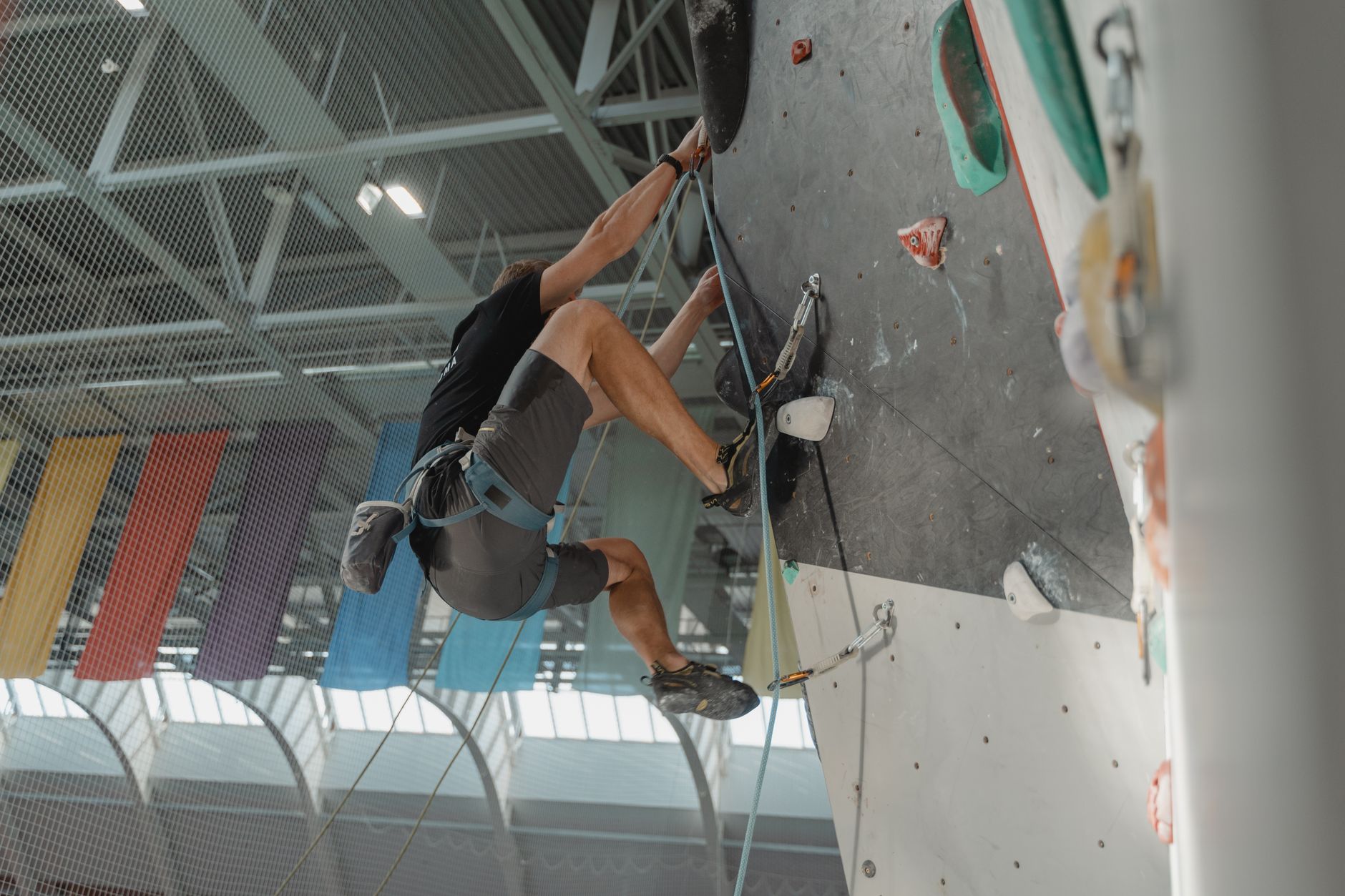
A drop knee works by rotating your hip and knee inward on a foothold, which turns your body sideways into the wall and lets you reach past a hold that felt out of range when you were squared up. It’s one of the most useful indoor climbing technique moves to drill specifically, because gym setters love building steep problems around it. If you want the full breakdown of how to set it up and when it fits, we’ve got a dedicated piece on drop knee climbing and another on drop knee rock climbing with more detail on the hip rotation.
Read the wall before you touch it
A lot of gym climbers start climbing before they’ve actually looked at the whole problem. Stand at the base and trace the line with your eyes first. Note which holds look like they’re meant for hands versus feet (texture and shape usually give it away), and look for the one move that seems hardest, the crux, so you’re not surprised by it halfway up.
Route reading matters more indoors than most people think, because setters build in sequences on purpose. If a hold is turned a certain direction, it’s usually a hint about which way your body should be facing when you grab it. Spend ten seconds reading before you climb and you’ll fall off less from surprise and more from genuine limit.
Gear habits that support your technique
Good technique still needs the right setup. Chalk up before your hands need it, not after they’re already slick. A light, even coat on the pads of your fingers works better than a thick cake of chalk that just flakes onto the holds and makes them greasier for the next climber.
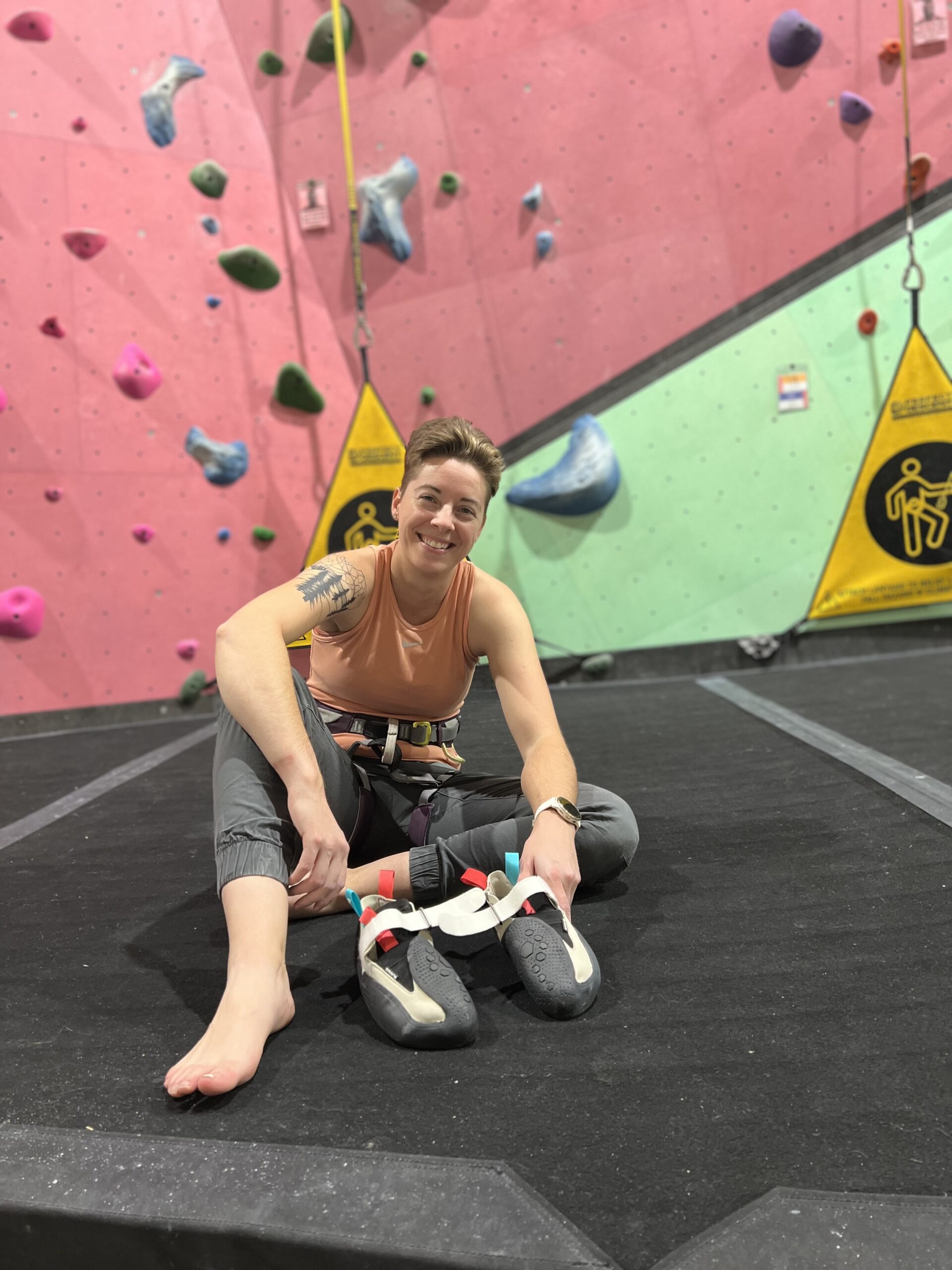
Shoe fit changes your footwork more than people expect. A shoe that’s too loose won’t let you trust small edges or smears, so you’ll instinctively overgrip with your hands to compensate. If you’re still breaking in a beginner pair, check out our guide to bouldering shoes for fit pointers that affect how precise your footwork can be.
If you climb on ropes indoors, your belayer’s attentiveness is part of your technique too. Climbing confidently through a committing move depends on trusting the catch, so take the extra minute to communicate with your belayer about where you expect to fall before you commit to a hard sequence.
Warm up the movement, not just the muscle
Technique breaks down fastest when you’re cold. Spend your first few routes on easy terrain focused purely on footwork and hip position rather than grabbing the hardest thing on the wall right away. A proper climbing warmup primes the exact movement patterns you’re about to ask your body to repeat, which means fewer sloppy foot placements once you get to your project.
Mistakes to watch for
- Looking at your hands instead of your feet. Your eyes should lead your feet to the next placement before your hand ever moves.
- Climbing square to the wall on steep terrain. Turning a hip in (the drop knee setup) gets you closer to the wall and extends your reach.
- Skipping the read. Climbers who start moving before tracing the whole route end up making decisions mid-crux instead of before it.
- Overchalking. A thin, even layer beats a thick cake that just coats the holds.
- Cold starts. Jumping straight to your project skips the chance to groove footwork on easy terrain first.
Frequently asked questions
What is the most important indoor climbing technique for beginners?
Footwork. Placing each foot deliberately and trusting it before you move your hands fixes more problems than any single strength gain, especially on vertical to slightly overhung gym walls.
How do I stop getting pumped so fast indoors?
Check your grip tension between moves. Many climbers hold holds tighter than the move requires, especially jugs, which burns forearm strength before the crux even arrives. Shake out on good holds when you can and let your hips and feet do more of the work.
Does shoe fit affect my technique?
Yes. A shoe that’s too loose makes small edges and smears feel unstable, which pushes climbers to overgrip with their hands to make up for shaky feet.
Why do I feel stronger outdoors than indoors, or the other way around?
Indoor holds are more uniform and routes are built with intentional sequences, so climbers who rely on route reading and setter patterns can feel strong in the gym and get surprised by the texture and unpredictability of real rock, and vice versa for climbers who learned on rock first.
How much should I warm up before climbing hard indoors?
Give yourself a few easy routes focused on footwork and hip position before touching your project. It primes the same movement patterns you’ll need at your limit.