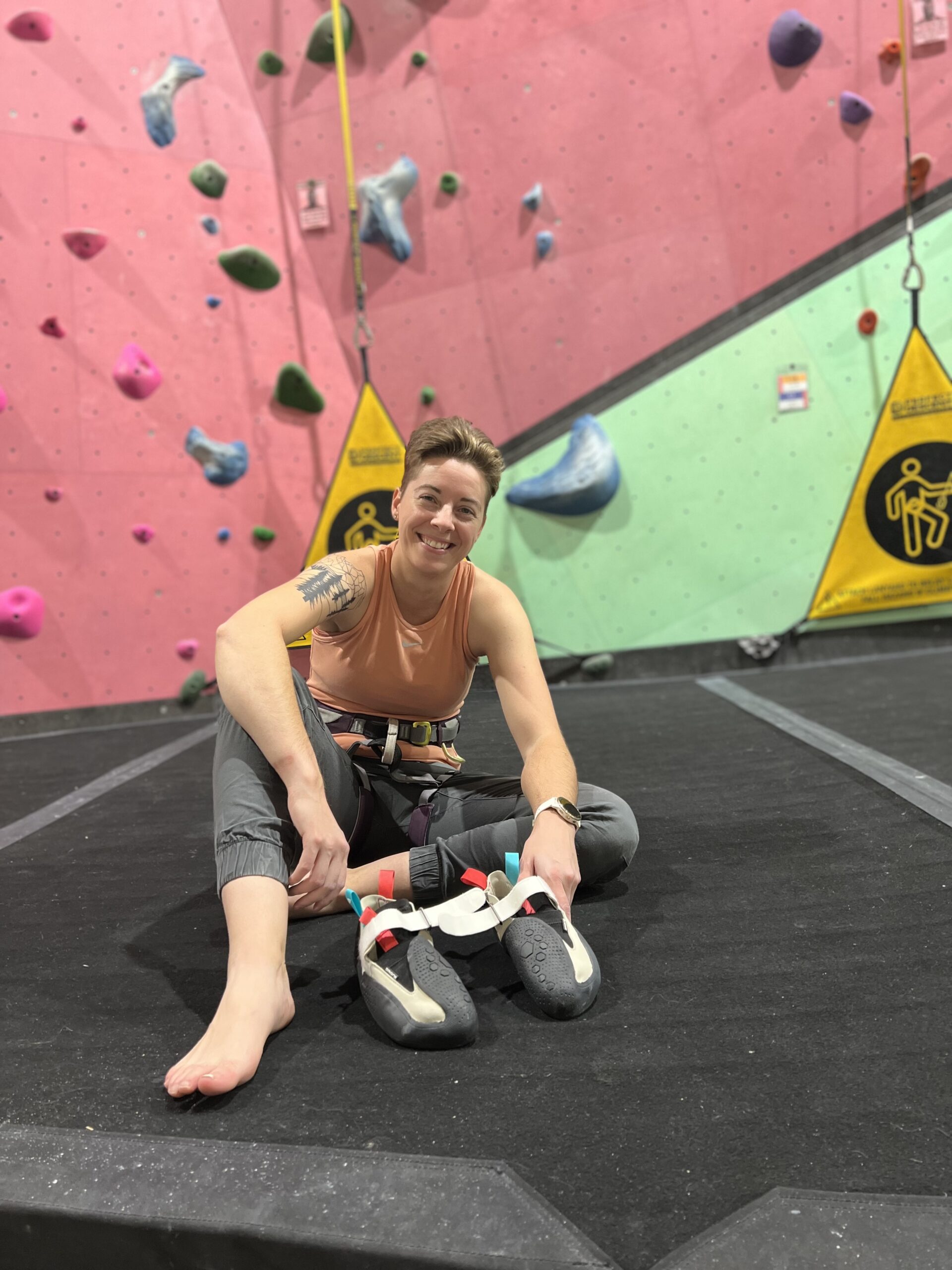
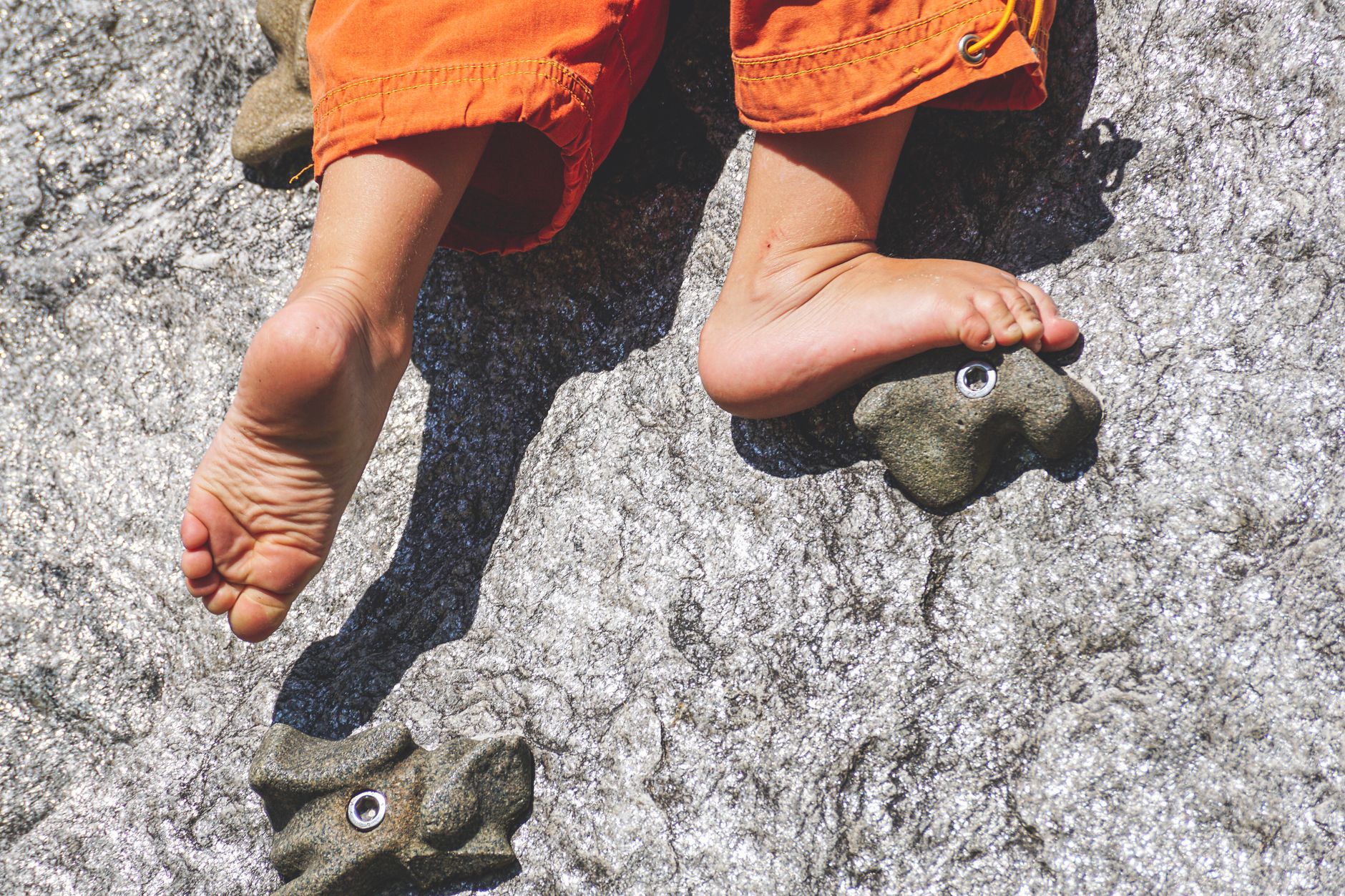
Learning how to use your toes climbing is one of the most fundamental skills you can build, and it’s one of the first things every climber should get a feel for. Where your toes go affects your balance, your reach, how efficient you feel, and how much control you have, and it shows up on nearly every climb no matter the grade or style.
This isn’t about strength. It’s about precision and paying attention to where your foot lands. Once you start placing your toes on purpose, movement feels lighter, more stable, and a lot easier to repeat.
What “using your toes” actually means
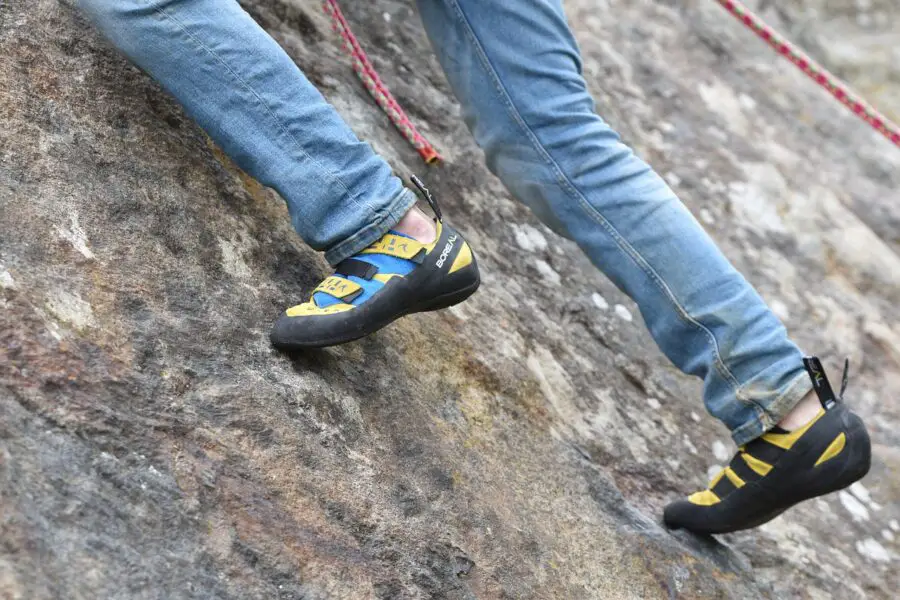
Using your toes means you put only the toe of your climbing shoe on a foothold instead of the middle or the heel of your foot. Most of the time you’re weighting the inside edge of your big toe, though some moves call for the very tip of your toe or the outside edge. It’s the same idea behind a good pair of shoes, and it’s why how tight your climbing shoes should be matters so much for footwork.
Placing your foot this way lets you:
- Pivot and rotate as you move
- Keep precise contact on small footholds
- Adjust your body position without slipping off
Why using your toes matters
Good toe placement improves your balance, your efficiency, and your reach. When your foot is set precisely on the toe, your leg can pivot naturally and your hips can move in closer to the wall, which is where you want them.
Climbers who don’t use their toes tend to:
- Feel wobbly on small footholds
- Lose reach because the heel drops too low
- Burn energy hauling with their arms
Using your toes well shifts the work back to your legs, which is where most of your climbing power should be coming from in the first place. If you want more ways to move off your feet, this pairs nicely with the other footwork ideas in our rundown of 22 climbing techniques and how to do them.
When this technique shows up
Honestly? On nearly every climb. It really stands out when:
- Footholds are small or spread far apart
- You need to adjust your body position mid-move
- You’re trying to gain a bit of extra reach without jumping for it
Even on easy climbs, precise toes set the foundation for the trickier footwork that comes later. It’s a big part of why slab feels doable once it clicks, and you’ll see the same theme in our 23 tips for climbing slabs.
How to use your toes climbing, step by step
Here’s how to put it into practice:
- Watch your feet as you set them on each foothold
- Place only the toe of your shoe on the hold
- Keep your heel light so your foot can still pivot
- Adjust the angle of your foot as your hips move
A lot of coaches teach this by drawing a line on a climber’s shoe to show where the toe zone ends. The point is to build awareness until precise toe placement just happens on its own, without you thinking about it.
If you like getting one small, doable climbing skill to work on each week, that’s exactly what our free newsletter is for. You’ll get short drills you can knock out in about 15 minutes, footwork included. Level up your climbing with 15 minutes of training and we’ll send the next drill straight to your inbox.
Common mistakes with toe use
- Putting too much foot on the hold
- Dropping the heel without meaning to
- Not looking at footholds before you step
- Treating foot placements as “temporary”
These little habits are what lead to slipping, over-gripping, and getting tired way faster than you should.
Where this technique fits in your progression
Using your toes is foundational. It’s essential when you’re starting out, and it stays just as important at every level as footholds get smaller and movement gets more precise. It’s one of those quietly neglected techniques that end up being necessary for V4 to V5 progression.
Most climbers keep refining this one long after their first year on the wall.
Related techniques
- Smearing
- Flagging
- Hip turns
- Tripod position
These work together with your toes to improve balance and foot-driven movement.
How to train this technique
Once you know what using your toes looks like, the next step is practicing it on purpose instead of hoping it shows up.
Once you’ve got the idea down, here’s how to train it.
Frequently asked questions
What does using your toes mean in climbing?
It means placing only the toe of your climbing shoe on a foothold instead of the middle or heel of your foot. Most of the time you’re weighting the inside edge of your big toe, and sometimes the tip or the outside edge, so your foot can pivot and stay precise on small holds.
Why do most climbers use their toes wrong?
The usual culprits are putting too much foot on the hold, letting the heel drop, and not looking at footholds before stepping. Those habits cause slipping, over-gripping, and early fatigue because your weight ends up on your arms instead of your legs.
How do I practice using my toes when climbing?
Watch your feet, place only the toe of your shoe on each hold, keep your heel light so the foot can pivot, and adjust the angle as your hips move. Do it deliberately every session until precise placement becomes automatic.
Is toe placement only for advanced climbers?
No. It’s a foundational skill that matters from your very first climb and stays just as important as footholds get smaller and moves get more precise. Most climbers keep refining it for years.
Does shoe fit affect how you use your toes?
Yes. A shoe that’s too loose lets your foot roll off small holds, so a snug fit helps you feel and trust the toe. See our guide on how tight your climbing shoes should be for the details.
Feet you can trust
Toe placement is one setting among several. The Footwork Precision guide covers placement, heel angle, slab and smearing, and why most foot slips are a hip problem.