You rack up at the base of a sport route, look up at that first bolt sitting eight or ten feet over a flat landing, and your stomach does the thing. Nobody wants to deck from a blown clip four feet off the ground. That’s the exact moment a stick clip earns its keep, and if you climb outside with any regularity, you’ve probably heard climbers argue about which one to carry. The Pongoose stick clip is one of the simplest tools in that conversation, and knowing how to actually use it well matters more than which brand is zip-tied to your harness.
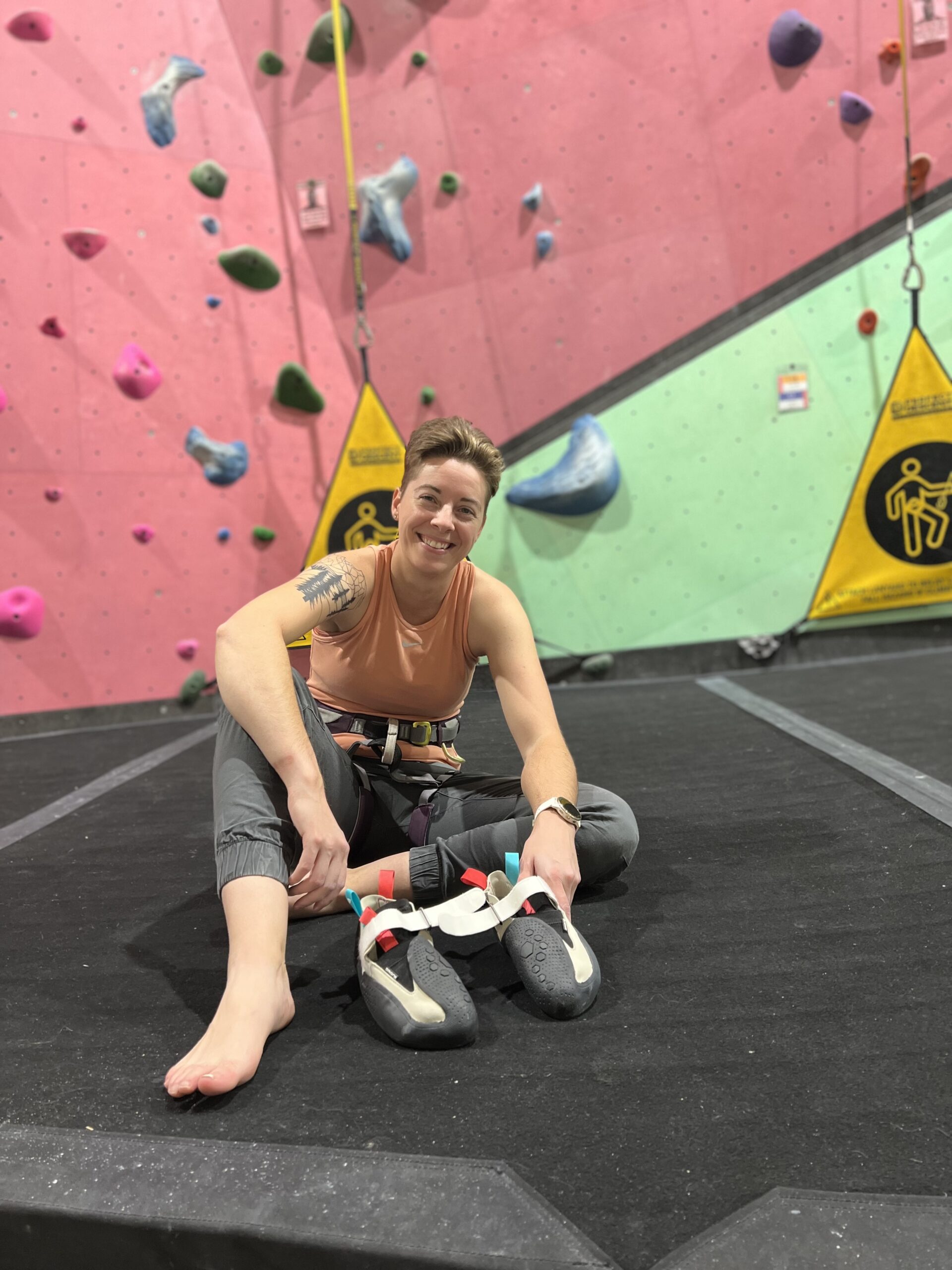
I don’t go climbing outdoors without one. Mine mostly clips the first one or two draws to keep me off the ground, but it’s done more than just keep me safe over the years. A few years back I took my dad climbing with me. He’d been nervous about me climbing outside ever since an accident I had over a decade ago, and he’d say things like “I don’t know if you should go climbing, I don’t want you to get hurt again.” I think a lot of parents feel that way, and as an adult it’s almost harder, because they know you’re going to do it anyway. I didn’t want to pretend I’d stopped, but telling him “we climb safely” never seemed to land. So I brought him out to a session and showed him instead. I showed him how we tie in, how we belay, how the belay device locks up if the rope moves too fast. He already knew tying in and belaying though, so none of that really eased him. It wasn’t until we pulled out the stick clip that he got interested. We showed him how it worked, and even though he wasn’t climbing, he was happy to help clip the high first bolt himself. That’s when he relaxed and actually started enjoying the session with us. He still makes the occasional comment now, but when he does, we bring up the stick clip and he settles down. He’ll probably always carry a little nervousness, but that tool has done more to ease his mind than any explanation ever did.
What a Pongoose stick clip does
A Pongoose stick clip is a lightweight pole with a clamp or notch at the end built to hold a quickdraw steady while you reach up and clip the rope through it from the ground. The design is stripped down on purpose: no trigger, no cord to pull, just a solid holder that keeps the draw oriented while you thread the rope. Fewer moving parts means less to fumble when you’re standing under a route trying to get a clean clip on the first try.
Compare that to something like the Trango Beta Stick Evo, which uses a trigger mechanism and a pull cord so you can clip and unclip the rope from a distance without lowering the pole, or the earlier Trango Beta Stick and Trango stick clip models that work off a similar notch-and-catch idea. The Beta Stick Evo is handy for cleaning a route on lead, since you can unclip draws as you climb past them without pulling rope through by hand. A Pongoose style tool skips that trick. It’s built almost entirely for getting the first clip or two done safely from the ground, and for racking a draw before you leave it, not for remote unclipping mid-climb.
How to use it well
Technique matters more than gear here. A stick clip in clumsy hands still ends up with a flipped gate or a dropped draw.
- Load the draw into the clamp with the rope-side gate facing out and away from the pole, so when you lift it to the bolt the gate is already oriented for a clean clip.
- Run your rope through the bottom carabiner before you lift the pole, not after. Trying to feed rope through once the draw is twelve feet in the air is how you end up flagging and cursing.
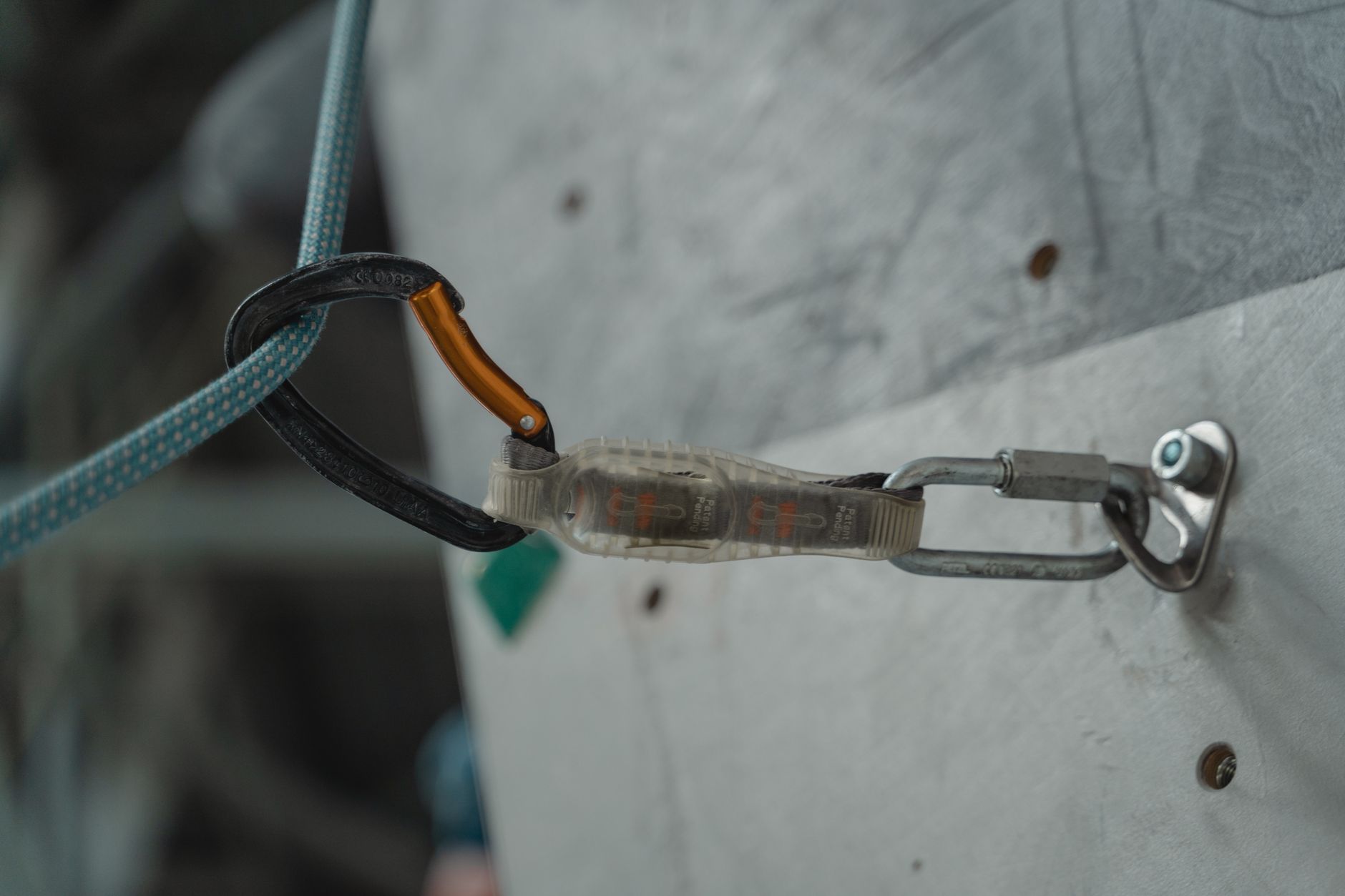
- Clip the top carabiner into the bolt hanger first, then use the pole to seat the rope into the bottom gate. Push, don’t jab. A slow deliberate push seats the gate; a hard jab just bounces the draw off the hanger.
- Keep slight tension on the rope as you clip so it doesn’t flop around and cross-load the gate.
- Once the draw is clipped and the rope is through, give the pole a gentle downward tug to confirm the carabiner is seated on the bolt before you let go of tension.
If you’re clipping a second bolt higher up before you’ve climbed to it (common on routes with a long, exposed first move), the same process applies, you’re just reaching further and fighting more wobble in the pole. Brace the base against your hip or thigh for stability instead of holding it out at full arm’s length.
Common mistakes climbers make with a stick clip
The biggest one is rope orientation. If you thread the rope through the draw backward, you’ll create a twist that makes clipping the second bolt by hand awkward, or worse, you’ll back-clip without realizing it until you’re already above the bolt. Check your rope path before you start climbing, not after you’re ten feet up wondering why it feels wrong.
The second mistake is rushing the lift. People shove the pole upward fast, hoping momentum carries the draw into the hanger. It almost never works and usually ends with the draw swinging loose or falling. Slow and controlled beats fast every time.
The third is forgetting to retrieve the pole. Once that first clip is set, you still need to climb up, unclip the draw from the holder, and stow the stick clip somewhere out of your way, either leaning against the wall, tucked in a pack at the base, or handed off to a belayer. Climbing with it still attached to the draw is how poles get dropped on your belayer’s head.
When to reach for one
Stick clips earn their place on routes with a tall or awkward first bolt, routes you’re projecting and want to skip the ground-fall risk on repeat burns, or routes where the opening moves are the crux and you’d rather save your energy for redpoint attempts instead of spending it fighting to clip from a stance. They’re also just good practice on any route where a fall before the first bolt would mean hitting the ground or a ledge. Nobody’s grading you on style points for skipping one.
If you want a deeper look at stick clip setups and when climbers reach for them, we’ve got a full rundown over at stick clip climbing.
FAQ
What’s the difference between a Pongoose stick clip and a Trango stick clip?
A Pongoose stick clip uses a simple clamp or notch design with no trigger mechanism, built mainly for clipping that first bolt from the ground. Trango’s lineup, including the Trango Beta Stick and Trango Beta Stick Evo, adds a trigger and pull cord so you can also unclip draws remotely while cleaning a route. Both work for the basic job of getting a draw up to a bolt; the Trango Beta Stick Evo just adds extra function for cleaning.
Can you clip and unclip with a Pongoose stick clip?
Clipping, yes, that’s the main job. Unclipping from a distance isn’t what the design is built for since there’s no trigger or remote release. You’d need to climb up and unclip by hand, which is normal for this style of stick clip.
Is it cheating to use a stick clip on a route?
No. Stick clips protect you from ground falls and awkward reaches on the opening moves. Most climbers use one on tall or run-out first bolts, especially while projecting, and plenty of route setters and gyms assume you will.
How do I keep the rope from twisting when I load a draw on the pole?
Thread the rope through the bottom carabiner with the gate facing away from the pole before you lift it, and check that the rope runs straight without a loop around the draw. A quick glance before you start the lift saves you from fighting a twisted clip later.