Climbing with straight arms is one of the most important techniques for conserving energy and climbing efficiently. Instead of pulling with bent elbows, this technique allows climbers to rely more on body positioning and leg movement.
Straight arms appear on nearly every climb and are especially important on longer routes or steep terrain where arm fatigue builds quickly.
What Is the Straight Arms Technique?
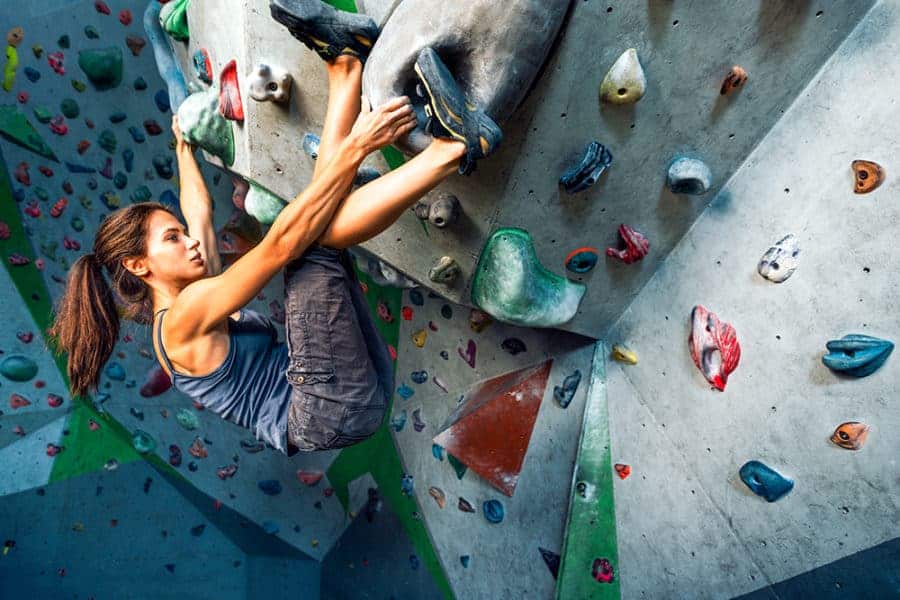
Straight arms refers to climbing with your arms extended rather than constantly pulling with bent elbows. In this position, your skeletal structure supports more of your body weight instead of relying on your arm muscles.
This technique allows climbers to hang more comfortably from holds while preparing for the next movement.
When This Technique Shows Up
Straight arms appear throughout almost every climb, but they become especially important when:
- Climbing overhangs or steep terrain
- Moving between larger holds
- Resting between difficult sequences
- Climbing longer routes where endurance matters
Whenever possible, climbers try to maintain straight arms between movements to reduce fatigue.
How This Technique Is Typically Used During a Climb
During a climb, straight arms are typically used while preparing for the next movement.
Climbers usually:
- Place their feet securely on footholds
- Shift their weight onto their legs
- Allow their arms to remain extended while stabilizing their position
Instead of pulling their body upward with bent arms, climbers push with their legs and move their hips to generate upward movement.
This approach helps preserve energy and keeps the arms fresh for more difficult moves.
Why Straight Arms Matter
Climbing with straight arms dramatically improves efficiency.
When climbers keep their arms straight, they:
- Reduce strain on their forearms
- Delay muscle fatigue
- Improve endurance on longer climbs
- Move more fluidly between positions
Many beginners struggle with overusing their arms, and learning to relax into straight-arm positions is often one of the biggest improvements they can make.
Common Mistakes With Straight Arms
Some common mistakes climbers make with this technique include:
- Climbing with constantly bent elbows
- Pulling upward instead of pushing through the legs
- Holding tension in the arms when resting
- Not trusting footholds enough to shift weight off the arms
These habits often lead to early fatigue and inefficient movement.
Where This Technique Fits in Progression
Straight arms are considered a foundational climbing technique. Beginners benefit greatly from learning it early, and experienced climbers rely on it constantly to maintain endurance on harder climbs.
Even advanced climbers regularly refine this skill as climbs become more sustained or powerful.
Related Techniques
Straight arms often work together with other foundational techniques such as:
- Using your toes
- Flagging
- Hip turns
- Tripod positioning
These techniques combine to create efficient, balanced movement on the wall.
How to Train This Technique
Once you understand what climbing with straight arms looks like and when it appears, the next step is practicing it intentionally.
Once you understand the technique, here’s how to train it.
Explore the Full Technique System
For a complete breakdown of climbing techniques, see
Climbing Technique Fundamentals: 22 Essential Techniques Explained.