Hip turns in climbing are one of those quiet techniques that make everything feel easier. When you rotate a hip toward the wall, you get your body closer to the next hold, keep your balance, and pull less with your arms. It’s a small move, but it shows up on almost every climb, and it makes a big difference once you start using it on purpose.
You’ll reach for a hip turn most when holds are offset or when you need a bit more reach and don’t want to jump for it.
What are hip turns in climbing?
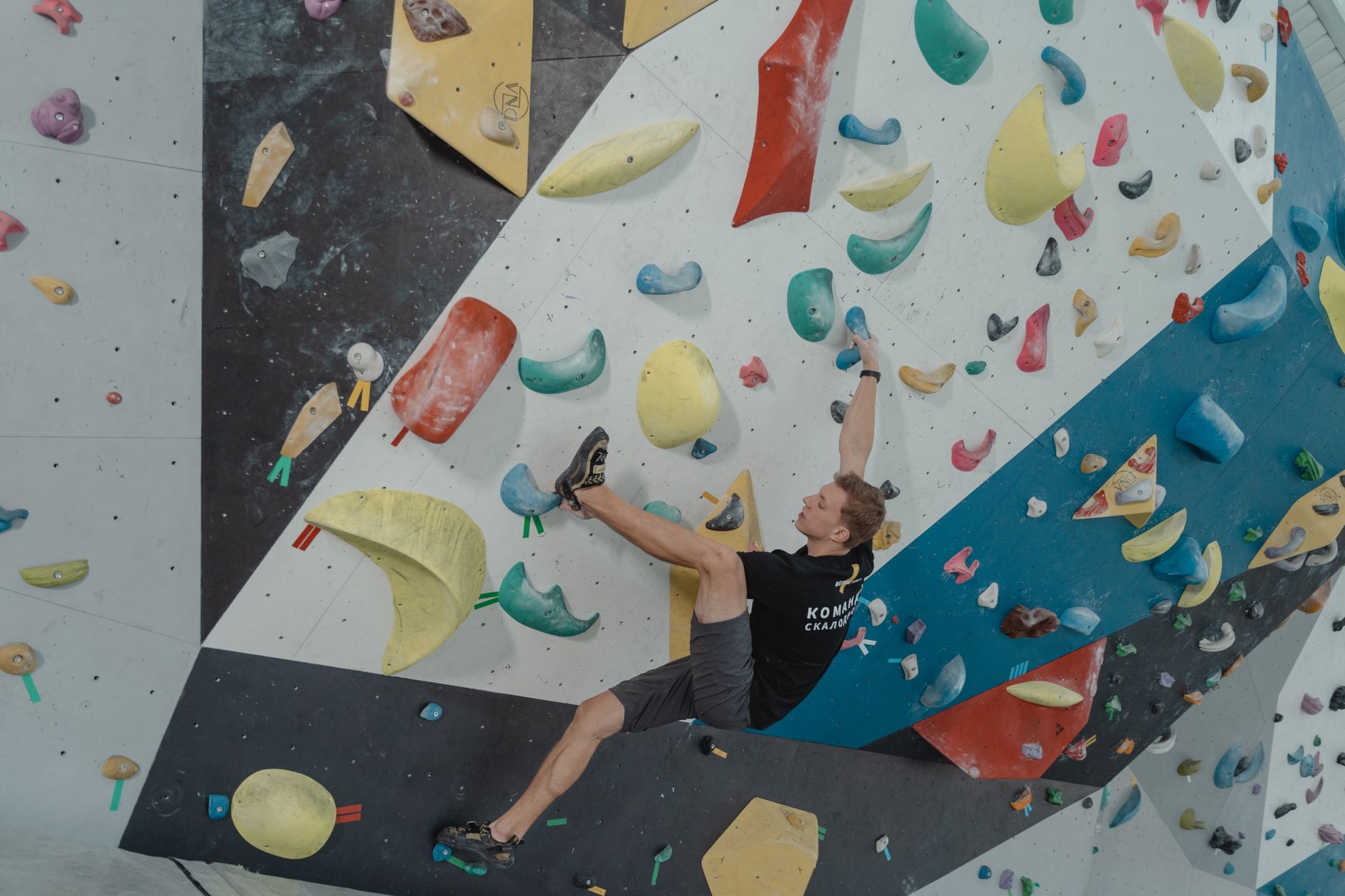
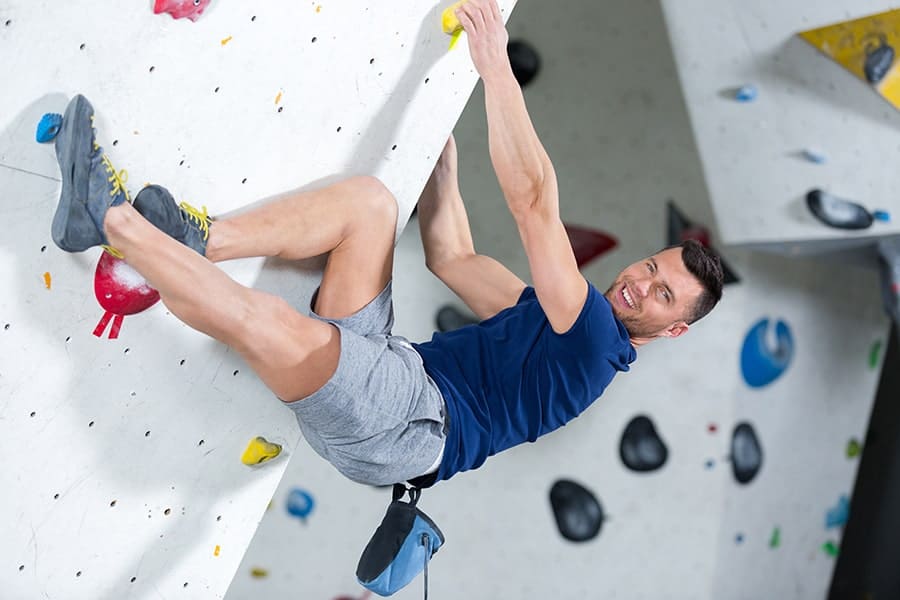
A hip turn just means rotating one side of your body toward the wall so your hip, knee, and toe all point the same way you’re moving. Instead of facing the wall square on, you turn slightly sideways to line your body up better with the next hold.
That shift in how you’re facing lets you move more smoothly and hold your balance while you reach. It’s the difference between muscling into a hold and just flowing up to it.
When this technique shows up
Hip turns come up all the time, especially when:
- Holds sit diagonally or offset from each other
- You need extra reach and don’t want to jump for it
- The climb asks for precise body positioning
- You’re moving sideways across the wall, often paired with a flag for balance
On vertical faces and slabs, hip turns really shine because they keep you close to the wall while you stay balanced.
How this technique is typically used during a climb
Mid climb, you’ll usually turn a hip to squeeze out more reach and stay steady while you do it.
Here’s how it usually plays out:
- Pivot on the toe of your foothold, so good footwork matters here
- Rotate the hip of your stepping foot toward the wall
- Line up your knee and toe with the direction you’re heading
- Reach with the hand on the same side as the turned hip
That gets your body in close to the wall and lets you move up with a lot less pull through your arms.
Why hip turns matter
Hip turns help you climb efficiently because they clean up your balance and positioning. When you get the timing right, this one move can:
- Add to your effective reach
- Cut down on the need for dynamic, jumpy moves
- Keep your body tucked close to the wall
- Move the work off your arms and onto your legs, which pairs nicely with keeping your arms straight
A lot of climbers find that once they learn to turn their hips, they move through hard sections way more smoothly than they used to.
Common mistakes with hip turns
Here’s where most people trip up:
- Turning the hips but never pivoting the foot
- Staying square to the wall out of habit
- Not shifting your weight onto the foothold before you reach
- Twisting from the knee instead of rotating from the foot
These slip-ups cost you stability and put extra strain on your knees, so it’s worth slowing down and getting the pivot right.
Where this technique fits in progression
Hip turns are foundational, so you can start learning them early. As your climbs get more technical, the move only gets more useful for staying efficient and saving energy.
You’ll keep refining how you set your hips as routes get steeper and the moves get trickier. It’s one of those skills you never really stop tuning.
If you like picking up one solid technique tip a week, that’s exactly what our free newsletter is for. It’s about 15 minutes of climbing drills each week, and you can grab it here for free.
Related techniques
Hip turns work hand in hand with other balance and positioning skills, like:
- Using your toes
- Flagging
- Straight arms
- Tripod positioning
Put together, these help you move with more control and less wasted effort.
How to train this technique
Once you know what a hip turn looks like and when it shows up, the next step is drilling it on purpose so it becomes automatic.
Once you’ve got the idea, here’s how to train it.
Explore the full technique system
For a complete breakdown of climbing techniques, see
Climbing Technique Fundamentals: 22 Essential Techniques Explained.
Frequently asked questions
What is a hip turn in climbing?
A hip turn is when you rotate one side of your body toward the wall so your hip, knee, and toe point the same way you’re moving. Instead of facing the wall square on, you turn slightly sideways to line up with the next hold, which improves your reach and balance.
When should I use a hip turn?
Reach for a hip turn when holds are offset or diagonal, when you need extra reach without jumping, or when you’re moving sideways across the wall. They’re especially handy on vertical faces and slabs where staying close to the wall keeps you balanced.
Why do hip turns make climbing easier?
They shift effort off your arms and onto your legs, keep your body close to the wall, and add to your effective reach. That means fewer big dynamic moves and smoother movement through hard sections.
What’s the most common hip turn mistake?
Turning the hips without pivoting the foot. If you rotate your hip but leave your foot planted square, you lose stability and can twist your knee. Pivot on your toe first, then rotate the hip and line up your knee and toe with the direction you’re going.
Are hip turns a beginner technique?
Yes. Hip turns are foundational, so beginners can start learning them right away. The move stays useful as you progress, and you’ll keep refining your hip positioning as routes get steeper and more technical.
Where this fits
Hip turns are one of four ways to stop a barn-door. See the Body Positioning guide.