This post contains affiliate links. If you buy through them, I may earn a commission at no extra cost to you.
I see climbers show up to multi-pitch days wearing trail runners because they didn’t want to haul approach shoes for the hike in. Then they hit the third-class scramble to the base and suddenly they’re sketched out, smearing on trail-runner foam that feels like skating on rock. Or they bring full approach shoes and their feet are cooked after three miles of trail because the shoes are stiff as boards.
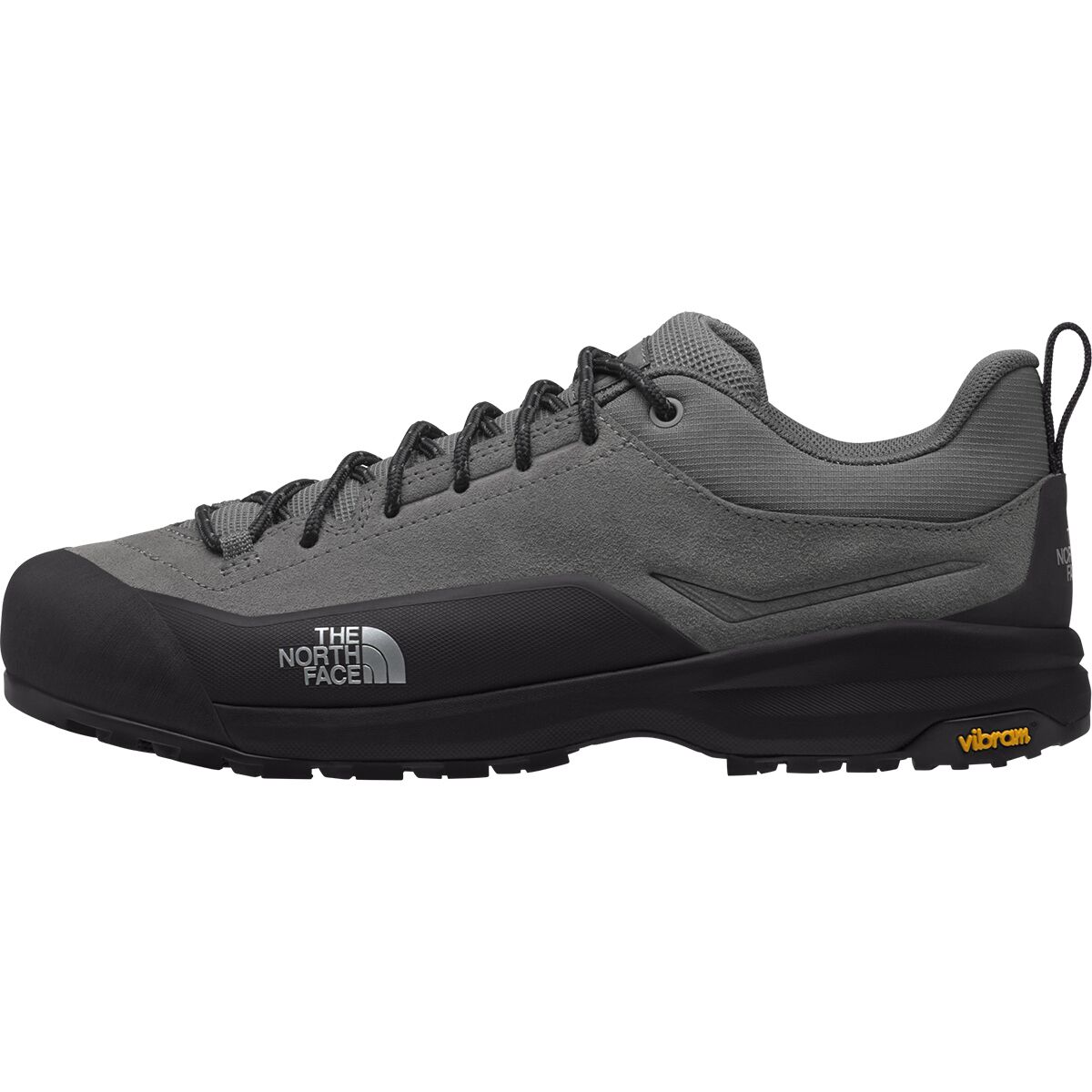
The North Face Verto is what you bring when the approach is long but you still need to trust your feet on slabs and easy scrambles. It’s light enough that you’re not cursing the extra weight on the trail, but it has enough sticky rubber and structure that you’re not white-knuckling every rockover.
When the Verto Makes Sense
This shoe is for approaches that are mostly trail with some scrambling mixed in. Think valley walks to alpine routes, long cragging approaches where you’re on dirt for an hour before you touch rock, or multi-pitch days where you’re belaying in your approach shoes and don’t want your feet to hate you by pitch three.
The Verto isn’t built for sustained fourth-class or harder. If you’re regularly climbing 5.8 in your approach shoes, or your approach is all talus and scree, you want something stiffer and more protective. And if you’re carrying a heavy pack, the lighter midsole will let you feel every rock through the sole.
What You Get
The upper is mesh and synthetic, so it breathes and dries fast. The North Face wrapped sticky rubber around the toe, so you can smear and edge on slabs without your feet sliding around. The sole is firm enough to feel solid on rock but flexible enough that it doesn’t fight you on flat trail sections.
Weight is under 1.5 pounds for the pair, which is genuinely light. You notice the difference on long approaches. The fit runs true to size for most climbers, but if you’re between sizes or have wide feet, confirm the return policy before you buy.
This isn’t a climbing shoe. Don’t expect it to handle steep 5.7 pitches. But on third-class terrain and easy slabs, it’s confidence-inspiring, and it’s comfortable enough to wear all day without your feet screaming at you.
Common Mistakes
The biggest mistake is thinking lighter is always better. If your approach is a brutal talus field or you’re carrying a heavy pack, the weight savings won’t make up for sore feet and less stability. Lightweight approach shoes are for maintained trails and moderate scrambles, not off trail boulder fields.
The other mistake is ignoring fit. A shoe that’s too narrow or too short will wreck your feet no matter how light it is. Try them on with the socks you’ll actually wear climbing. Walk around on an incline if the shop has a ramp. Your toes shouldn’t hit the front on descents, and your heel shouldn’t slip when you’re edging.
And don’t expect these to replace your climbing shoes. The Verto will get you to the base and back to the car in comfort, and it’ll handle easy scrambles, but if you’re climbing anything sustained or technical, bring your real shoes.
Check Current Price
You can check current price at Backcountry to see if it fits your budget and timeline. Confirm sizing and return policy with the shop before you buy.
If the Verto doesn’t match your needs, look at shoes with more aggressive rubber if you’re doing harder scrambles, or true trail runners if your approaches are almost entirely on trail with minimal rock. Some climbers prefer a mid cut for ankle support on loose terrain, which adds weight but can be worth it if you’re prone to rolling ankles.
Whatever you choose, make sure the shoe fits the actual terrain you’re covering. The right lightweight approach shoe disappears on your feet during the hike and gives you just enough confidence on rock that you’re not thinking about your feet.