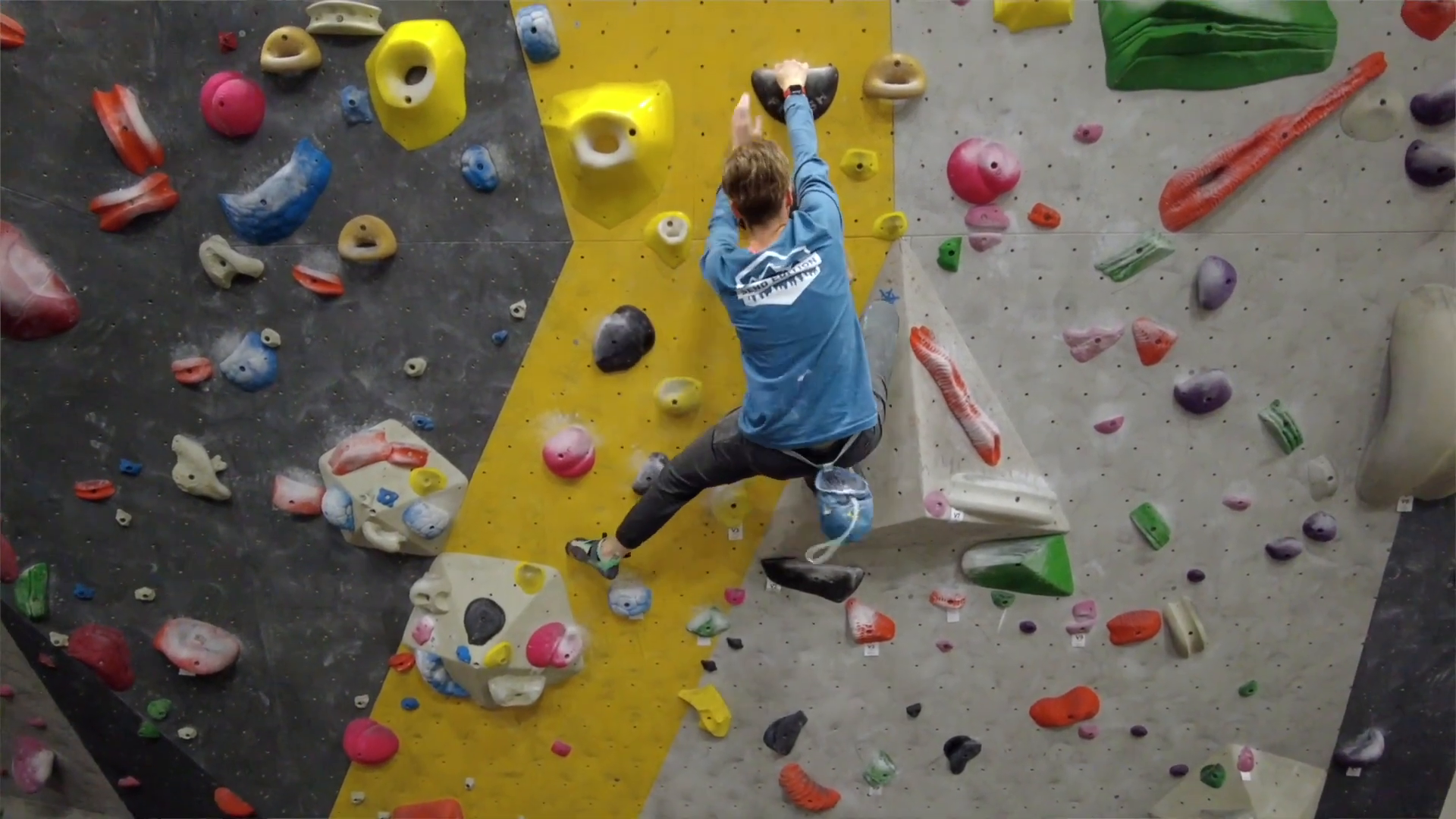

Ready to start climbing? This is your guide to indoor climbing for beginners, and it walks through the tips and technique that give you a solid base to build on. Whether you’re heading to the gym to boulder or to climb on a rope, these fundamentals will make your first sessions more fun and help you climb harder sooner.
🏔️ Introduction to Climbing
If you’re just getting started, it helps to nail down the basics first. Climbing isn’t only about strength. It’s about technique, balance, and knowing the different styles.
Whether you’re bouldering or roping up, the skills you pick up early will pay off for years. In this guide we’ll dig into the fundamentals every beginner needs so your climbing stays fun and safe. So let’s gear up and get on the wall.
🧗 Understanding the Types of Climbing
Indoor climbing comes in two main flavors, bouldering and rope climbing, and each one works a different side of the sport.
Bouldering means climbing shorter walls, usually around 10 to 15 feet high, with no ropes or harness. It’s all about short, powerful moves and problem solving, with thick pads underneath to catch your falls. If bouldering is where you’re starting, our guide to bouldering for beginners breaks down what to expect.
Rope climbing uses taller walls, usually 30 to 60 feet, where you wear a harness and tie into a rope for safety. This style leans on endurance and technique as you work longer routes while a partner or an auto-belay keeps you protected.
Both styles bring their own challenges and rewards, and they play off each other nicely when you’re new to indoor climbing.
🧗♂️ The Five Types of Climbing Holds
Knowing your holds is a big early win. When you’re just starting out, here’s a rundown of the five main types you’ll run into:
- Jugs: The friendliest hold out there, big enough to wrap all your fingers around. They’re perfect for beginners and show up all over easier routes.
- Pockets: Holds with a hole you slot your fingers into. On beginner routes you’ll usually see three-finger or two-finger pockets.
- Crimps: These ask for a more delicate grip, with just your fingertips on a small edge. Try to keep your palm relaxed and open for better control.
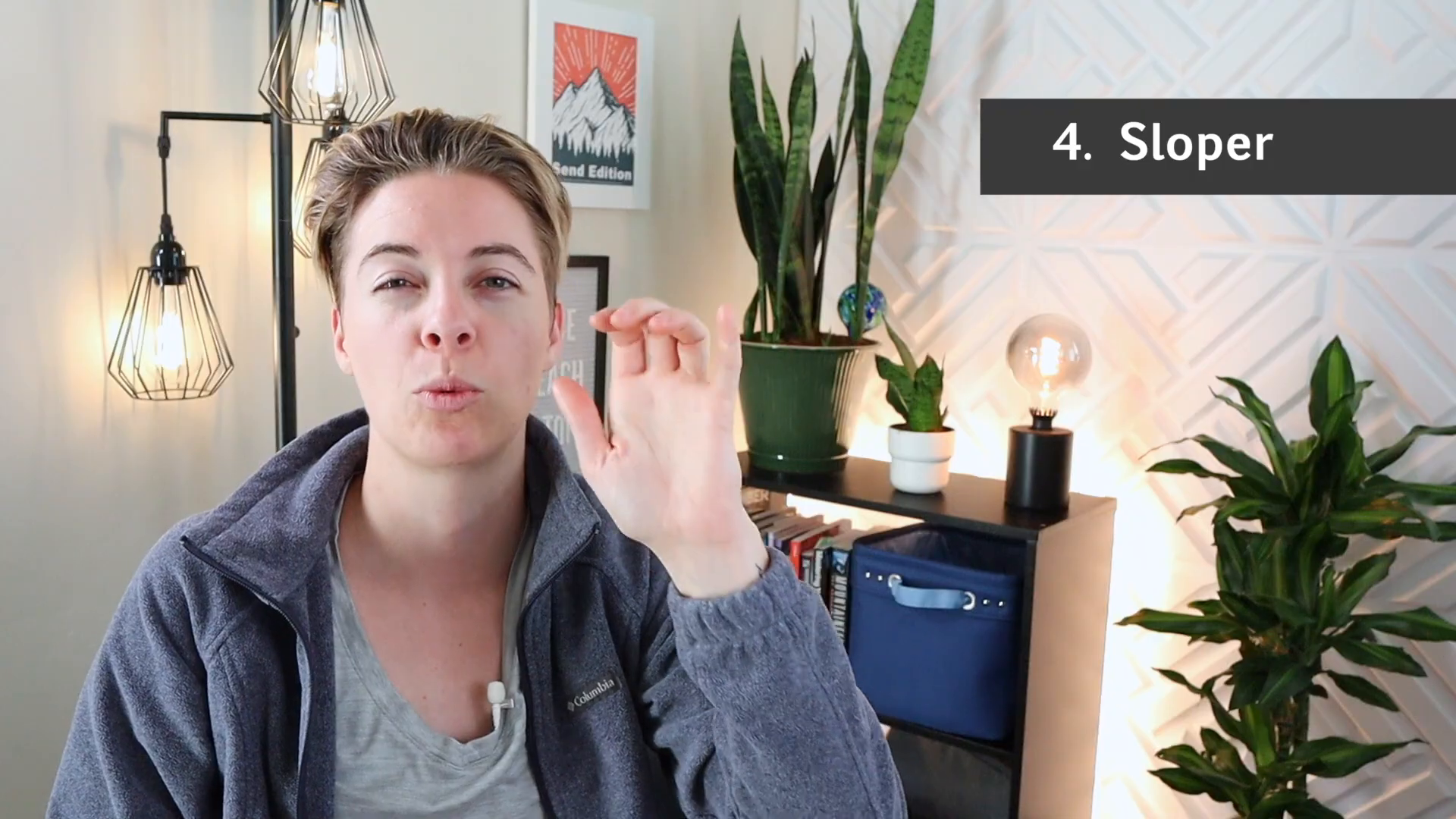
- Slopers: Rounded holds with no edge, so you grab them open-handed and rely on friction. They feel awkward at first, but they’ll level up your climbing once they click.
- Pinches: Just like they sound, you pinch these with your thumb on one side and fingers on the other. They fire up your grip strength fast.
Don’t forget your footholds either. These are often small chips meant for your feet, and using them well makes a huge difference. If you want to go deeper, here’s a full breakdown of climbing holds and how to use them. Spotting the type of hold in front of you is a skill that pays off on every route.
🦶 Using Your Feet in Climbing
Your feet do more work than most beginners realize. To climb well you’ve got to lean on your feet as much as your hands. Here’s how to use them better:
- Use Your Big Toe: Your big toe is your strongest, so aim to put it on the foothold and let it carry your weight. You’ll climb more efficiently that way.
- Pivot Your Foot: Instead of slapping your foot flat on the wall, pivot so your heel drops closer to it. That opens up your reach and your balance.
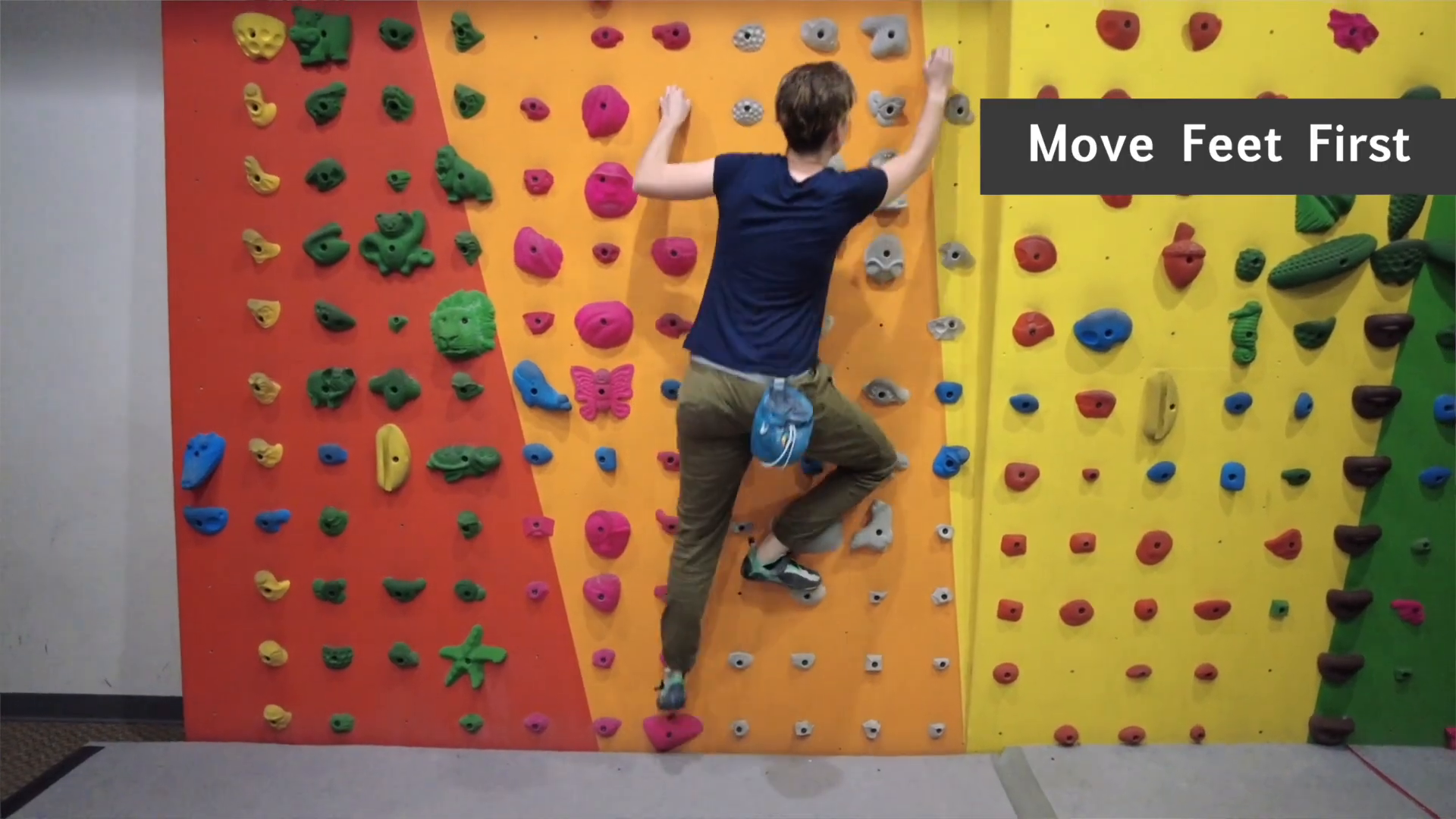
- Move Feet First: Before you reach with a hand, move your feet. It lets your legs take the load and keeps you steady.
- Keep Your Arms Straight: Straight arms let you hang off your skeleton and save energy, so your legs do the heavy lifting.
Dial in your foot placement and your movement, and climbing starts to feel a lot smoother. It’s not an upper-body-only sport, it’s about using your whole body. There’s more nuance here than people think, so it’s worth learning why most climbers use their toes wrong.
🦵 Leveraging Your Legs for Better Climbing
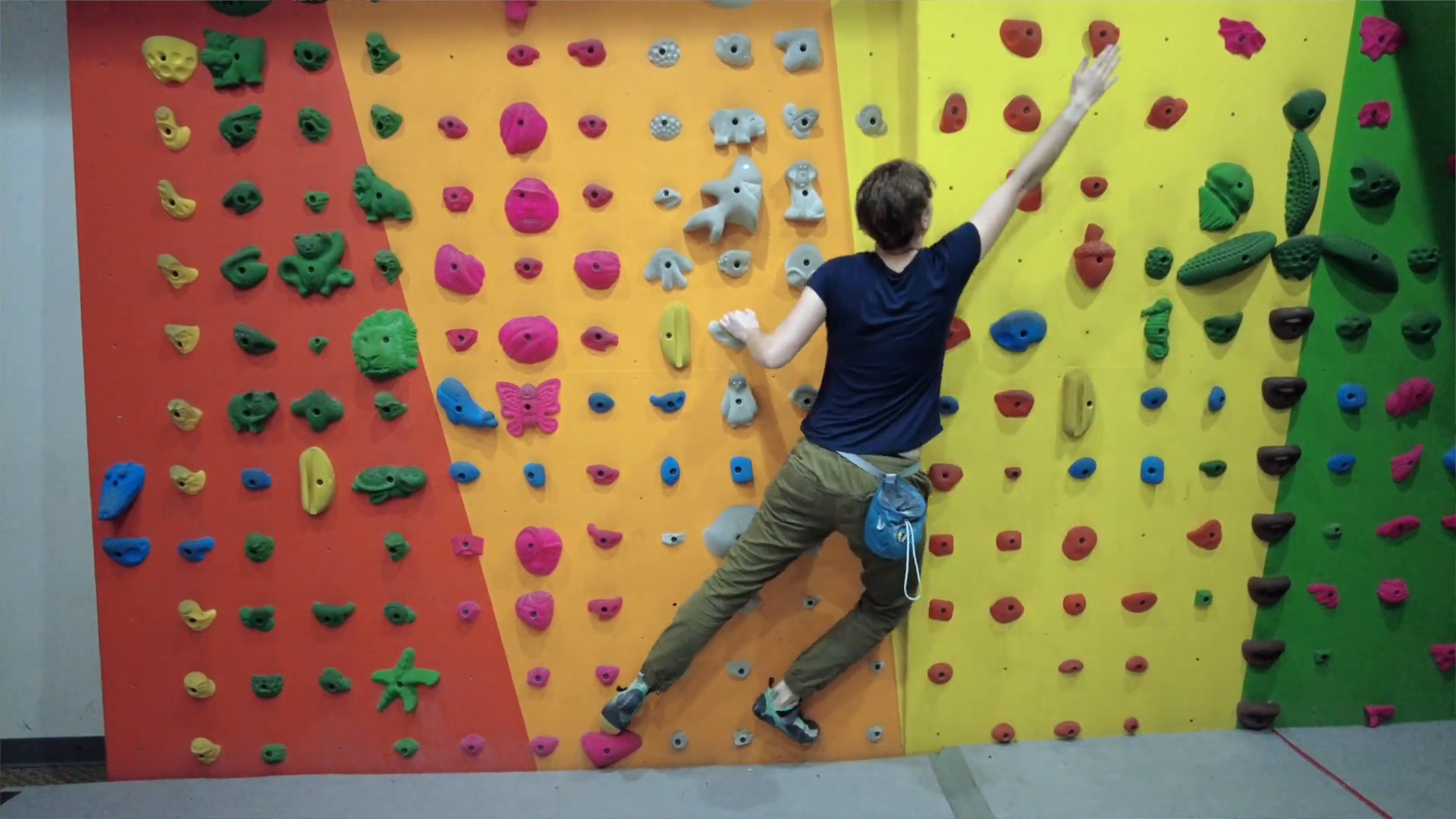
Out on the wall, your legs are your best friends. A lot of beginners over-grip with their arms, and that burns you out fast.
Instead, think of climbing as pushing yourself up with your legs. They’re way stronger than your arms and they’re already used to carrying your weight all day.
To get the most out of them, treat each move like a squat or a lunge. Keep your arms straight and drive up with your legs.
Do that and your weight spreads out evenly, which takes a ton of strain off your upper body. It comes down to keeping a strong base and letting those big leg muscles lift you up the wall. Keeping straight arms while you climb is one of the simplest habits that makes this click.
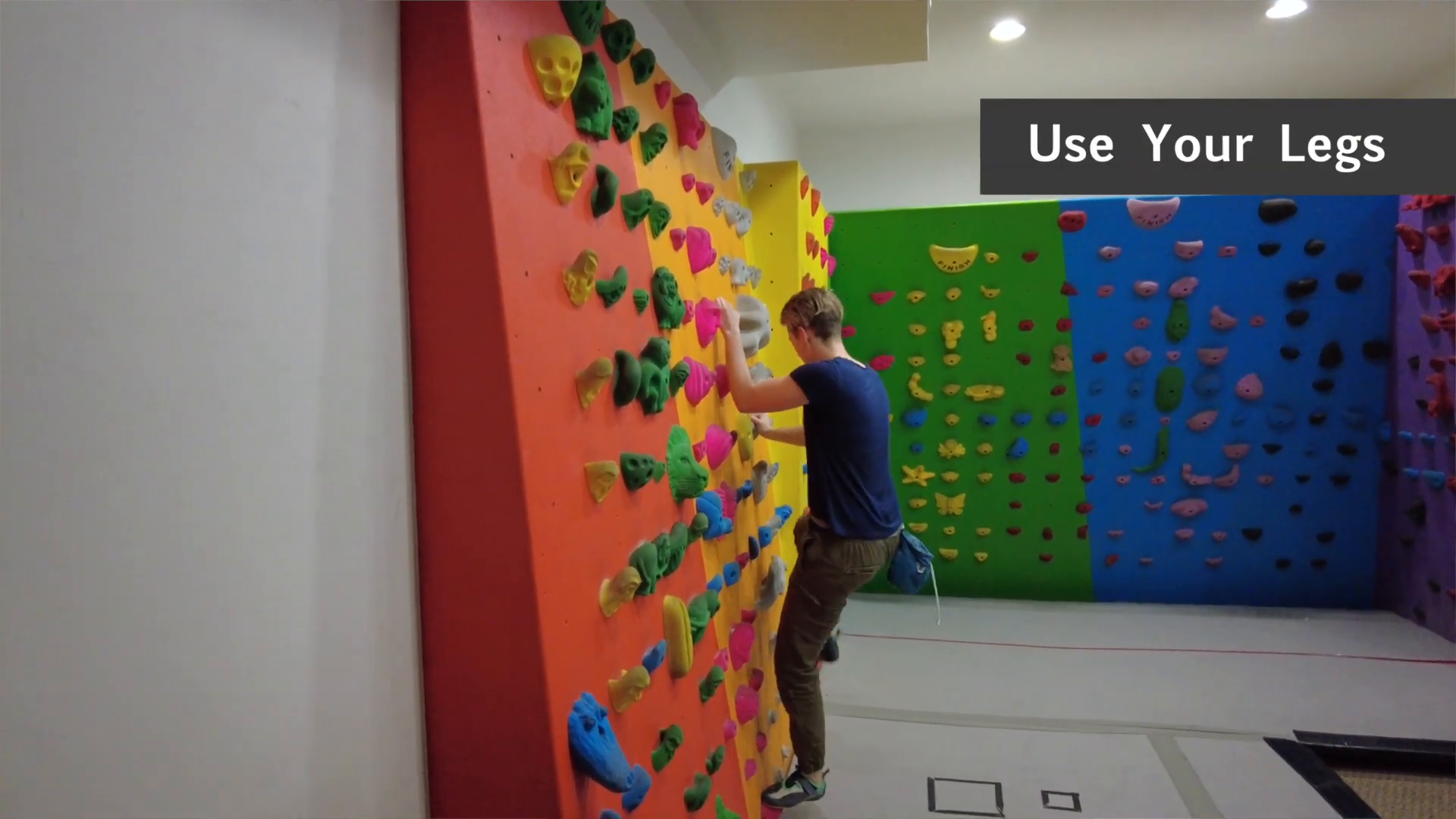
As you climb, keep an eye on where your feet land. Get them set before you move your hands so you can push off with your legs and make every move smoother. Remember, you climb with your legs, not just your arms.
👣 Moving Feet Before Hands
One of the best habits you can build early is moving your feet before your hands. It sounds almost too simple, but it does a lot for your efficiency and your balance.
When your feet move first, your legs take on more of your weight, and that keeps you balanced and in control.
Think ahead to your next handhold while you make sure your feet are locked in. Do that and you cut your chance of slipping while stretching your reach to the next hold.
Practice it enough and your movement starts to flow and feel natural. So next time you’re on the wall, tell yourself: feet first, hands later.
🏞️ Indoor Climbing for Beginners: Gym Basics
Welcome to the gym. When you’re new to indoor climbing for beginners, learning how the space is laid out and how routes work is a big first step.
Most indoor routes are color-coded or marked with tape. Each color is its own route, so stick to the holds that match your color.
So if you spot a line of all purple holds, that’s your route.
Start with both hands on the marked starting hold and get your feet on the right footholds before you leave the ground. If you want a fuller primer, here’s what to know before you start indoor rock climbing.
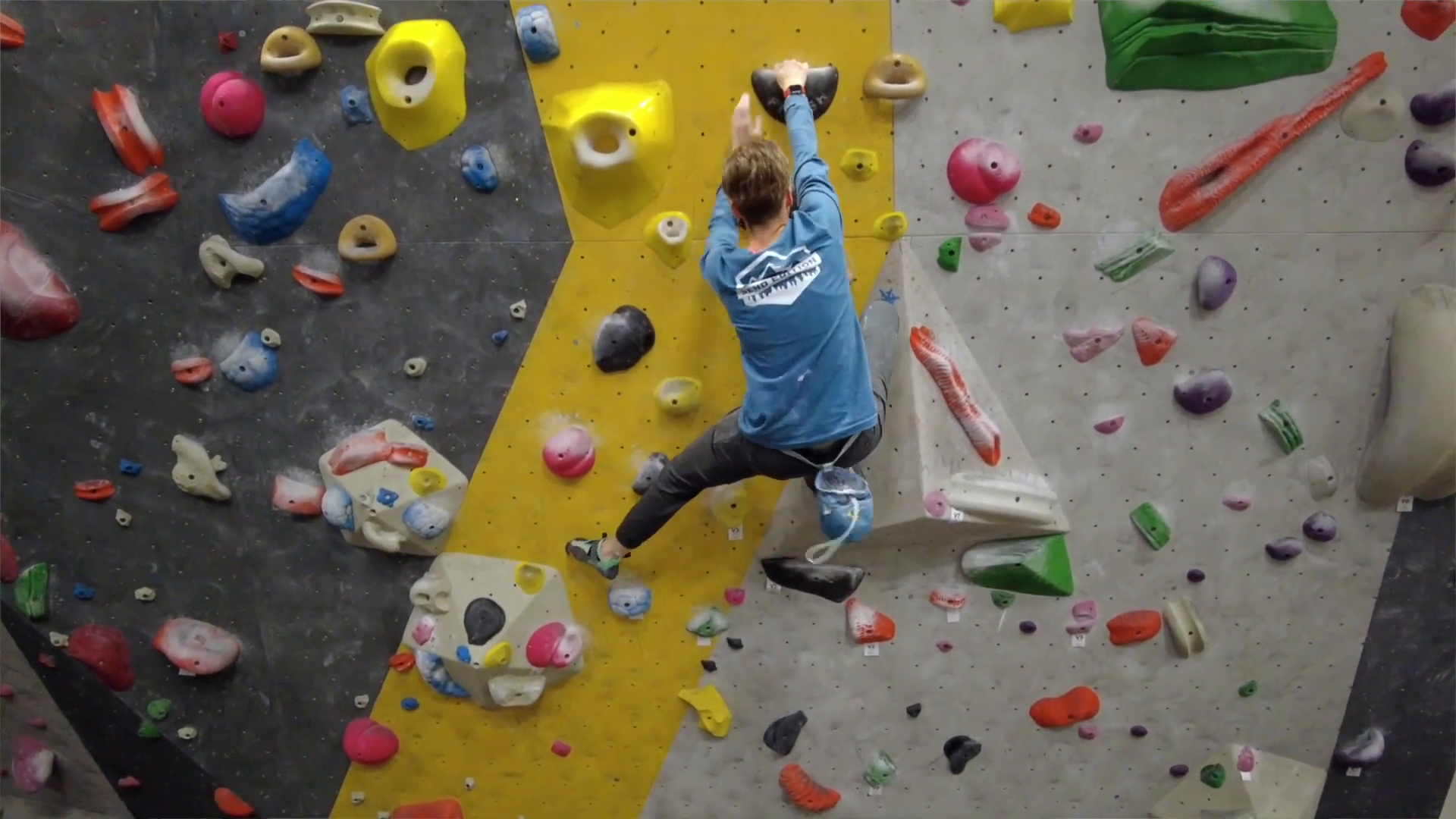
As you climb, pay attention to your body position and the grips you’re using. It starts with reading the holds right and using your feet well. The goal is to stay in control and balanced while you work your way up.
🧗♀️ How to Safely Climb Down
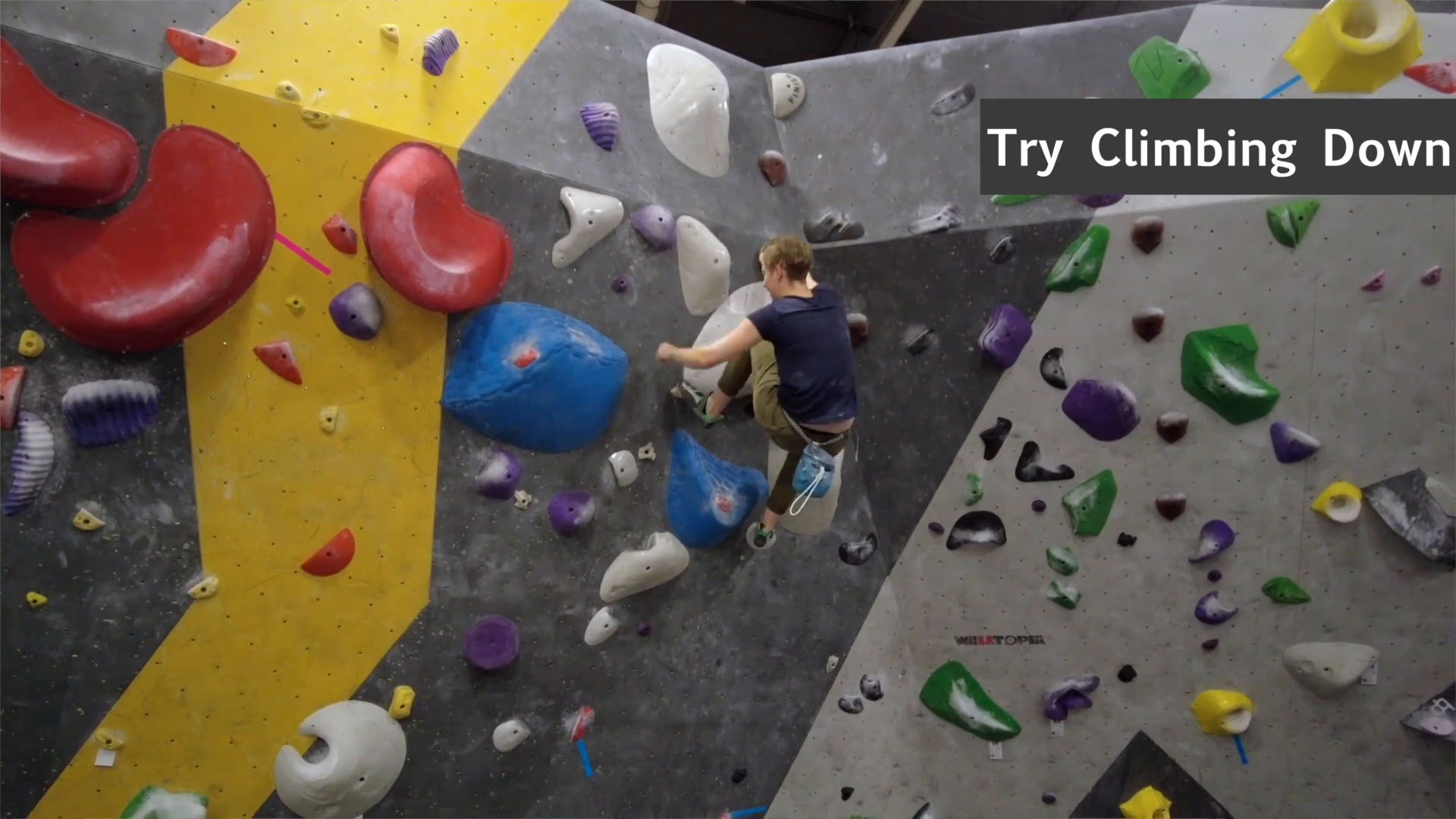
Once you top out, the next job is getting down safely. A lot of beginners jump off, but that’s an easy way to tweak an ankle.
Take your time and use the holds to climb back down instead. Most gyms set specific holds, often marked differently, meant for downclimbing. Use those to lower yourself bit by bit.
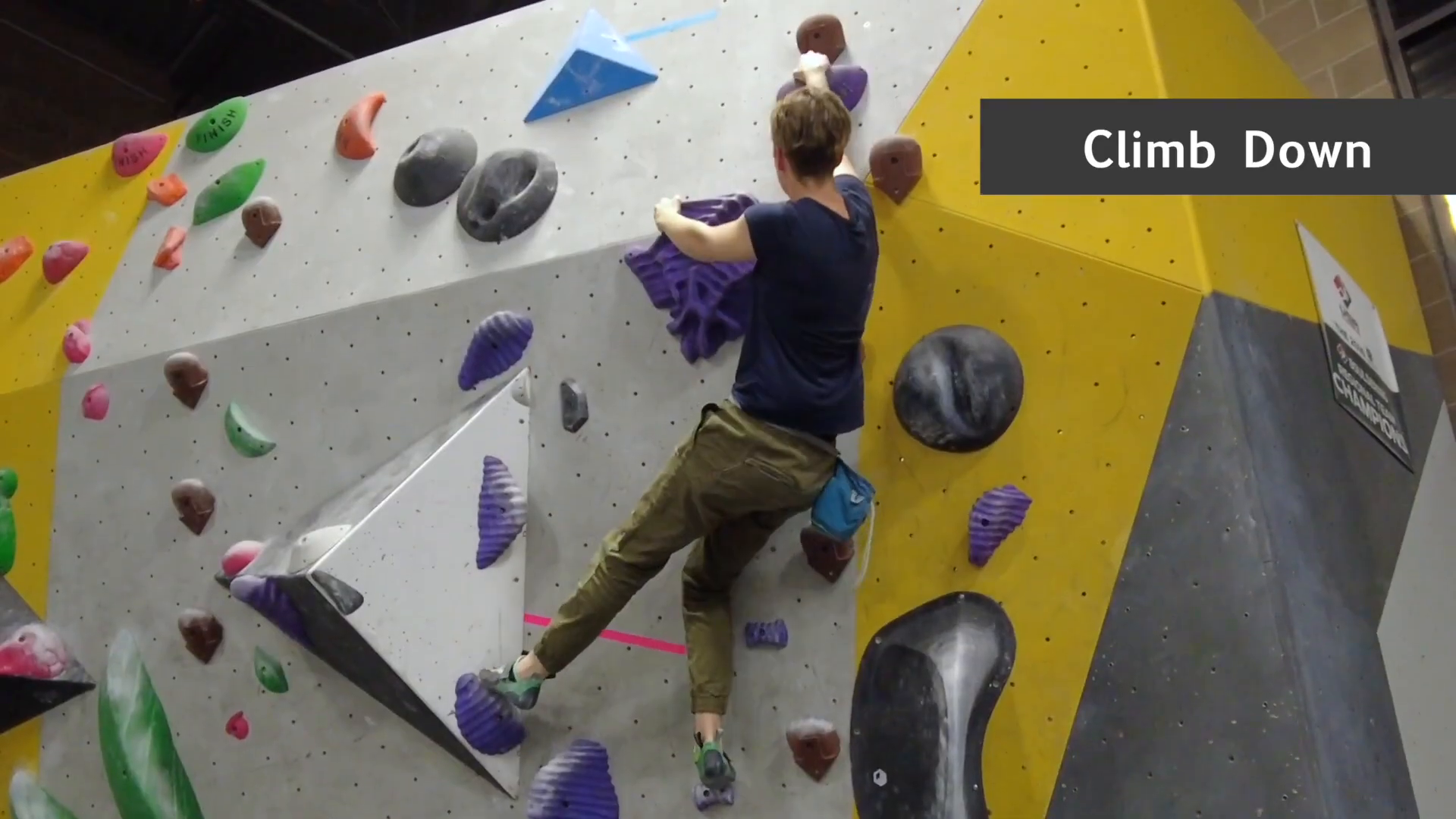
On the way down, keep it slow and make sure your feet are set. If you feel shaky up high, it’s totally fine to downclimb a few holds and hop off once you’re close to the ground. It keeps you safe and builds your confidence as you go.
🛡️ Staying Safe and Gym Etiquette
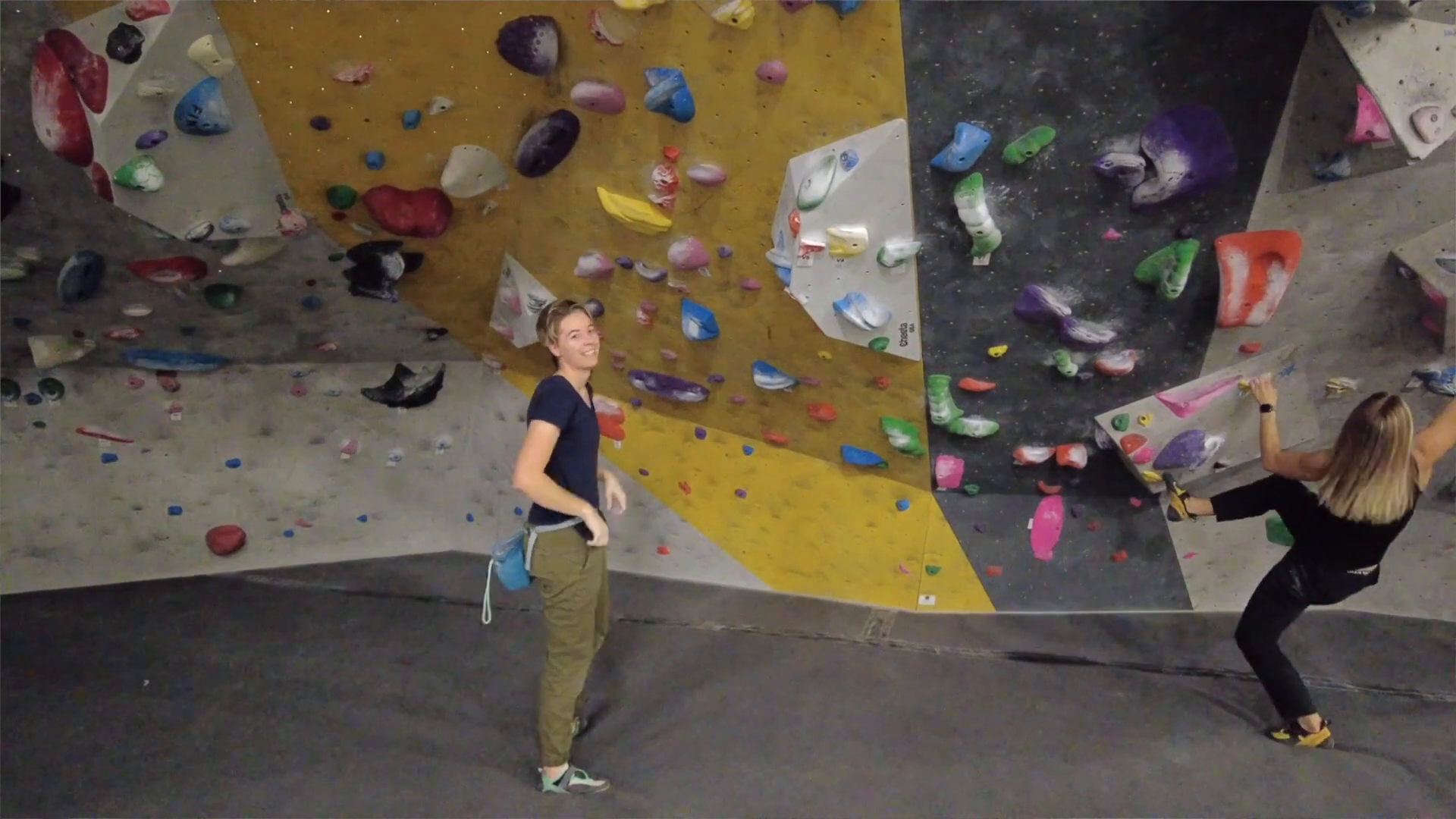
Safety comes first at the gym. Knowing your fall zones matters, since those are the spots a climber might land, and you want to keep yourself and everyone else clear of them.
Walk on the flooring outside the pads and never stand right under someone who’s climbing. That keeps you safe and leaves the pads free for climbers to fall onto.
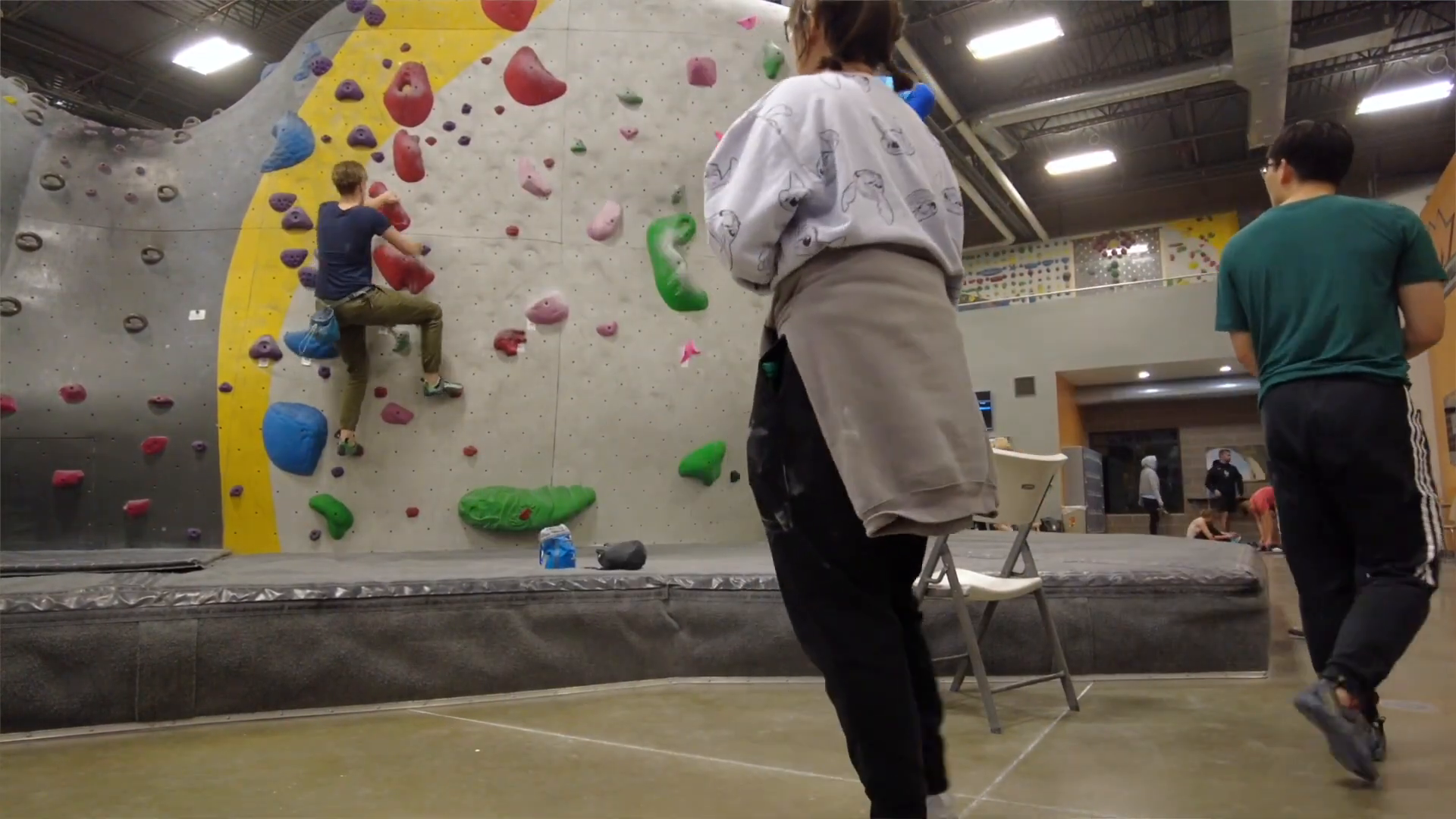
Basic etiquette counts too. If someone’s already on a wall, don’t hop on right next to them, since that’s how collisions happen.
And while it’s great to work a route, share the space and give others a turn. It’s all about everyone getting a fun, safe session in. Climbing’s a community thing, so look out for the people around you. If it’s your first visit, here’s what to expect on your first time at a bouldering gym.
🤸 Learning How to Fall
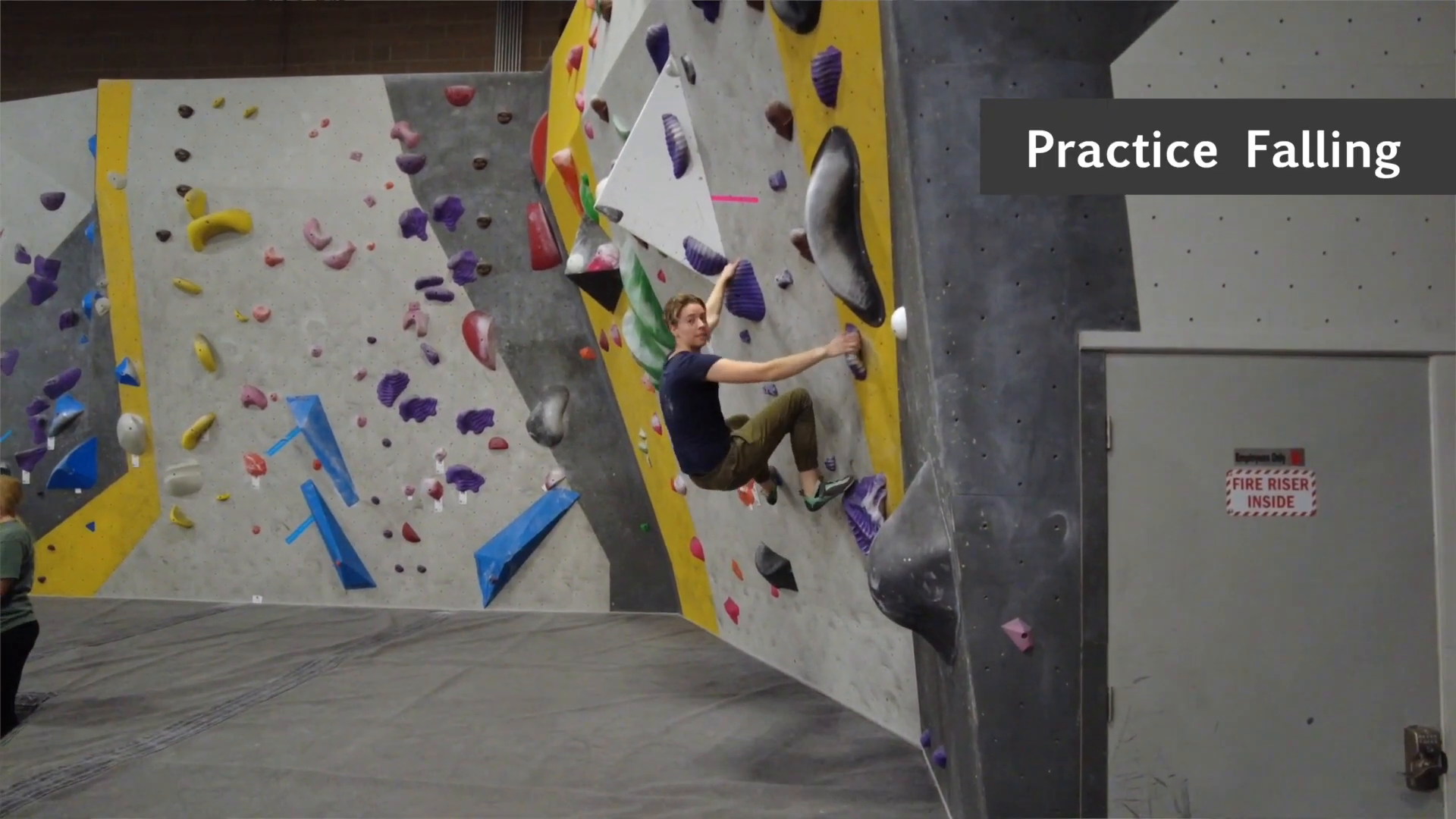
Falling is part of climbing, and it happens to everyone when you’re starting out. Learning to fall well keeps you off the injury list.
If you feel yourself coming off, bend your knees and let your body roll back while you tuck your chin. Never throw an arm out to catch yourself, since that’s how wrists get sprained. A lot of beginners tense up because of nerves, so it helps to work on the fear of falling too.
For younger climbers, a handy trick is to grab their knees as they fall. It stops them from reaching out with their arms and keeps them tucked into a compact shape, which cuts the risk of getting hurt.
Practicing your falls builds confidence, and that makes your whole climbing experience safer and more fun.
🏆 Keep Climbing!
As you get going with indoor climbing for beginners, remember that mileage is everything. The more you climb, the more natural it feels.
Lean into the challenges, learn something from every attempt, and don’t be shy about going back to the basics. Keep chipping away at your limits and before long you’ll be topping out routes you once stared up at. So gear up, stay stoked, and keep climbing.
Want a little coaching in your inbox? Our free newsletter sends you one climbing drill a week that takes about 15 minutes, so you keep improving between sessions. Grab the free weekly drills here and level up your climbing 15 minutes at a time.
Frequently asked questions
What gear do I need to start indoor climbing?
To start, you really just need climbing shoes and some chalk, plus a harness if you’re roping up. Most gyms rent all of it out for beginners, so you can try climbing before you buy a thing.
Is indoor climbing safe for beginners?
Yes. Indoor gyms are built with safety in mind, with padded flooring under the boulders and trained staff on the floor. Learning to fall well and knowing the fall zones keeps you even safer.
How do I choose a climbing route as a beginner?
Start on the easier routes, which are usually marked or color-coded for beginners, and work up from there as your confidence grows. Match your hands and feet to the holds of your chosen color and take it one move at a time.
What’s the difference between bouldering and rope climbing?
Bouldering is short walls, usually 10 to 15 feet, with no rope and thick pads below, and it’s all about powerful moves. Rope climbing uses taller walls, around 30 to 60 feet, with a harness and rope, and it leans more on endurance and technique.
How often should a beginner climb?
Two or three sessions a week is a great starting point. It gives you enough time on the wall to build skill and strength while leaving room to recover between climbs.