Straight arms climbing is one of the easiest ways to save energy on the wall, and most climbers take longer to trust it than they should. Instead of pulling with bent elbows the whole time, you let your skeleton hang off the holds so your body weight rides on bone and not on muscle. That keeps your arms fresh for the moves that actually need power.
You’ll see straight arms on nearly every route, and they matter most on long climbs or steep terrain where your forearms pump out fast. Learn to relax into them and you’ll last a lot longer before your grip goes.
What Straight Arms Climbing Actually Means
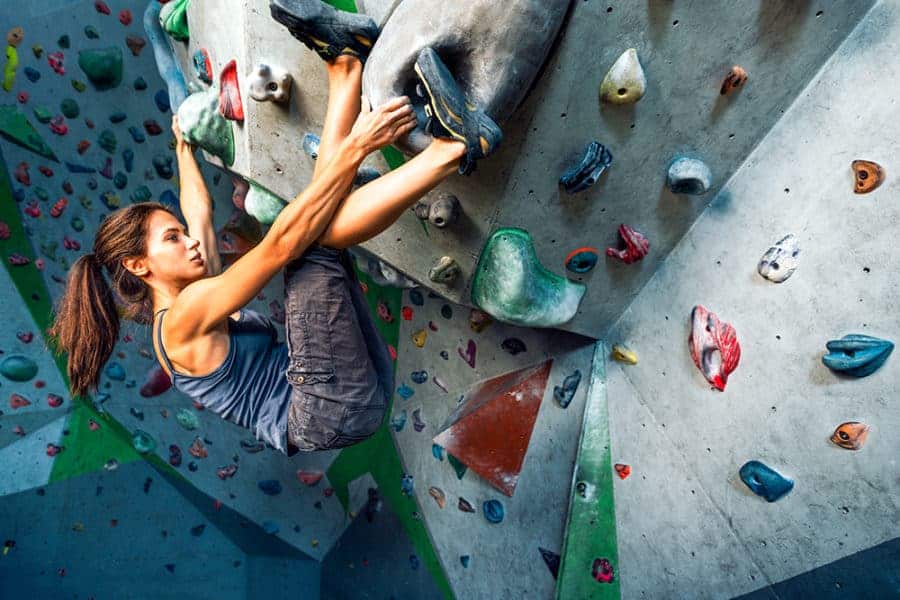
Straight arms just means climbing with your arms extended instead of constantly pulling with bent elbows. When your arm is straight, your bones and joints hold you on the wall, so your muscles get a break. Bend the elbow and your forearms have to work the whole time, which is exactly what pumps you out.
Think of it as hanging rather than doing a pull-up. You hang off the hold, set your feet, and get ready for the next move without burning energy you don’t need to spend yet.
When Straight Arms Show Up
Straight arms turn up all over almost every climb, but they really earn their keep when you’re:
- Climbing overhangs or steep terrain
- Moving between larger holds
- Resting between hard sequences
- Climbing longer routes where endurance matters
Whenever you can, drop back onto straight arms between moves to shed some of that fatigue. If your endurance is what tends to fold first, it’s worth digging into how climbing endurance actually gets built so the fresh arms have somewhere to go.
How Climbers Use Straight Arms On A Route
On the wall, straight arms mostly happen while you’re setting up for the next move. Here’s the rough sequence most climbers run:
- Place your feet securely on the footholds
- Shift your weight onto your legs
- Let your arms stay long while you stabilize and look for the next hold
Instead of hauling yourself up with bent arms, you push through your legs and drive your hips to make the move happen. Your arms stay long right up until the moment you actually need to pull. That keeps energy in the tank and your grip fresh for the harder stuff higher up.
Why Straight Arms Matter
Climbing with straight arms makes a huge difference to how efficient you are. When you keep your arms long, you:
- Take strain off your forearms
- Delay that pumped, done-for feeling
- Hang on longer on big routes
- Move more smoothly between positions
Loads of newer climbers over-grip and muscle everything, so learning to relax into straight arms is often the single biggest jump they can make. It’s one of those habits that quietly fixes a bunch of other problems at once, which is why it lands on almost every list of the climbing techniques worth learning first.
Common Mistakes With Straight Arms
A few habits get in the way of straight arms more than anything else:
- Climbing with elbows bent the whole time
- Pulling up instead of pushing through the legs
- Holding tension in the arms even while resting
- Not trusting your feet enough to shift weight off your hands
These all lead to early fatigue and clumsy movement, and they show up together more often than you’d think. If any of this sounds familiar, it’s worth a look at the other common climbing mistakes beginners make so you can catch them early.
Where Straight Arms Fit In Your Progression
Straight arms are a foundational skill. Beginners get a lot out of learning it early, and stronger climbers lean on it constantly to hold their endurance together on hard routes.
Even advanced climbers keep refining it as their climbs get longer and more powerful. It never really stops paying off.
Related Techniques
Straight arms work best alongside the other foundational skills, so it’s worth pairing your practice with:
Put these together and your movement starts to feel balanced and efficient instead of forced.
How To Train This Technique
Once you know what straight arms look like and when they show up, the next step is practicing them on purpose until they stop feeling like a thing you have to remember.
When you’re ready to drill it, here’s how to train it. If you’d rather have the work picked for you, the Grip & Grind app builds this kind of movement straight into your sessions.
Want something you can do in a few minutes a week without buying a thing? Our free newsletter sends you simple climbing drills you can run in about 15 minutes. Level up your climbing with 15 minutes of training and a new drill lands in your inbox each week.
Explore The Full Technique System
For a complete breakdown of climbing techniques, see Climbing Technique Fundamentals: 22 Essential Techniques Explained.
Frequently asked questions
What does climbing with straight arms actually do?
It shifts your body weight off your muscles and onto your skeleton. With a straight arm you’re hanging off bone and joint instead of gripping and pulling the whole time, so your forearms get a break and stay fresh for the moves that really need power.
Why do my arms pump out so fast when I climb?
Usually because you’re climbing on bent arms and pulling yourself up with your hands instead of pushing through your legs. Keeping your arms long between moves and driving with your legs and hips takes a lot of that load off your forearms and delays the pump.
When should I keep my arms straight while climbing?
Whenever you’re not actively pulling. That means while you set your feet, shift your weight, rest, or reach around looking for the next hold. Bend the arm to make the move, then drop back onto a straight arm as soon as you can.
Is straight arms a beginner or advanced technique?
Both. It’s foundational, so beginners benefit from learning it early, but stronger climbers rely on it constantly to hold their endurance together on long or steep routes. Even advanced climbers keep refining it.
How do I train straight arms?
Practice it on purpose on easy terrain first, focusing on hanging off long arms and moving from your legs. You can follow the drills in our training hub, use the Grip & Grind app to build it into your sessions, or grab our free weekly drill newsletter for short, ready-to-go practice.