This post contains affiliate links. If you buy through them, I may earn a commission at no extra cost to you.
If you feel like you’re always fighting to stay on the wall, the tripod position in climbing is the fix most climbers overlook. It’s a simple idea. You keep three points of contact on the wall so your body stays balanced and stable while you set up the next move. Nail it and you’ll waste less energy, swing less, and hit holds a lot more accurately.
You’ll use it on nearly every climb, and it matters most right before you move or reach for the next hold.
What Is the Tripod Position in Climbing?
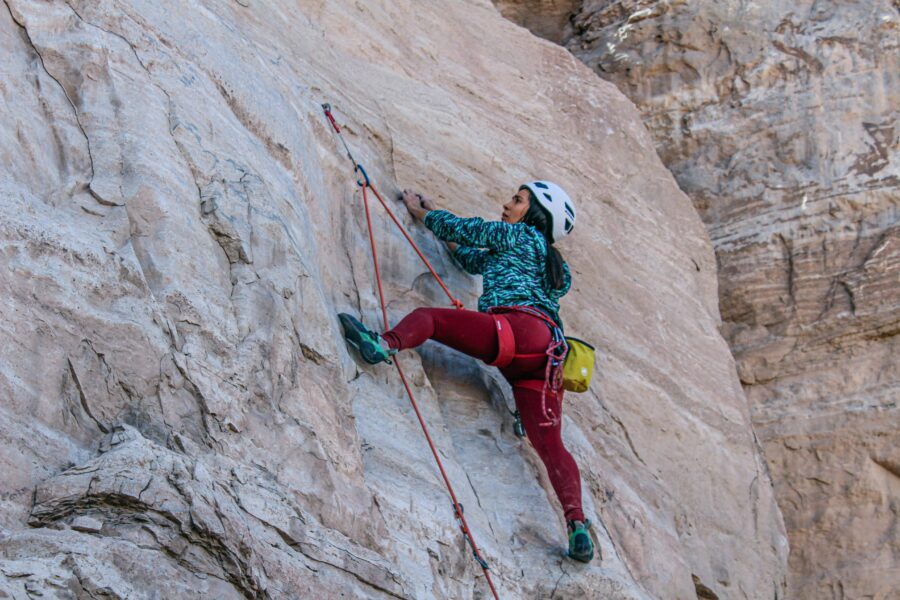
The tripod position just means you’re keeping three points of contact on the wall at once, usually two feet and one hand, or two hands and one foot. Those three points give you a stable base to balance over and move from.
Instead of moving from a stretched-out or off-balance spot, you drop back into the tripod to reset and get ready for the next move. Think of it as your home base between holds.
When This Technique Shows Up
The tripod position shows up constantly, especially when you’re:
- Transitioning between movements
- Getting ready to reach for the next hold
- Stabilizing after a hard move
- Climbing technical or balance-heavy terrain
More often than not, it’s the position you return to right before you commit to your next move.
How Climbers Use the Tripod Position on the Wall
On the wall, you use the tripod to build stability before you move. Here’s what that looks like in practice:
- Keep three points of contact on the wall
- Set your body so your weight sits over your feet, not hanging off your arms
- Pause for a beat to settle before you reach
- Move one limb at a time while the other three hold you steady
Move like this and you climb more deliberately, with fewer surprise swings and less scrambling to hang on. A lot of it comes down to your feet, so it’s worth dialing in how you use your toes so your weight actually loads through them.
Why the Tripod Position Matters for Your Climbing
The tripod position in climbing pays off in balance, control, and efficiency. When you use it well, it helps you:
- Stay stable between movements
- Burn less energy hanging on
- Reach holds more accurately
- Keep control on technical climbs
Most sketchy moments happen when climbers try to move from an unstable spot instead of resetting into a solid one first. Adding a flag with your free leg is one easy way to turn a shaky two-point position back into a balanced base.
Common Mistakes With the Tripod Position
A few things trip climbers up here:
- Moving before they’ve got a stable base
- Letting every limb move at once
- Not shifting their weight fully onto their feet
- Rushing the move without control
These are the mistakes that lead to swinging off, slipping, or just wasting energy. If your feet keep skating out from under you, it’s usually a trust issue, and getting comfortable with smearing and trusting friction makes those three points a lot more reliable.
Where This Technique Fits in Progression
The tripod position is a foundational technique you can start using immediately, even as a beginner. As climbs get harder, holding stable positions between moves matters even more, not less.
You’ll keep refining it as your balance and movement control improve. Pairing it with hip turns is a natural next step once the basics feel solid, since turning your hip into the wall lets you reach further from the same stable base.
Get One Climbing Drill a Week, Free
If you want to actually build habits like the tripod position instead of just reading about them, come train with us. The Send Edition newsletter sends you one short climbing drill a week, about 15 minutes each, completely free. It’s the easiest way to turn technique tips into real movement on the wall.
Related Techniques
The tripod position works hand in hand with other balance and positioning techniques, like:
Put together, these techniques form the foundation of efficient movement on the wall.
How to Train This Technique
Once you know what the tripod position looks like and when it shows up, the next step is practicing it on purpose during your sessions.
Once you understand the technique, here’s how to train it.
Explore the Full Technique System
For a complete breakdown of climbing techniques, see
Climbing Technique Fundamentals: 22 Essential Techniques Explained.
Frequently asked questions
What is the tripod position in climbing?
It’s when you keep three points of contact on the wall at once, usually two feet and one hand, or two hands and one foot. Those three points give you a stable base to balance over and set up your next move.
When should I use the tripod position?
Use it any time you need to stabilize before moving, like transitioning between holds, getting ready to reach, or resetting after a hard move. It’s especially handy on technical, balance-heavy terrain.
What’s the most common tripod position mistake?
Moving before you’ve got a stable base, and letting more than one limb move at a time. Both lead to swinging, slipping, and wasted energy. Fix it by settling your weight over your feet and moving one limb at a time.
Is the tripod position only for beginners?
No. It’s foundational enough for beginners to use right away, but it matters even more as climbs get harder and you need to hold stable positions between tougher moves.
How do I practice the tripod position?
Climb slowly and pause in a solid three-point stance before every move, shifting your weight onto your feet before you reach. A weekly drill routine helps too, and the free Send Edition newsletter sends you one short drill a week to build the habit.
Where this fits
Balance and body control are the same conversation. See the Body Positioning guide.