This post contains affiliate links. If you buy through them, I may earn a commission at no extra cost to you.
Watch two climbers do the same problem. One moves through it like a sentence. The other does it like a list: reach, stop, look, reset, reach, stop. They both get to the top, and one of them is exhausted.
The difference isn’t always fitness and it’s usually not technique in the sense of knowing what to do. Sometimes it is that your shoes aren’t letting you trust your feet enough to keep moving.
Why stopping on every hold costs you
Holding still on a hold is work. Your fingers are loaded, your muscles are contracted, and nothing is being accomplished. Every pause on a route is a small payment for no progress.
Starting is also work. Getting a limb moving from a standstill takes more effort than continuing something already in motion, so a climb made of twelve separate starts costs more than a climb made of three connected sequences.
Then there is the compounding part. Stopping makes you more pumped, being more pumped makes you grip harder, gripping harder makes you more tired, and being more tired makes you want to stop and figure things out. The loop closes on itself.
When your shoes make you hesitate
If you are stopping to adjust your feet, reset your weight, or double-check a foothold before you commit, your shoes might be part of the problem. Shoes that are too stretched out, too soft for the terrain, or sized wrong make you second-guess placements you would trust in a better pair.
This is the misunderstanding that stops people working on it. They picture flow as speed, try climbing quickly, place their feet badly, and conclude that flow is for other people. Rushing isn’t fluidity. Rushing is doing the same disconnected moves with less attention.
Fluidity is about the gaps rather than the moves. A climber can move quite slowly and still be completely fluid, as long as the movements connect into each other instead of stopping between. Deliberate and continuous are perfectly compatible. Rushed and continuous aren’t.
What to look for in a shoe that supports smooth climbing
The shoe that lets you move continuously is the one that fits your foot well enough that you trust it without thinking.
Fit matters more than model
A shoe that fits your foot shape will let you weight a foothold and move on without resetting. If you are constantly adjusting or feeling like your heel might pop, you will stop to check your feet instead of trusting them.
Stiffness for the terrain
Stiffer shoes give you a platform on small edges that lets you commit to the next move. Softer shoes let you feel more but require more precision. Match the shoe to what you are climbing, not what looks cool.
Fresh rubber
Worn-out rubber makes you hesitate on smears and volume placements. If you are stopping to test footholds you used to trust, check your soles.
A shoe that gets recommended a lot for all-around performance
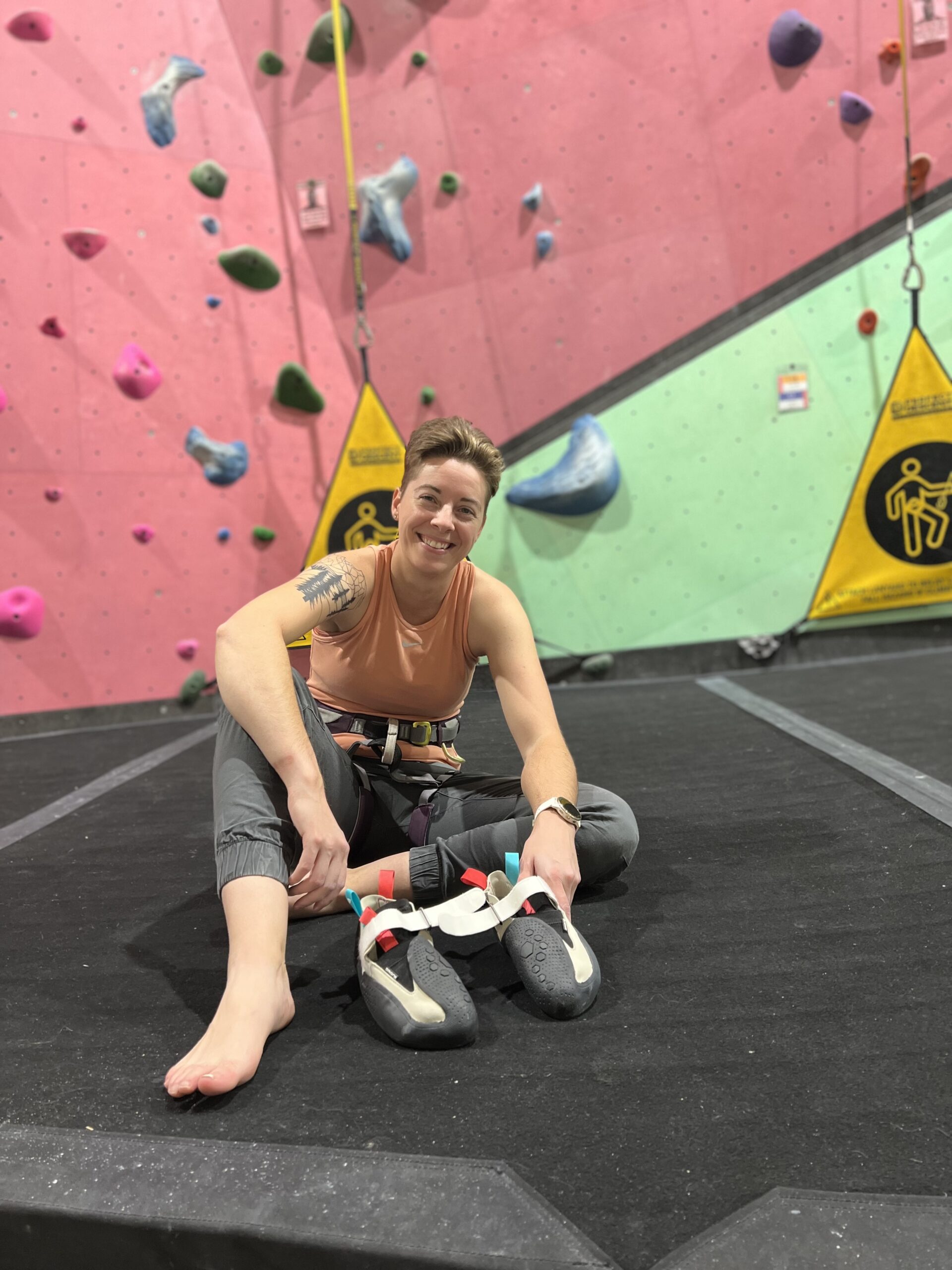
The La Sportiva Tarantulace comes up in forums constantly as a shoe that just works for people learning to trust their feet. It isn’t the most technical shoe and it isn’t trying to be. It fits a lot of foot shapes reasonably well, the rubber is sticky enough for most gym and outdoor climbing, and the lace system lets you dial the fit so your foot isn’t sliding around inside.
Climbers mention it because it doesn’t make you think about your shoes while you are climbing, which is exactly what you want when you are working on moving smoothly. It’s stiff enough to stand on small edges without your foot collapsing, but not so stiff that you lose all feel.
This is based on what climbers are talking about in forums, not a lab test. Confirm sizing and return policy with the shop before you buy.
Check current price at Backcountry
Matching pace to terrain
The actual skill is knowing which speed a section wants, and that is a reading job as much as a movement one.
Technical sequences want deliberate
Small holds, precise feet, delicate balance. Here you slow down, place things properly, and accept that the section costs time. Rushing a slab is how people fall off slabs.
Pumpy ground wants continuous
Steep terrain on decent holds where the clock is your enemy. Every second you spend deciding is a second your forearms are paying for. Move, and if it isn’t perfect, keep moving.
Dynamic moves want committed
A move that needs momentum needs you to commit fully. Hesitating halfway through gives you the downside of both: you spend the energy and lose the momentum. Push from your feet and go.
Rests want stopped
The one place stopping is correct, and the place most climbers don’t stop. Finding the rests is what earns you the right to be continuous elsewhere.
Breathing, which is often the quickest fix available
Almost everyone holds their breath on hard moves. It’s automatic, it comes with bracing, and it does two bad things at once: it adds tension you didn’t need and it cuts the oxygen you did.
The instruction is simple: exhale as you move. Breathe out through the reach rather than holding it in and gasping afterwards.
This is unusual among climbing habits in that you can change it consciously in one session. It also does more for how smooth your climbing feels than almost anything else, because breath sets the rhythm everything else follows.
Where the stops come from
If you are stopping a lot, it’s usually one of three things, and they have different fixes.
- You do not know what comes next. That is a reading problem, not a movement one. Reading the route properly removes most mid-climb pauses.
- You are hesitating on a move you can do. That is commitment, and it breaks rhythm more than anything else. It’s covered under fear management.
- Your position is wrong so you have to reset. That is body position, and the fix is getting the position right the first time rather than climbing faster.
This matters because “climb more smoothly” is useless advice if the reason you are stopping is that you genuinely don’t know where to go, or your shoes aren’t giving you the confidence to commit to your feet.
Common mistakes
- Confusing speed with flow. Rushing makes precision worse and smoothness no better.
- Trying to be fluid on your limit. At your limit you are surviving. Flow develops two or three grades below.
- Holding your breath. Universal, automatic, and fixable in one session.
- Treating every section the same. One pace for a whole route means you are wrong for most of it.
- Never resting. Continuous climbing isn’t the same as never stopping. It means not stopping where stopping doesn’t help.
- Climbing in shoes that do not fit. If you are adjusting your feet between moves, your shoes are making you stop.
Where this fits in your progression
Fluidity develops throughout, but the payoff is largest for intermediate climbers. Beginners stop because they are genuinely working out where their limbs go, which is reasonable and temporary. Once the movements are familiar, the stopping is habit, and habits respond quickly to attention.
It’s also the thing that shows up most clearly on video and least clearly from the inside. Filming one lap tells you more about your rhythm in thirty seconds than a season of climbing will.
Related techniques
Movement fluidity works together with:
How to work on this
Rhythm responds well to constraint drills, all on easy terrain:
- No stopping. Climb an easy route without pausing anywhere. Not fast, just never fully stopped. You will find out exactly where your habitual pauses are.
- Exhale on every move. One lap, breathing out through each reach. It feels ridiculous and it works immediately.
- Metronome climbing. Move on a count, one move every two seconds, on a problem well below your limit. It forces continuous movement and shows you which moves you were unconsciously stalling on.
- Film one lap. Side on, easy problem. Watch where you stop. Almost nobody predicts their own pauses correctly.
Twice a week on terrain two or three grades below your limit. This is a skill that needs spare attention, which you don’t have when you are trying hard.
Frequently asked questions
Why does my climbing look jerky?
Usually because you are treating each move as a separate event. You reach a hold, stop, reset, look around, then start the next move from a standstill. Every one of those stops costs energy, because holding still on a hold is work and starting from zero is more work than continuing. Fluid climbing is climbing where the moves are connected.
Should I climb fast or slow?
Both, in different places. Rushing and flowing aren’t the same thing, and neither are slow and controlled. The skill is matching your pace to the section: deliberate through technical sequences where precision matters, continuous through pumpy ground where stopping costs you, and committed on dynamic moves where hesitation kills the momentum you need.
What does climbing with rhythm actually mean?
It means your movement has a repeating shape rather than being a series of unrelated efforts. Reach, weight shift, feet, reach. Breathing out as you move rather than holding your breath. The pattern is what lets your body predict what is coming, which is what makes it feel smooth.
Why do I stop breathing when I climb?
Almost everyone holds their breath on hard moves. It happens automatically when you brace, and it adds tension you didn’t need and cuts the oxygen you did. Exhaling as you move is the fix, and it’s one of the few climbing habits you can change consciously in a single session.
Is fluidity a beginner or advanced skill?
It develops all the way through, but the largest gains tend to come to intermediate climbers. Beginners are still working out where their limbs go, so stopping to think is reasonable. Once the movements are familiar, the stopping becomes a habit rather than a necessity, and that is the point at which working on flow pays off quickly.
Can climbing shoes affect how smoothly I move?
Yes. If your shoes don’t fit well or the rubber is worn out, you will hesitate on footholds you would otherwise trust. That hesitation breaks your rhythm and makes you stop to reset instead of moving continuously. A shoe that fits your foot shape and has fresh rubber lets you commit to your feet without thinking about it.
Related: Best Climbing Shoes for Drop Knees: Aggressive Downturned Shoes for Steep Terrain.