This post contains affiliate links. If you buy through them, I may earn a commission at no extra cost to you.
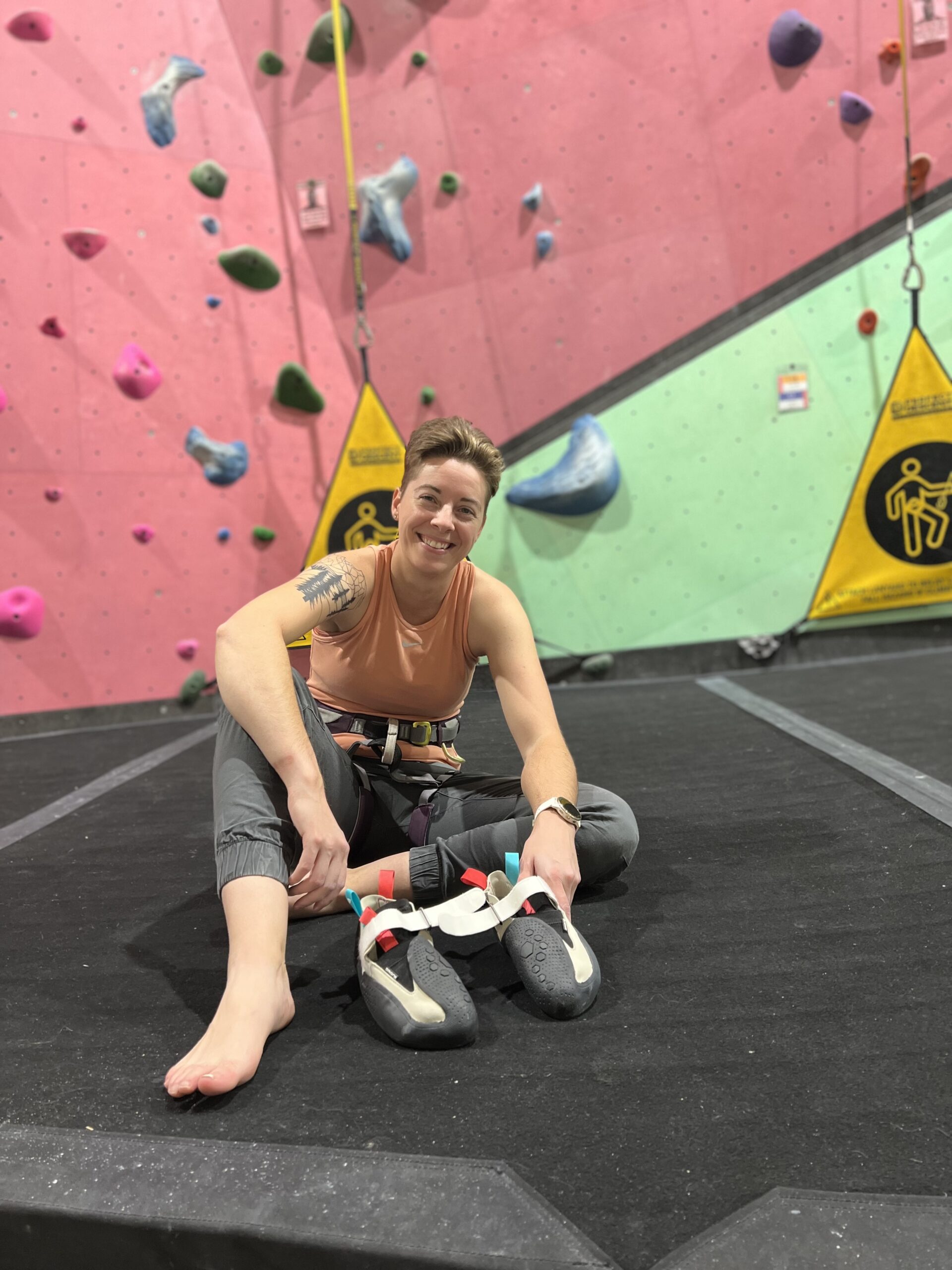
One of my best friends is finally making the jump to buy his own pair of shoes instead of renting a pair every time we climb together. He loves climbing, but he wasn’t sure he was ready to drop money on an expensive pair while he’s still figuring out what kind of climbing he likes and whether he’s going to keep at it on a regular basis.
Since I’m his favorite climbing partner, he asked me for shoes he could get for under $100.
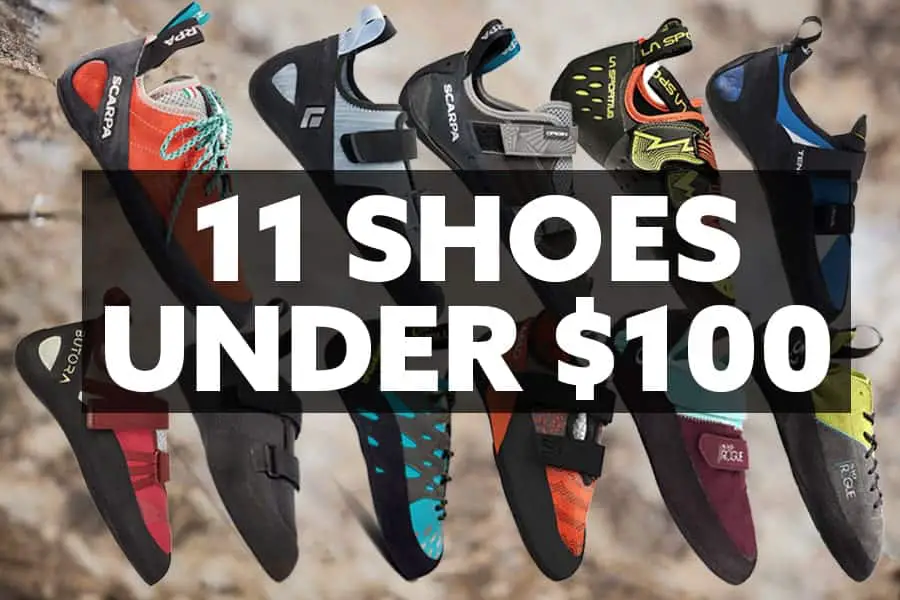
So I did some digging for him, and I’ve pulled together everything I found on the best climbing shoes under $100 right here. Every pair below lands around that price, and I’ve added a quick summary for each one so you can work out which fits your feet and the kind of climbing you like.
Best Shoes For All-Around Climbing: TENAYA Tanta Climbing Shoes, $99
Best Shoes For Rock Climbing: Scarpa Helix Climbing Shoes, $99
Best Shoes For Bouldering: Mad Rock Weaver Climbing Shoe, $99
What to know before you buy climbing shoes under $100
Here’s the honest truth about climbing shoes under $100. They’re a great way to get on the wall without spending a fortune, and a few of them punch well above their price. The tradeoff is the rubber. Cheaper rubber doesn’t last as long and won’t stick quite like the pricey stuff, so you’ll be replacing a budget shoe sooner than a high-end one. For a first pair, while you’re still learning what you like, that’s a fair trade. If you’re not sure how a climbing shoe is even supposed to feel on your foot, it’s worth reading up on how tight your climbing shoes should fit and what affects how climbing shoes fit before you buy.
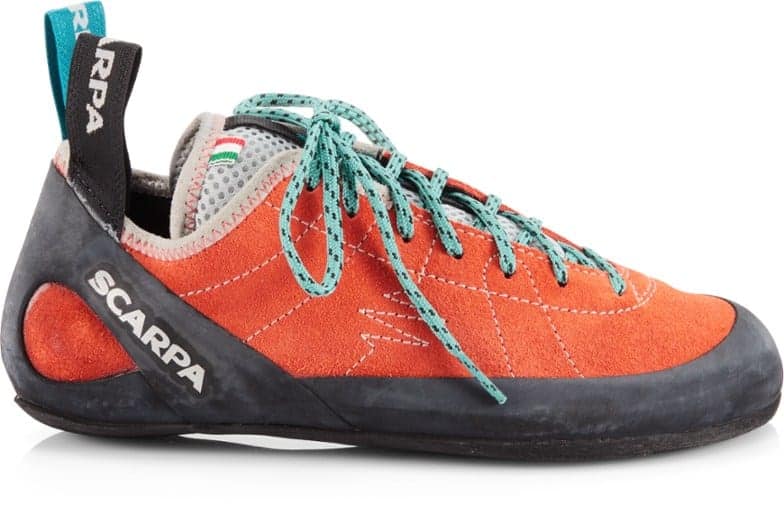
Scarpa Helix Climbing Shoes
- See the price from Backcountry here.
- Type: Neutral/Flat
- Upper Material: Suede
- Closure: Laces
- Size: Wide and Narrow Options
Unlike most of the shoes on this list, these have laces. That makes them a nice pick if you like rope climbing. They’ve also got a classic look to them, which is fun and might make you stand out a little at the crag or the gym.
What really sets the Helix apart from the rest of the shoes under $100 is the rubber.
The 3.5mm Vibram XS Edge rubber is close to the 4mm Vibram XS Edge that Scarpa uses on a lot of their pro-level shoes.
The rubber won’t last as long as it does on the pro shoes, but it sticks a lot like it does, and it might give you a slight edging advantage over other beginner shoes.
The Helix is an all-time classic. It was around for the first ascents on Moonlight Buttress and Astroman. With a flat profile and a fairly symmetric shape, it’s really comfortable on multi-pitches. The suede upper stretches a touch to conform to your foot, and the Flexan midsole gives ultra-thin support that suits intermediates in the gym. The only updates are a padded tongue for comfier crack climbing and the Vibram XS Edge sole that stays grippy for seasons.
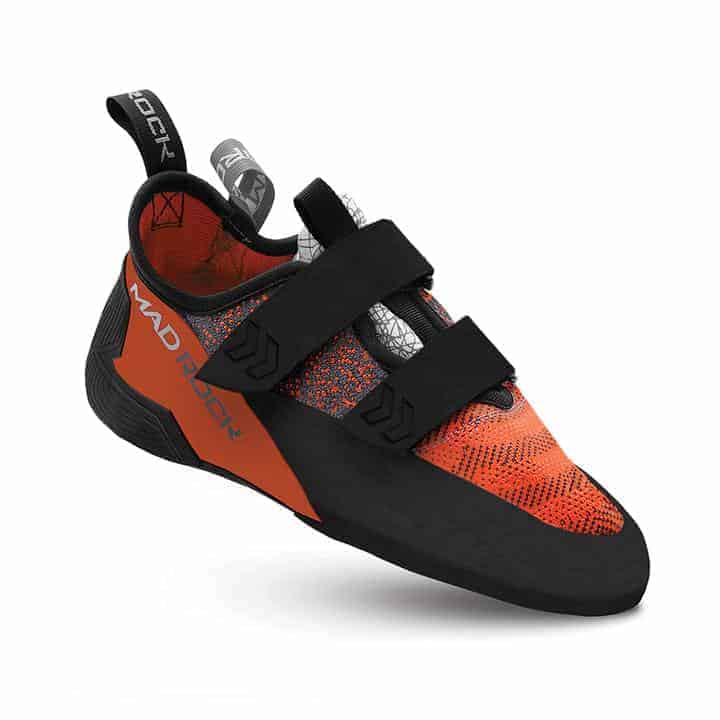
Mad Rock Weaver Climbing Shoe
- See the price from Backcountry here.
- Type: Moderate
- Upper Material: FloKnit
- Closure: Straps
- Size: Wide and Narrow Options
Mad Rock isn’t the most popular brand among climbers, but they make great shoes, especially for bouldering. The nice thing about the Weaver is that it uses the same Science Friction 3.0 rubber they put on their pro shoes. If bouldering is your thing, it’s also worth checking out my picks for the best bouldering shoes once you’re ready to upgrade.
I climb in their Mad Rock Dron LV shoes, which run the same rubber, and it’s super sticky with a nice balance between sensitivity and support.
On top of that, the Weaver is a moderate shoe, which is an intermediate profile and rare for anything under $100. Most moderate shoes start at $140 and up.
Mad Rock is actually calling the Weaver their comfiest shoe yet. A lot of that comes down to the FloKnit upper, which uses flexible knitting and heat-fused TPU to seriously boost breathable comfort. The Weaver also gets a comfortable profile from the moderate curve that gently bumps up performance for beginner and intermediate climbers.
La Sportiva Tarantulace Climbing Shoes
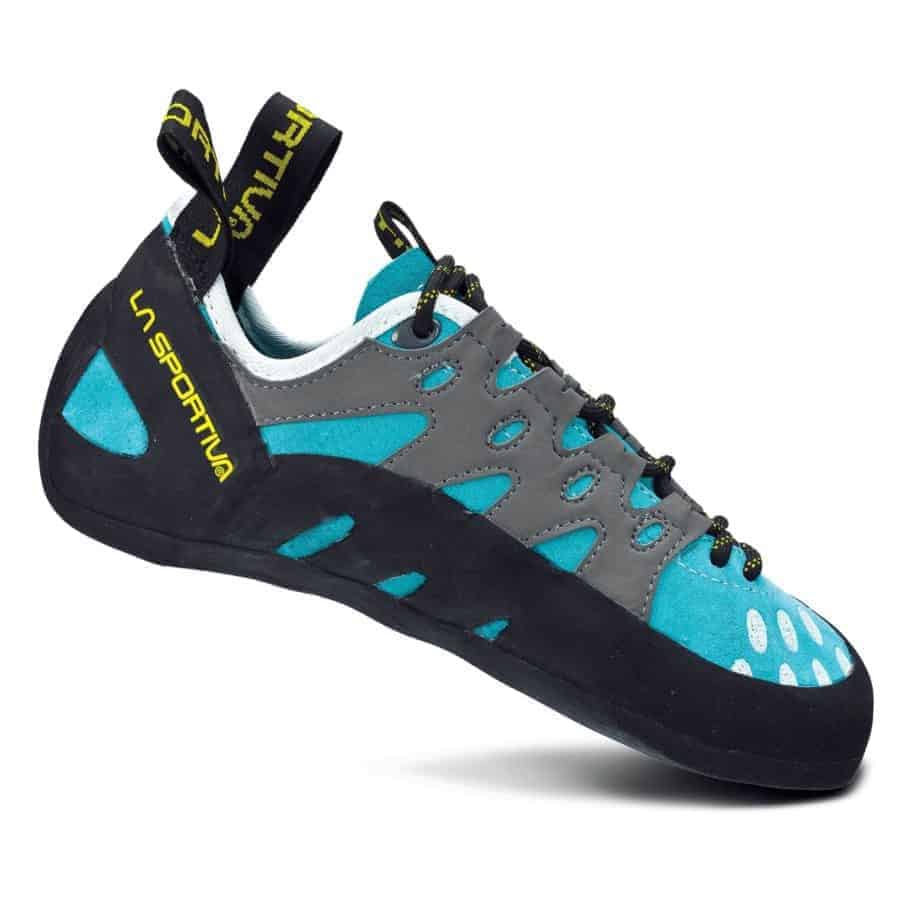
The Tarantulace is probably the most popular beginner shoe I see in the gym. That’s likely because it has a wider toe, so climbers who are new to it don’t have to worry about their toes screaming while they wear them.
They’ve got a flat (neutral) profile, so you can keep them on for a long stretch without your feet hurting. That’s great for gym climbers who don’t want to pull their shoes off between routes during long sessions.
They’re made with leather and have no lining, so they’ll stretch up to about half a size once you fully break them in. Because of that, think about going half a size smaller than you normally would. It’ll hurt a bit more while you break them in, but they’ll hug your toes really well once they stretch out. If you want to get this right the first time, my guide on how tight climbing shoes should fit walks through it.
If you don’t size down half a size, you risk them being too big once they’re broken in.
TENAYA Tanta Climbing Shoes
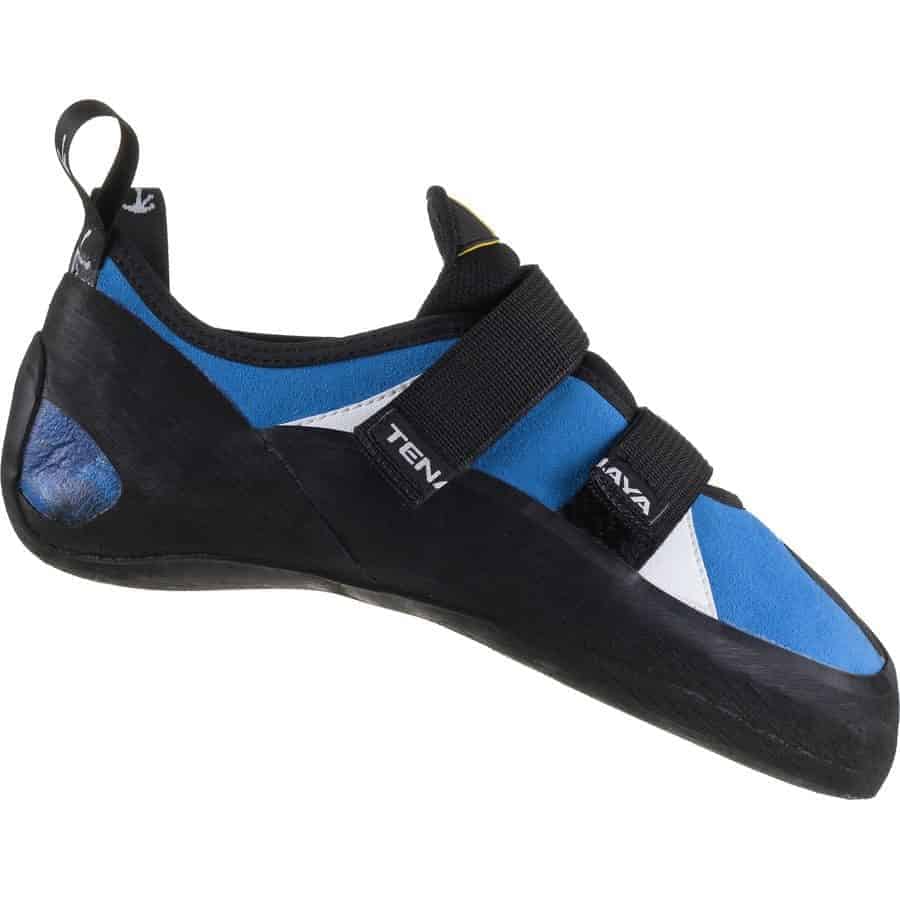
- See the price from Backcountry here.
- Type: Slight downturn and moderate aggression
- Upper Material: Microfiber
- Lining: Cotton
- Closure: Strap
- Size: Wide and Narrow Options
There are very few climbing shoes under $100 with a moderate downturn, so the Tanta stands out. That matters because a moderate shoe is a great way to get some of the benefits of pro shoes without the pain of cramming your foot into a highly asymmetrical, aggressively downturned toe.
If your feet fit well in these, I’d say give them a shot. They can give you an edge on overhangs and small toe holds that neutral, flat shoes just can’t.
Tenaya built this one with a slight downturn for the moderate aggression that intermediate climbers want on harder projects. The mix of synthetic leather and breathable, odor-resistant cotton lining keeps the upper from stretching out like your old leather pair. Not too soft and not too stiff, the Tanta’s midsole and rubber sole feel just right for smearing, edging, and heel hooking your way to the top.
Black Diamond Momentum Climbing Shoes
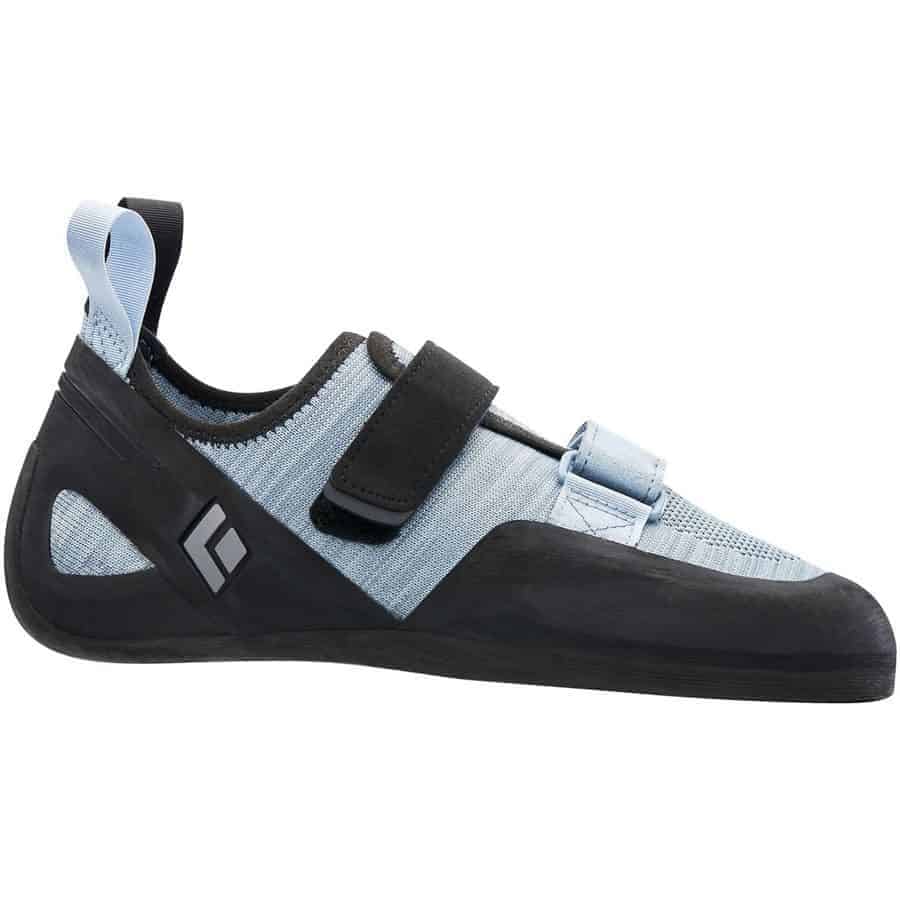
These were my wife’s first bouldering shoes, and even now that she’s upgraded to nicer, fancier ones, she still tells me how much she misses the Momentums.
She and a lot of other climbers find the Momentum super comfortable. It has a flat profile and comes in wide (men’s) and narrow (women’s) options, so you can find a fit that works for you.
The Momentum was built with comfort front of mind, but it still performs. With Engineered Knit Technology for great breathability and a proprietary molded rubber, it’s a solid entry-level shoe for all-day comfort at the gym or the crag.
Scarpa Origin Climbing Shoes
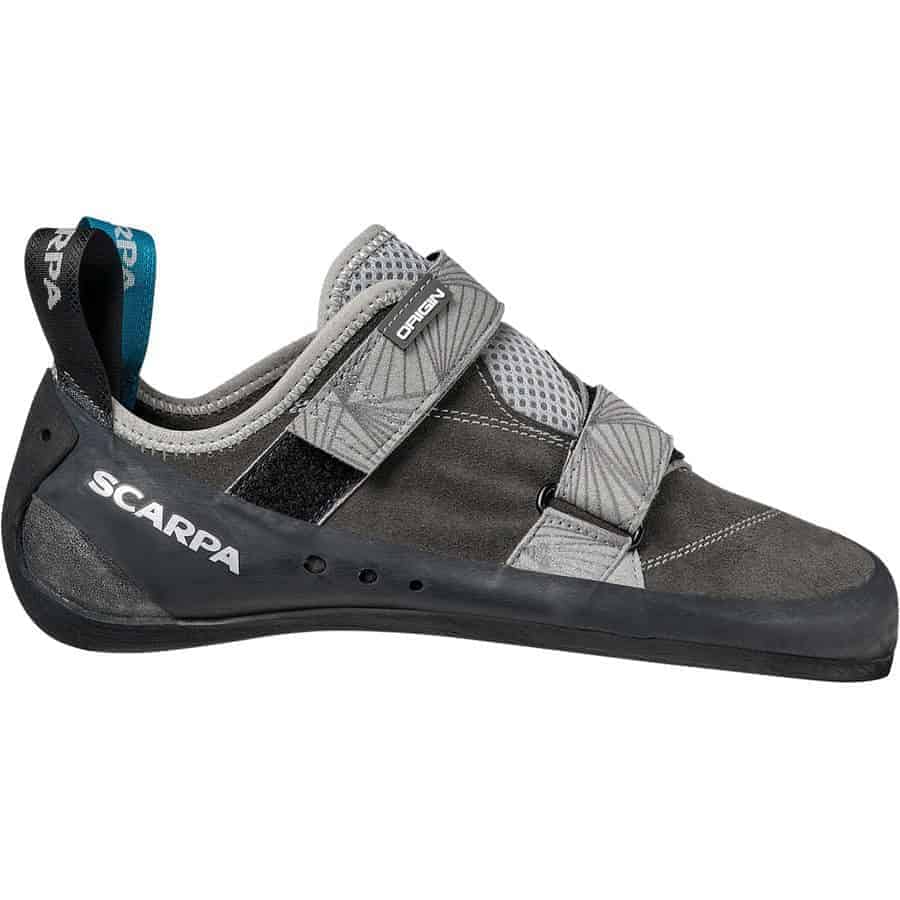
These are made with comfort front and center. Climbers say they feel just like they were marketed to feel, “like a cocoon” all day. A nice touch is that the suede leather stretches, but reportedly only to the shape of your toes.
I’ve climbed in shoes with a tongue similar to this one, and I didn’t love the extra room the padded tongue left in the upper. Plenty of climbers love it though, so it comes down to personal preference.
The Origin has a lush leather upper that gives it a padded, almost luxury feel you rarely find in a shoe meant to get people into climbing. The flat profile and fairly relaxed randing ease your feet into that cocoon of comfort, and the hook-and-loop closure keeps the foot snug and well positioned while you climb. The Origin also introduces Scarpa’s Vision rubber, a proprietary compound that’s both sticky and tough enough for everything new climbers’ feet will throw at it.
La Sportiva Oxygym Climbing Shoes
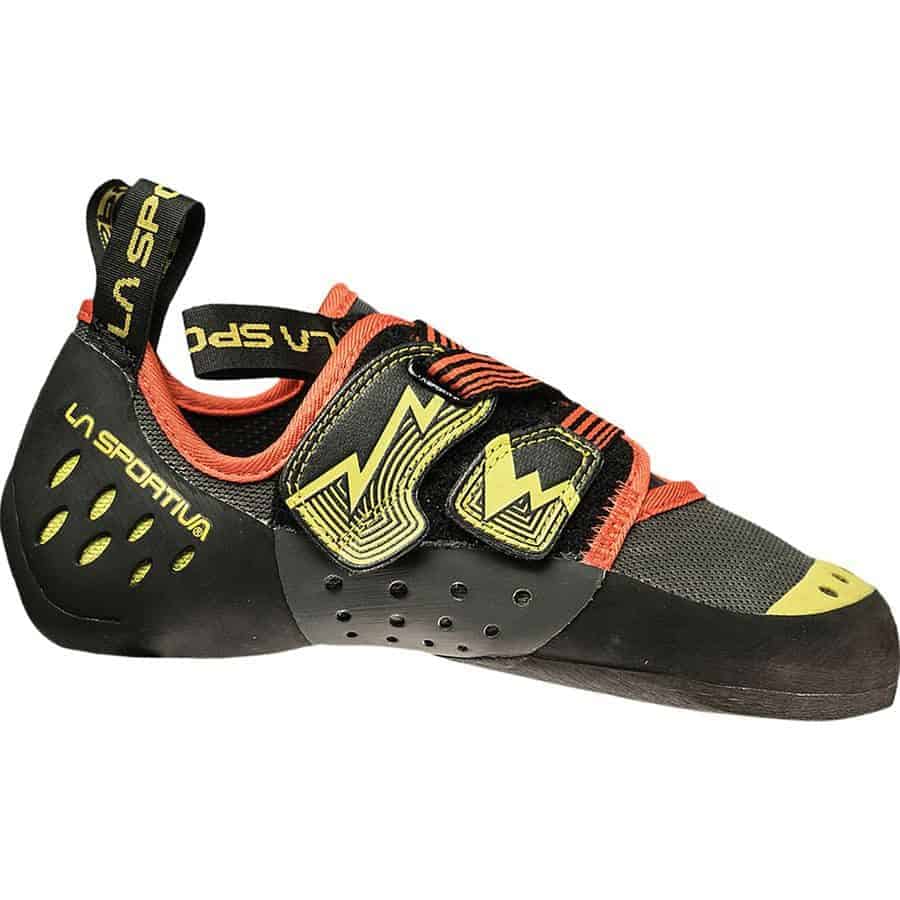
- See the price from Backcountry here.
- Type: Neutral/Flat
- Upper Material: Synthetic
- Lining: AirTex Silver
- Closure: Straps
- Size: Wide and Narrow Options
These were the first pair I ever bought, and just like the name says, they’re perfect for the gym. I loved the confidence the fit gave me, and they were comfortable enough that I could keep them on while belaying or waiting for a route to open up at the bouldering gym. They’re the shoes that helped me level up at the start of my climbing adventure, and I think fondly of them.
Of course, like all climbing shoes under $100, they don’t last as long, and the rubber started to peel away from the rest of the shoe. Even so, I kept wearing them until the rubber stopped giving me the support or stickiness I needed.
I’ve gone through a few pairs since then, and these are my new favorite bouldering shoes (sorry, they’re over $100).
Synthetic material tends to stretch less than leather, so the fit you feel out of the box isn’t too far off the fit you’ll get after a few weeks of wear. Minimal asymmetry and a neutral profile make it easy to wear this grippy shoe for hours, whether you’re working slabby under-vert or slightly over-vert problems. The round toe handles a variety of surfaces, be it a top-rope line at the gym or rock outside. The patented hook-and-loop closure gives you two points of adjustment for a really personal fit, plus quick changes between climbs. Slip-lasted construction takes away a bit of the stiffness, so your wait for the wall isn’t a foot-wrenching experience.
Butora Endeavor Moss (Wide Fit) Climbing Shoes
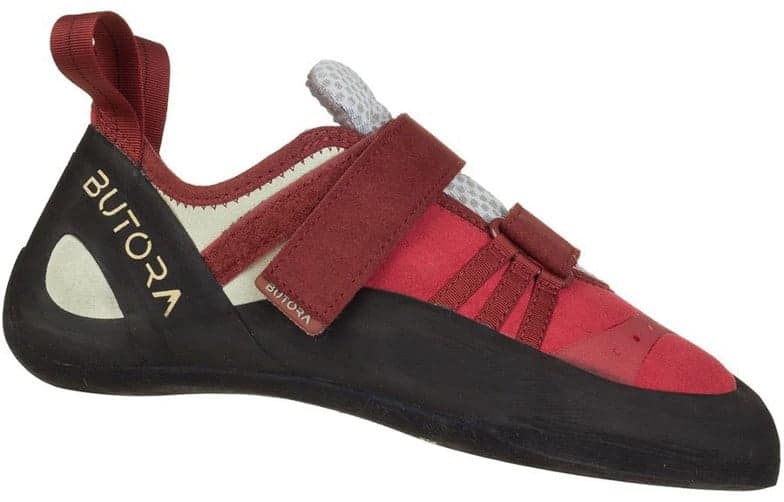
- See the price from Backcountry here.
- Type: Neutral/Flat
- Upper Material: Synthetic/leather
- Lining: Hemp
- Closure: Straps
- Size: Wide
These are a great option for climbers with average to wide feet. There’s sock-like padding that makes them a solid pick for anyone who finds themselves jamming their feet into cracks while they climb.
A lot of climbers have noticed these fit differently than most climbing shoes, so it’s worth checking Butora’s sizing chart before you order.
Thanks to the Endeavor’s slightly asymmetrical toe, this shoe has a natural feel, and it’s built with a triple fork webbing construction for a personalized fit. It also has a hybrid upper of synthetic microfiber and natural leather that give it shape and breathability, while a two-piece tongue helps ventilation, and the Poron memory foam takes pressure off the straps.
Five Ten Rogue Lace Climbing Shoes
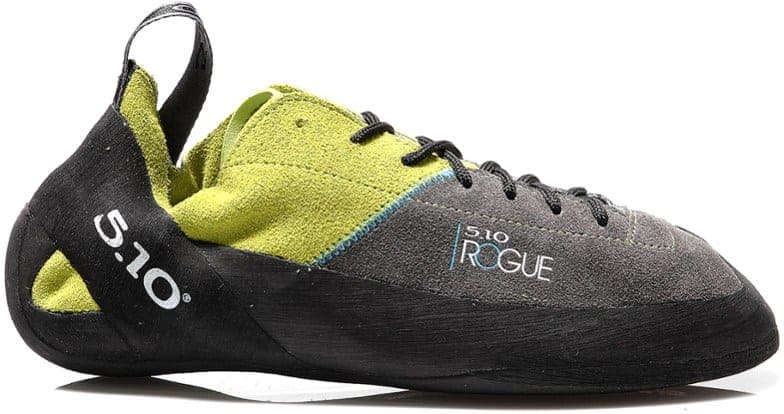
- See the price from Backcountry here.
- Type: Moderate
- Upper Material: Leather
- Lining: Leather
- Closure: Laces
- Size: Wide and Narrow Options
A lot of climbers who use this one say it’s a great pick if you want something a bit more intermediate than most shoes in the same price range. It has a moderate downturn, which is great for small toe holds, and it’s a lace-up, so you can dial in the fit section by section along your foot.
The Five Ten Rogue Lace won’t break the bank, but that doesn’t mean Five Ten held back on the tech. Built on the same last as Five Ten’s Stonelands shoe, the Rogue has a natural, relaxed foot position, so you can learn the ins and outs of toeing into jibs without the discomfort of upper-end footwear. The upper is split-grain leather that conforms to your foot as you climb, with a uniform give and natural breathability for even more comfort. With the lace-up closure, you get customized tension around your foot so everything stays nice and snug.
Five Ten Rogue VCS Synthetic Climbing Shoes
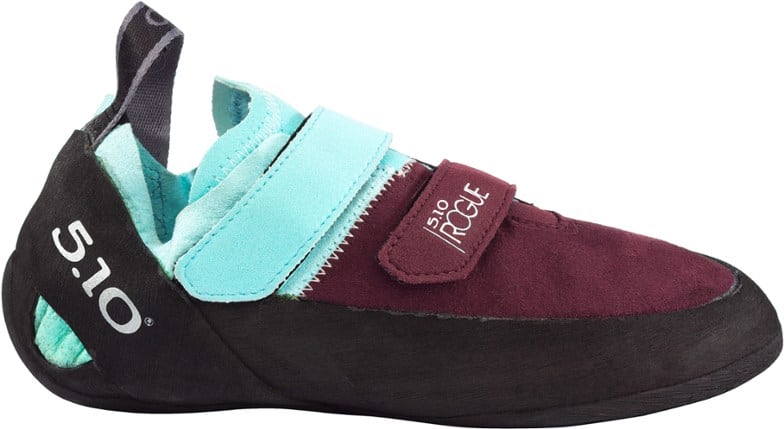
- See the price from Backcountry here.
- Type: Moderate
- Upper Material: Split-grain Leather
- Lining: Stretch arch lining
- Closure: Strap
- Size: Wide and Narrow Options
One of the best things about this shoe is the 4.2mm Stealth® C4™ ultra-sticky rubber outsole. It grips nearly every surface and edges well for smearing and climbing in the gym. It’s close to the rubber Five Ten uses on their pro shoes, so it’s great value for the price.
Five Ten designed the Rogue VCS for beginners who want to carry what they’ve learned on plastic over to outdoor rock. Just because it’s inexpensive doesn’t mean it’s cheap on performance. Five Ten used the same last as the Stonelands for a natural, relaxed fit that beginners crave while they learn how to step up on a jib or smear over slabs. The Rogue has a breathable split-grain leather upper that conforms to your foot for a glove-like fit, but go easy on sizing because this one can stretch up to a full size over time. The hook-and-loop closure lets you get it on quick and off easy.
Disclaimer:
My first pair of climbing shoes was the La Sportiva Women’s Oxygym. As the name says, they’re great for the gym, and they gave me the confidence I needed to level up my climbing.
But just like all of these shoes under $100, the rubber is cheaper than what you get on shoes even $40 to $60 more, so they don’t last as long. It was only two months in when I started to notice the rubber separating from the rest of the shoe.
After three months, I realized my shoes weren’t giving me the support or stickiness I wanted, so I had to upgrade. With my new shoes, I’m getting 6 months to 1 year with heavy use (3 to 4 times a week for 2 to 3 hours in the gym). That’s almost four times the use for less than $60 more.
So my honest take is to spend a little more for a shoe that’ll give you more support, stick to holds better, and last longer. If you want the full rundown on fit and materials before you commit, my climbing shoe FAQ covers the questions I get asked most.
A pair of shoes gets your feet on the wall, but footwork is what actually makes you feel steady up there. If you want a simple nudge in that direction, the free Send Edition newsletter sends you one short climbing drill a week that takes about 15 minutes. It’s a low-effort way to keep improving between sessions.
Here is my recommendation for the best bouldering shoes.
Here is my recommendation for the best sport climbing shoes.
Frequently asked questions
Are climbing shoes under $100 good enough for beginners?
Yes. Budget shoes are a great way to start, and a few on this list use the same rubber as their brand’s pro shoes. The main tradeoff is that cheaper rubber wears out faster, so you’ll replace a first pair sooner than a high-end one. For learning what kind of climbing you like, that’s a fair trade.
What’s the best all-around climbing shoe under $100?
In this roundup the Tenaya Tanta ($99) is my pick for all-around climbing. If you mostly rope climb, the Scarpa Helix ($99) with its laces is a great shout, and for bouldering the Mad Rock Weaver ($99) stands out because it’s a rare moderate shoe at this price.
How long do budget climbing shoes last?
In my experience the rubber on shoes under $100 started separating around two months in, and by three months they weren’t giving me the support or stickiness I wanted with heavy use. Stepping up to a pricier pair got me closer to 6 months to 1 year climbing 3 to 4 times a week.
Should I size down in budget climbing shoes?
It depends on the material. Leather shoes like the La Sportiva Tarantulace can stretch up to about half a size, so going half a size smaller helps them fit your toes once broken in. Synthetic shoes stretch less, so the out-of-the-box fit is close to what you’ll keep.
Do cheap climbing shoes come in wide and narrow options?
Plenty do. Several picks here, including the Scarpa Helix, TENAYA Tanta, and Black Diamond Momentum, come in wide and narrow options, and the Butora Endeavor Moss is a strong choice if you have wider feet.