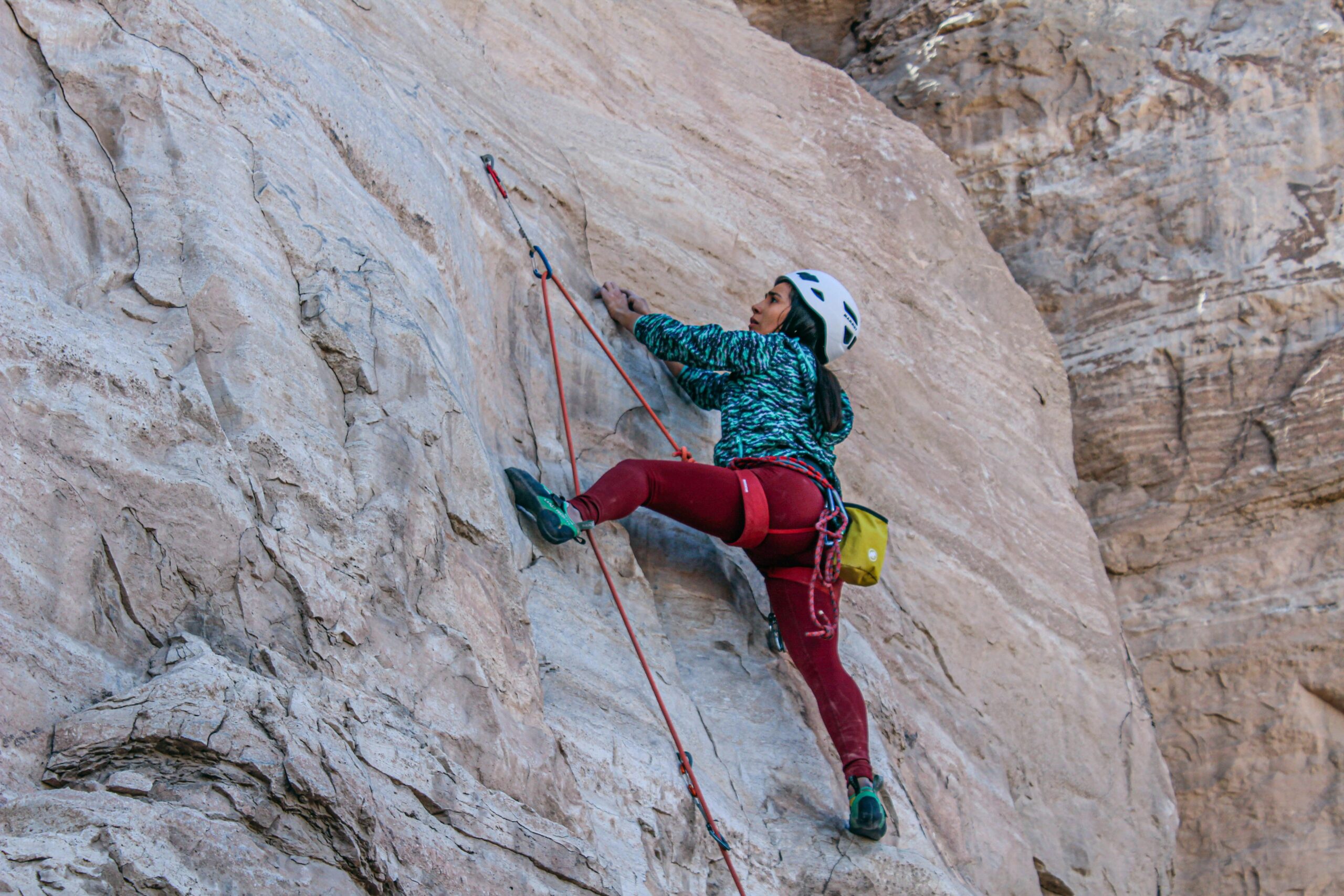
The tripod position is a foundational climbing technique that helps climbers stay balanced and controlled while moving. By maintaining three points of contact with the wall, climbers can stabilize their body and move more efficiently between holds.
This technique appears on nearly every climb and is especially important when preparing to move or reaching for the next hold.
What Is the Tripod Position in Climbing?
The tripod position refers to a body position where three points of contact are maintained on the wall, typically two feet and one hand, or two hands and one foot. These three points create a stable base that supports balance and controlled movement.
Instead of moving from unstable or stretched positions, climbers use the tripod position to reset and prepare for the next move.
When This Technique Shows Up
The tripod position shows up constantly throughout a climb, especially when:
- Transitioning between movements
- Preparing to reach for the next hold
- Stabilizing after a difficult move
- Climbing on technical or balance-focused terrain
It is often the position climbers return to before making their next move.
How This Technique Is Typically Used During a Climb
During a climb, the tripod position is used to create stability before moving.
Climbers typically use this technique by:
- Keeping three points of contact on the wall
- Positioning their body so weight is balanced over their feet
- Pausing briefly to stabilize before reaching
- Moving one limb at a time while maintaining control
This approach allows climbers to move more deliberately and avoid unnecessary swings or loss of balance.
Why the Tripod Position Matters
The tripod position improves balance, control, and movement efficiency.
When used effectively, it helps climbers:
- Stay stable between movements
- Reduce unnecessary energy use
- Improve accuracy when reaching for holds
- Maintain control on technical climbs
Many climbing mistakes happen when climbers move from unstable positions instead of resetting into a stable one.
Common Mistakes With the Tripod Position
Some common mistakes climbers make include:
- Moving without establishing a stable base
- Letting all limbs move at once
- Not shifting weight fully onto the feet
- Rushing through movements without control
These mistakes often lead to swinging, slipping, or inefficient movement.
Where This Technique Fits in Progression
The tripod position is a foundational climbing technique that beginners can apply immediately. As climbs become more complex, maintaining stable positions between movements becomes even more important.
Climbers continue refining this skill as they develop better balance and movement control.
Related Techniques
The tripod position works closely with other balance and positioning techniques such as:
Together, these techniques form the foundation of efficient movement on the wall.
How to Train This Technique
Once you understand what the tripod position looks like and when it appears, the next step is practicing it intentionally during climbing sessions.
Once you understand the technique, here’s how to train it.
Explore the Full Technique System
For a complete breakdown of climbing techniques, see
Climbing Technique Fundamentals: 22 Essential Techniques Explained.