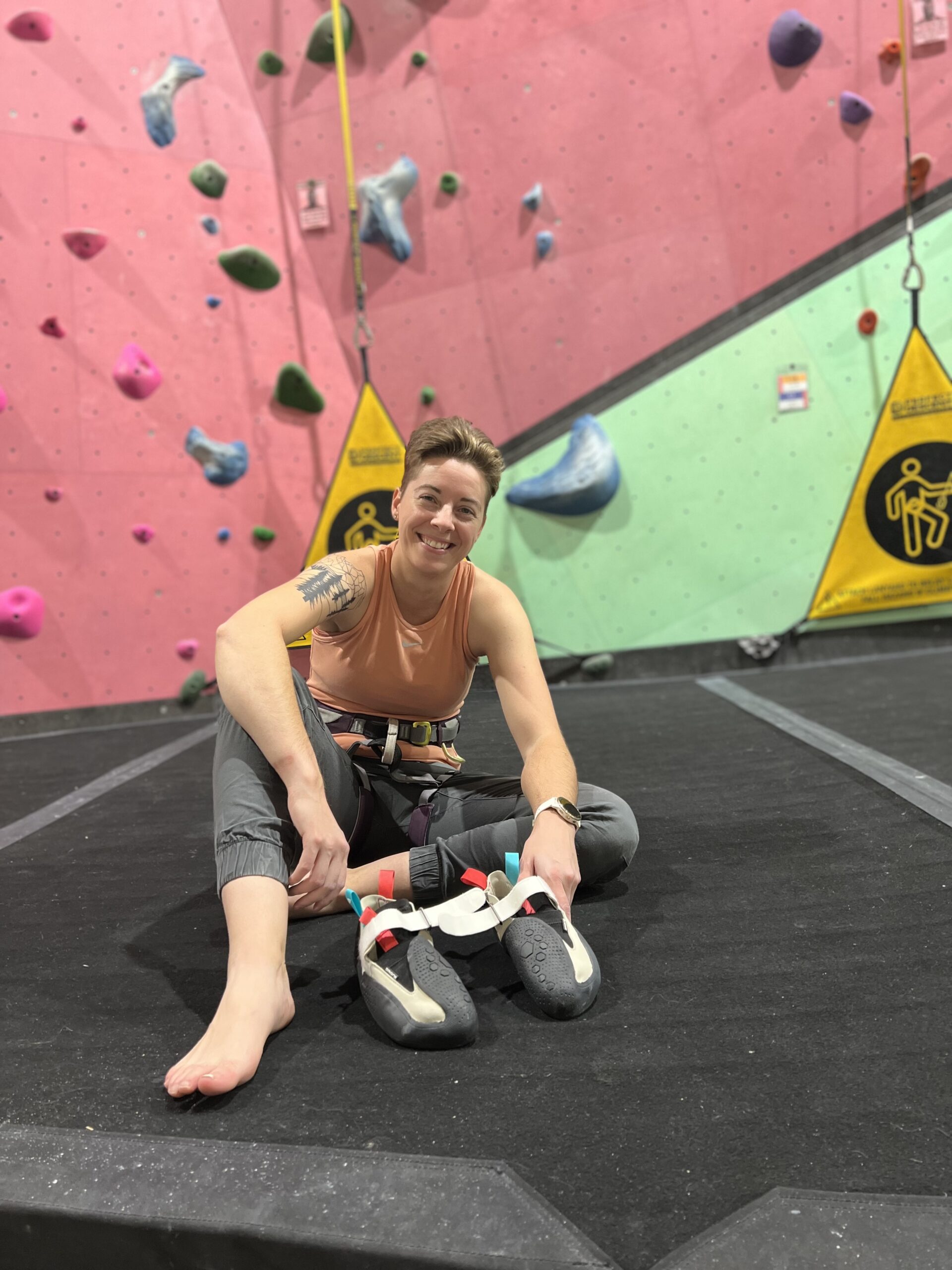
I was at a climbing clinic earlier today and the instructor walked everyone through basic climbing language so we would all be on the same page while she gave direction.
She brought up “slopers,” and while most of us knew what she meant, it was clear not everyone was sure what slopers actually were. If you have ever wondered what large slopers in rock climbing are, or you want to know how to use slopers without pumping out and sliding off, you are in the right place. Slopers climbing is one of those skills that feels impossible until it suddenly clicks.
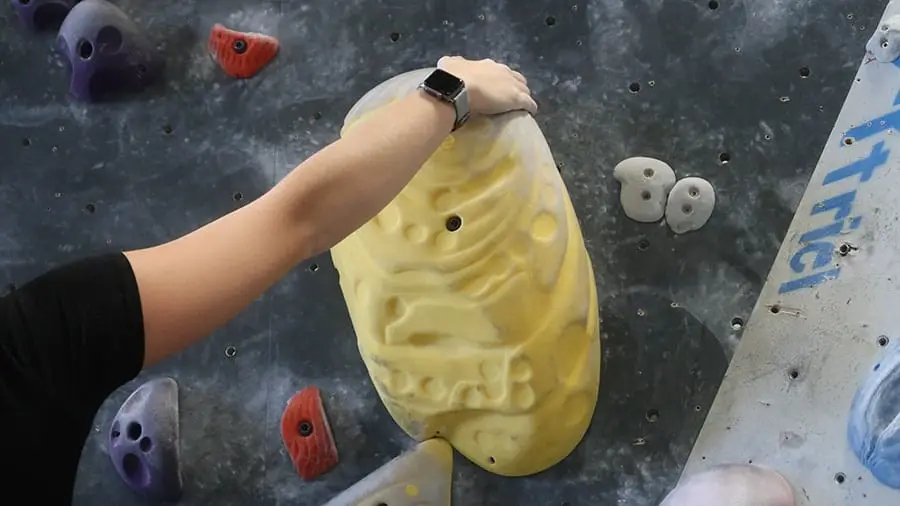
Slopers are large, rounded holds that slope away from the wall with no clear edge to grab. There is no lip telling you where to hold, so you press an open hand flat against the surface and trust the friction. These holds are usually more difficult to use and show up mostly on harder, more advanced climbs.
Slopers Climbing: How To Use Slopers
Often a sloper is one of the toughest parts of a route or problem to complete, and some climbers avoid routes with slopers altogether. A lot of the time slopers aren’t just in one spot either. They show up all over the route or problem, so you can’t just power past one bad move and forget about them.
Slopers climbing almost feels like a different sport, because it asks you to use your muscles and your brain differently than most holds do. If you have spent your time on positive holds, a sloper is a shock. It has none of the security of a jug and none of the clear grip of a crimp, so you have to read it and commit. Some people love slopers, but most climbers don’t, so here are a few reasons to love them and a few reasons to hate them.
3 Ways to Use Large Sloper Rock Climbing Holds
- Figure out where your weight needs to be before you commit to the hold. Most slopers want your weight directly under them, so if you are off to the side or hanging away from the wall, find a way to get your hips and shoulders right beneath the sloper before you weight it.
- Make sure your hands are dry and well chalked up before you grab a large sloper. Unlike other holds, the whole surface of your hand is what creates the friction that keeps you on, so a dry, chalked palm lets you stay on the hold a lot longer. If your skin is greasy or damp, you are done before you start.
- Engage your fingers, palm, whole arm, shoulder, back and core while you use a big hold like a sloper. If you try to hang off your hand and wrist without your arm, back and core, you can pick up a straining injury on top of making the move harder than it needs to be.
If slopers feel like a totally different animal, it helps to zoom out and study how every hold type works. Our guide on how to use climbing holds walks through the whole family, and comparing a sloper to a crimp or an undercling makes it a lot clearer why an open hand and body tension matter so much here.
3 Reasons Why You Should Love Slopers Climbing
- Slopers are fun because they hand you a different kind of challenge than crimps or jugs, since your hand is completely open. Unless someone has left a chalk mark right where you are meant to grab, it isn’t obvious how to grip it and you have to work it out. That makes a sloper a little puzzle inside the bigger puzzle of the route or problem. It’s more of a mental test as well as a physical one, and plenty of climbers love that.
- They can be great for getting higher on a climb quickly by pressing down from above the hold and pushing yourself up over the top of the sloper.
- A sloper usually makes a decent foothold once you get on top of it, because the surface is so big. A nice big foothold can let you rest for a bit longer, depending on the angle and where the sloper sits on the wall.
3 Reasons Why You Should Hate Slopers Climbing
- Every hold takes some muscle, but slopers seem to burn a lot more than the rest. You have to use your whole hand, arm, back and core to hang onto most of them, and that adds up fast over a route.
- Another reason climbers hate slopers is the same reason I said you should love them. A sloper usually has no clear way to use it, because there is no edge to set your fingers on, so it takes extra brain power (and probably a couple of falls) to figure out.
- The tricky part is that you can’t always tell if you can trust your grip on a sloper until you actually try it. If you have to depend on it and you read it wrong, you fall. Falling is a normal part of climbing, but that doesn’t mean we have to like it. If falling is the part that scares you off, our guide on dealing with the fear of falling is worth a read.
Slopers reward reps far more than raw strength, so the real fix is steady, focused practice on the wall. If you like working on one skill at a time, I send a free weekly newsletter with a short climbing drill you can knock out in about 15 minutes of training. It’s an easy way to build the body tension and open-hand strength that slopers demand without overhauling your whole week.
Conclusion
Slopers show up on more advanced routes and problems, and some climbers love them because they offer a different kind of challenge that feels refreshing next to the usual holds.
Others dislike the amount of muscle and effort slopers take, so they steer clear of slopers climbing whenever they can.
If you want to get better at large climbing holds and sloper holds, pay attention to where your weight is, where your grip is, and then trust yourself. It’s the same mindset that carries over into plenty of other climbing techniques, and building hand and grip strength off the wall will only make slopers feel more secure.
If you fall, that is ok, it’s part of climbing. At least you are building the skills you need to be a better climber, and one day you might get really good at big holds and slopers, which would put you a step ahead of everyone still avoiding them.
Frequently asked questions
What are slopers in rock climbing?
Slopers are large, rounded holds that slope away from the wall with no clear edge or lip to grab. Instead of gripping an edge, you press an open hand flat against the surface and rely on friction and body position to stay on. They mostly appear on harder, more advanced climbs.
How do you use slopers without slipping off?
Get your weight directly under the sloper, keep your hand dry and well chalked, and use your whole body. Engage your fingers, palm, arm, shoulder, back and core rather than hanging off your hand and wrist, and keep as much of your palm in contact with the hold as you can.
Why are slopers so hard to climb?
Slopers are hard because there is no obvious spot to grip and no edge to pull on, so they take more muscle and more problem solving than crimps or jugs. You often can’t tell if your grip will hold until you commit to it, which is why they usually take a few tries to figure out.
Can a sloper be used as a foothold?
Yes. Once you get on top of a sloper, its large surface usually makes a decent foothold. Depending on the angle and where it sits on the wall, a big sloper foothold can even give you a spot to rest for a little longer.
Does chalk help on slopers?
A lot. With a sloper, the whole surface of your hand creates the friction that keeps you on, so a dry, well chalked palm lets you stay on the hold longer. Greasy or damp skin makes a sloper almost impossible to trust.
Forearms pumping out early?
Slopers punish overgripping more than any other hold. The Grip Efficiency guide covers how to hold things well, why forearms pump early, and when training your grip is actually the answer.