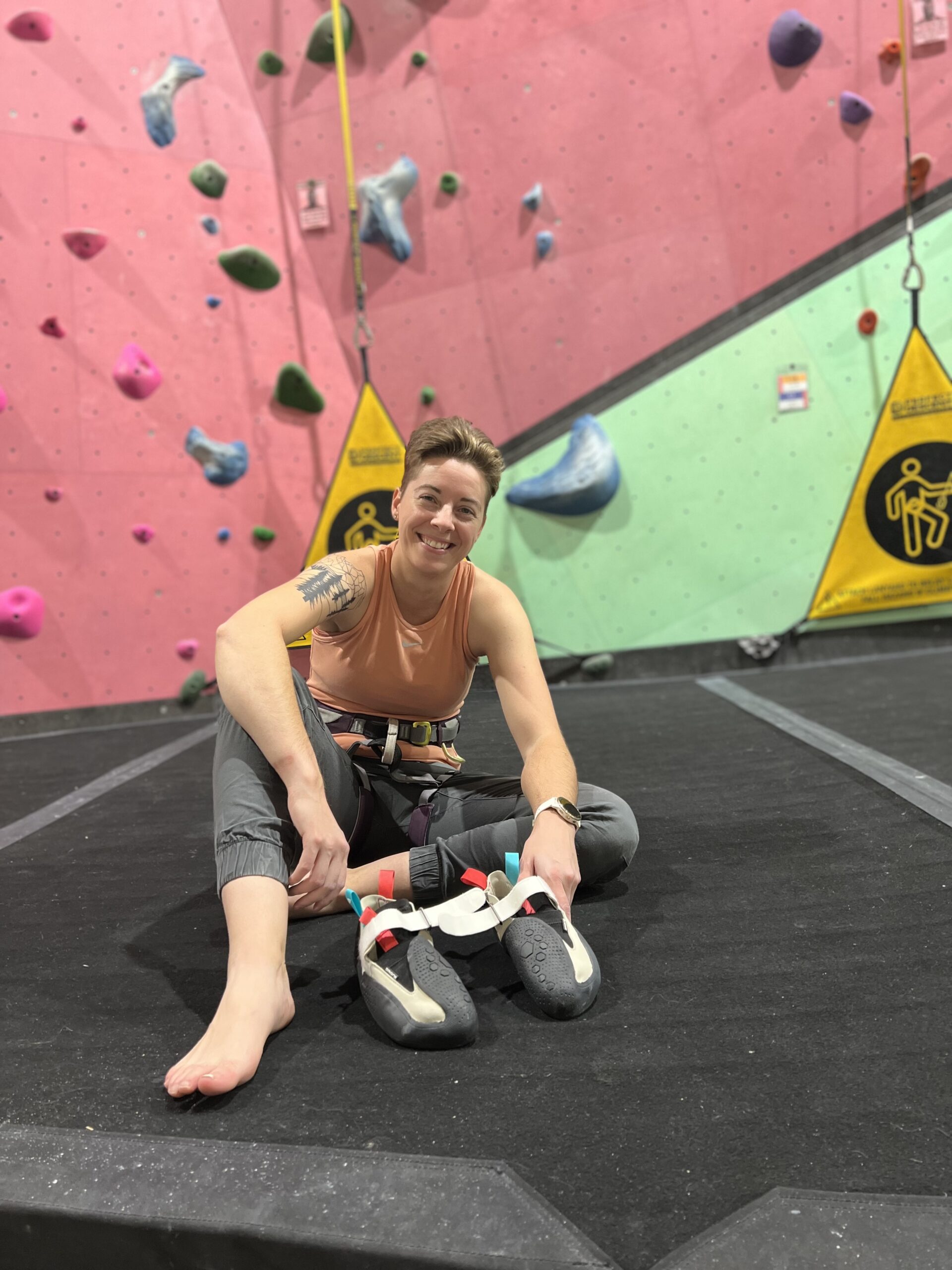
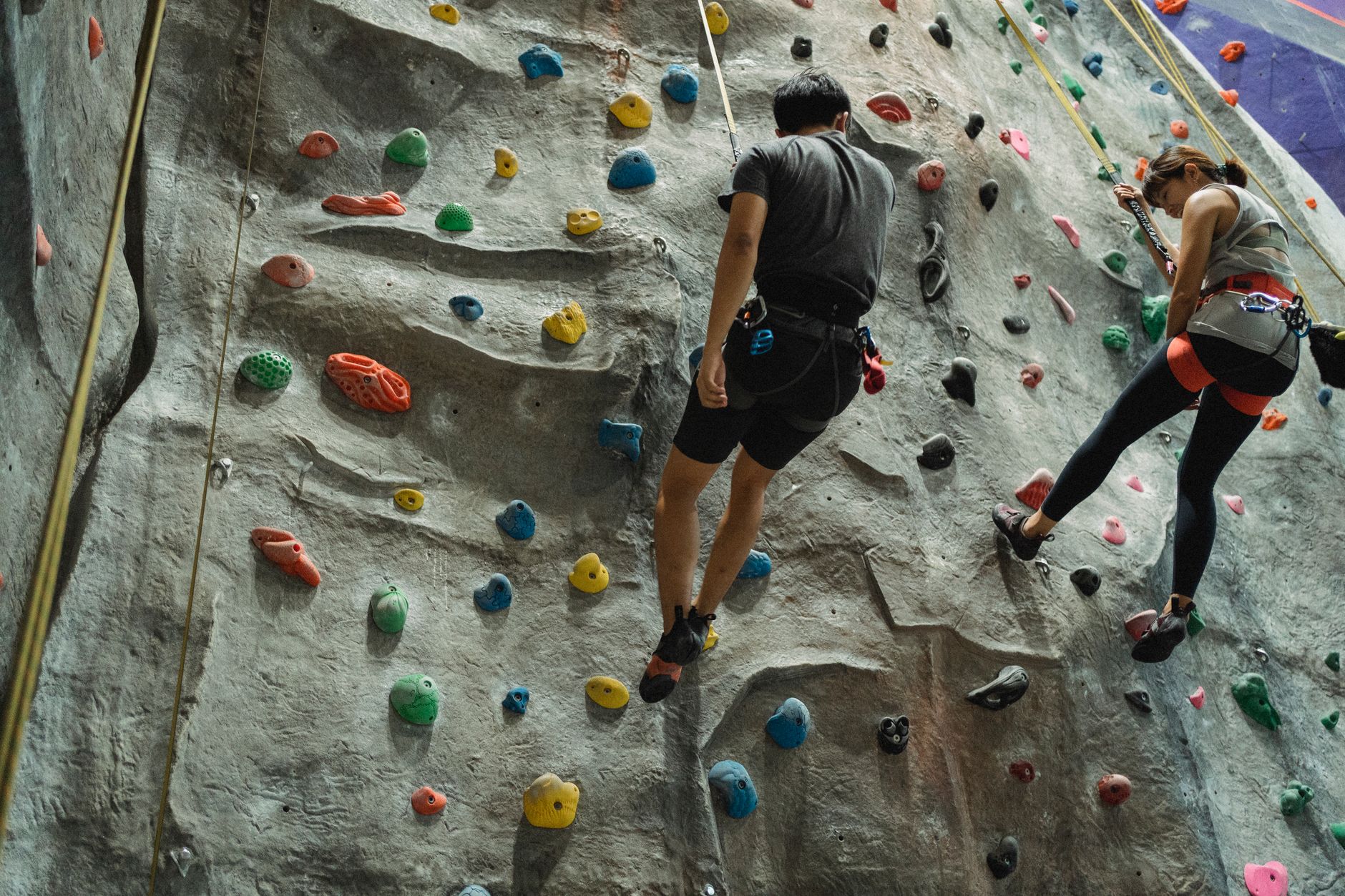
New to climbing and want to walk into the gym knowing what you’re doing? This guide covers the basics of climbing for beginners, the stuff nobody really explains on your first day. We’ll go through the types of holds you’ll grab, how to actually use your feet, how to read routes, gym etiquette, and how to fall without hurting yourself. Get these fundamentals down and your first few sessions will feel a lot less confusing and a lot more fun.
If you want a wider warm-up on what to expect, our guide to starting indoor rock climbing pairs nicely with everything below.
The basics of climbing for beginners: understanding hold types
Before you touch the wall, it helps to know what you’re grabbing. Holds come in a bunch of shapes, and each one asks for a slightly different grip. Here are the ones you’ll run into first:
- Jug: The friendliest hold on the wall. It has a big curved ridge you can wrap all your fingers around, so it feels secure. When you’re new, most easy routes are loaded with these.
- Pocket: A hold with a hole you slot your fingers into. Some fit three fingers, some only fit one, so read them before you commit.
- Crimp: A small edge where only a couple of finger pads fit. It takes precise gripping and it loads your fingers hard, so go easy on these early on. If you want to understand them better, here’s what a crimp is and how to use it.
- Sloper: A rounded hold with no clear edge. You hold it with an open hand and rely on friction and body position more than grip strength. They feel weird at first, so here’s a deeper look at how slopers work.
- Pinch: A hold you squeeze between your thumb and fingers. Good thumb pressure makes these feel a lot more solid.
That’s the short list to get you moving. Once you want the full picture, we break down every shape in our guide to the types of climbing holds and how to use them.
Using your feet: footwork that actually helps
Most new climbers pull way too hard with their arms and forget they have feet. The truth is your legs are stronger than your arms, and good footwork saves your grip for when you really need it. Here’s how to start using your feet well:
- Stand on your big toe. It’s your strongest toe, and putting weight through it gives you a precise, stable point to push from.
- Pivot your foot so your big toe and the inside edge point toward the wall. That opens up your hips and gives you more reach.
- Let your legs carry the load. Push up with your feet instead of hauling with your arms, and you’ll climb longer before you get pumped.
Footwork is a skill you build on purpose, not something that just shows up. If you want to drill it, our footwork drills for climbing give you simple ways to practice quiet, precise feet.
Indoor climbing: reading routes and gym etiquette
Indoor walls look like a mess of colorful holds until someone shows you the system. Once you get it, it’s simple. Here’s what to look for and how to share the space:
- Routes are usually color-coded or marked with tape. You follow one color or one tape set, and those are the only holds you use.
- Look for the marked starting holds. They tell you where the climb begins, and some gyms mark the start with a special tag or two pieces of tape.
- A route counts as sent when you match both hands on the finish hold with control. No slapping and jumping off.
- Climb back down on the holds instead of jumping from the top. It’s easier on your ankles and it’s just good habit.
Etiquette matters as much as technique on your first visit. Don’t walk or sit under someone who’s climbing, wait your turn on a route, and keep your gear out of the fall zone. For more of the unwritten rules, read our tips for your first time at a bouldering gym.
Safety first: falling and staying aware
Falling is part of climbing, especially bouldering, so it’s worth learning to do it well from day one. A little awareness keeps you and the people around you safe:
- Stay out of the fall zone when you’re not climbing. Standing under a climber is the fastest way to get landed on.
- Practice falling well. Bend your knees to absorb the landing, and don’t stick your arms out to catch yourself.
- Keep an eye on the climbers around you so you don’t wander into their space or their route.
If the fear of coming off the wall is holding you back, that’s normal, and it fades with practice. Our guide on dealing with the fear of falling walks you through it step by step.
Climbing progression: practice and persistence
Here’s the honest part. You’ll flail on your first few sessions, and that’s fine. Everyone does. Progress in climbing comes from showing up, trying moves that feel hard, and learning something from each attempt. Don’t chase grades early on. Chase clean movement and good footwork, and the harder climbs come on their own.
Want a simple way to keep improving between gym days? Grab our free newsletter and get one short climbing drill each week, about 15 minutes, straight to your inbox. You can level up your climbing with 15 minutes of training and build real skill without overthinking it.
Get these basics down and your first trips to the gym will feel a whole lot smoother. Learn your holds, trust your feet, read the routes, fall smart, and keep coming back. Master the fundamentals and the fun part, actually sending climbs, follows close behind. Happy climbing!
Frequently asked questions
What are the basics of climbing for beginners?
The core basics are knowing the common hold types (jugs, pockets, crimps, slopers, and pinches), using your feet to carry your weight instead of pulling with your arms, reading color-coded or taped routes, following gym etiquette, and learning to fall safely. Get comfortable with those and you have a solid foundation to build on.
What should I do the first time I go to a climbing gym?
Show up in comfy clothes, rent shoes, and follow the routes by color or tape. Stay out of the fall zones, wait your turn, and climb easy routes to warm up. Focus on standing on your feet and moving in control rather than racing to the top.
Do I need my own gear to start climbing?
No. Most gyms rent shoes and provide everything you need for bouldering or top-rope climbing. Once you’re hooked, your own shoes and a chalk bag are usually the first things worth buying.
How do I get better at climbing as a beginner?
Climb regularly, work on your footwork on purpose, and try moves that feel a little too hard. Practice and persistence beat raw strength early on. Short, focused drills between sessions, like the ones in our free newsletter, speed things up.
Is falling while climbing dangerous?
Falling is a normal part of climbing, and it’s manageable when you do it right. Bend your knees to absorb the landing, keep your arms in instead of reaching out, and stay clear of other climbers’ fall zones. Learning to fall well takes most of the fear out of it.