
This post contains affiliate links. If you buy through them, I may earn a commission at no extra cost to you.
If you own a grigri, sooner or later it’s going to get grimy, and you’ll want to know how to clean your grigri without wrecking it. Good news: it’s easier than it looks, and you don’t need any fancy products. The steps below follow the maintenance guidance from Petzl (the company that makes the Grigri), so you can trust that you’re not doing anything that’ll void the device or wear it out early.
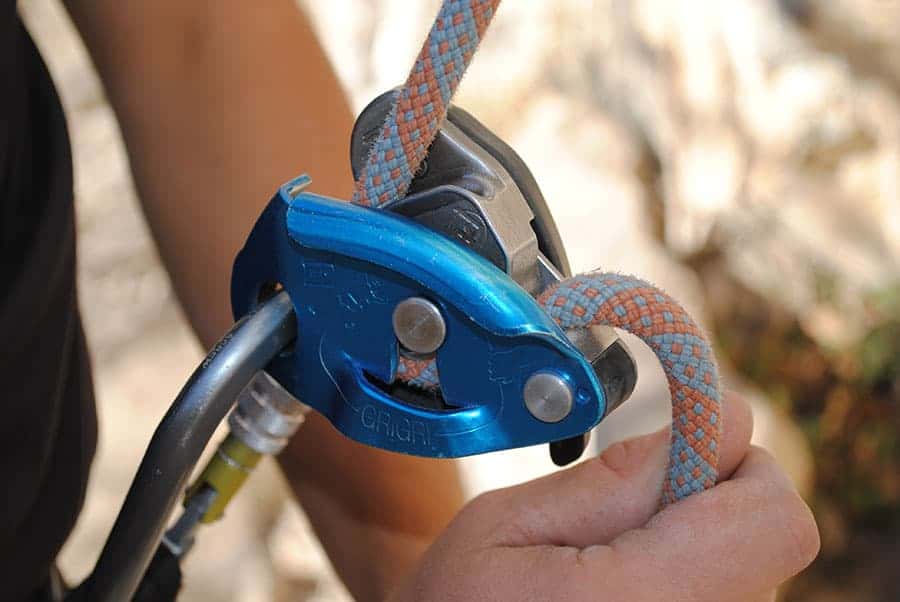
A grigri is an assisted-braking belay device with a moving cam inside it, and that cam is what keeps your climber safe. Dirt, grit, and salt work their way into the mechanism over time and can make the cam sticky or gum up how smoothly it feeds rope. Keeping it clean keeps the thing working the way it should when it counts.
When To Clean Your Grigri
You don’t need to scrub your grigri after every session. Most of the time a quick look-over is plenty. Give it a proper clean when:
- You’ve used it in a salty environment (seaside crags, sea cliffs, anywhere with salt air or spray)
- The device has oily dirt or caked-on mud
- The cam feels gritty, sticky, or slow to move when you flick it with your finger
- You’ve dropped it in sand, dirt, or muddy water
Salt is the sneaky one. It doesn’t look like much, but it can corrode the mechanism and stiffen the moving parts, so rinse the device off after any trip near the ocean even if it looks clean.
How To Clean Your Grigri Step By Step
Here’s how to clean your grigri depending on what it’s been through. If it’s just salt, you barely have to do anything. If it’s oily dirt or mud, you’ll do a little more.
Salt only: rinse the device thoroughly with fresh water, work the cam a few times under the water to flush the mechanism, then dry it as described below.
Oily dirt or mud:
- Use a small brush (a toothbrush works great) to dislodge the oily dirt or mud from the outside and around the cam.
If the brush alone doesn’t get it clean, step it up:
- Mix warm water (pH-neutral, 30 °C maximum) with plain hand or face soap.
- Dip the brush into the soapy water and scrub the grigri, working the brush into the mechanism and around the moving cam.
- Rinse the grigri thoroughly with fresh tap water to get all the soap out.
- Open the device, pat it dry with a towel as much as you can, then let it air dry the rest of the way.
Work the cam back and forth a few times while it’s wet and again once it’s dry so you can feel whether it’s moving freely. If it still feels gritty, repeat the rinse.
Drying And Lubricating After Cleaning
Let your grigri dry completely before you store it or use it, and keep it out of direct heat. Don’t set it on a radiator, near a fire, or in front of a heater. Dry it in a shaded, ventilated spot at room temperature so you don’t warp or weaken the plastic and metal parts.
If the cam still feels a little stiff once it’s dry, Petzl says you can put a drop of silicone-based lubricant on the moving axles and springs. The key rule: keep any lubricant well away from the cam’s braking surface and the rope path. Oil where the rope runs makes the device slip, which is the opposite of what you want. When in doubt, skip the lube. A clean, dry mechanism is usually all you need.
Cleaning Mistakes That Can Ruin Your Grigri
A grigri is life-safety gear, so what you don’t do matters as much as what you do. Steer clear of these:
- Avoid acid and harsh cleaners. Don’t use WD-40 type degreasers, since they strip the lubricants the device needs and their abrasive effect speeds up wear.
- Only use household face and body soap. Solvents, stain removers, and degreasers are too strong and aren’t compatible with the materials in the device.
- Don’t use a high-pressure water sprayer. It can force lubricant out and damage the joints.
- Never put oil, solvent, or any degreaser on the cam or the braking surface, since that can make the device slip under load.
While you’ve got it in your hands, give it a quick inspection. Look for cracks, deep grooves worn into the rope channel, sharp edges, or a cam that doesn’t snap back on its own. If anything looks off or the mechanism doesn’t work smoothly after cleaning, retire the device and replace it. When you’re not sure, err on the side of caution.
Cleaning your grigri is really just part of taking care of your kit. The same habits apply across the board, from your climbing rope to the rest of your climbing gear. And if you’re still deciding what to belay with, it’s worth reading up on the best belay devices for beginners and whether it’s time to upgrade to an assisted-braking device like the grigri in the first place.
Want small, practical climbing wins like this in your inbox? Join the free Send Edition newsletter for a weekly climbing drill you can do in about 15 minutes.
If yours is past saving and you need a replacement, you can check the current price on the Petzl Grigri at GearX or the Grigri+ at GearX.
Trying to decide between a grigri and a regular tube device? I break down the Grigri vs ATC and the Grigri vs Grigri+ in my belay device guide. If you use yours for canyoneering too, here’s my pick for the best rappelling device for canyoneering, and here’s how to make sure your harness fits while you’re checking your gear.
If you’re shopping for a climber this year, here’s my gift guide for climbers, sorted by price.
Frequently asked questions
How often should I clean my grigri?
There’s no set schedule. Clean it when it’s actually dirty, when the cam feels gritty or sticky, or after any use near salt water. A quick rinse after a seaside trip and a soapy scrub when it picks up oily dirt or mud will cover almost everyone.
What soap can I use to clean a grigri?
Only plain household hand or face soap mixed with warm, pH-neutral water at 30 °C maximum. Skip solvents, stain removers, and degreasers. They’re too strong and aren’t compatible with the materials in the device.
Can I use WD-40 on my grigri?
No. WD-40 type degreasers strip the lubricants the mechanism relies on, and their abrasive effect accelerates wear. If the moving parts need lubrication after cleaning, use a silicone-based lubricant on the axles and springs only, and keep it off the cam and rope path.
Can I dunk my grigri in water?
Yes. Rinsing and even submerging it in fresh water is fine and is exactly what you do for salt cleanup. Just avoid high-pressure sprayers, dry it fully at room temperature away from direct heat, and check that the cam moves freely before you use it again.
When should I retire my grigri instead of cleaning it?
Retire it if you see cracks, sharp edges, deep grooves worn into the rope channel, or a cam that won’t snap back on its own, or if it still doesn’t work smoothly after a proper clean. When in doubt, replace it. It’s life-safety gear.