This post contains affiliate links. If you buy through them, I may earn a commission at no extra cost to you.
Your harness is the main piece of safety gear that ties you to the rope and holds your belay device, and it’s also what you’ll wear for hours at a time. That’s a lot riding on one piece of kit, so picking the right one matters more than most beginners think.
Because it’s tied to both your safety and your comfort, it’s normal to wonder what the best harness for climbing actually is. I put this guide together so you can see the one I’d recommend and, just as important, learn what to look for so you can make the call yourself.
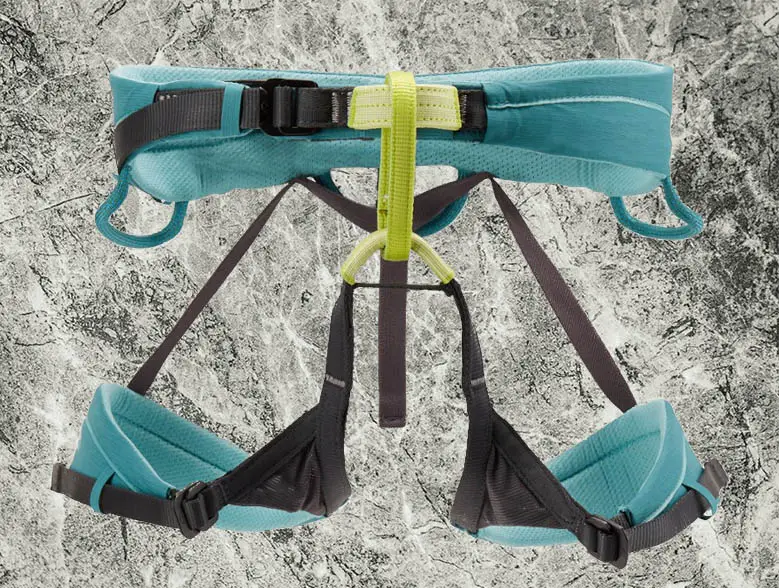
Top pick: Edelrid Autana II (check current price). It’s the current version of the Autana harness I recommend below.
Image Backcountry
If you’d like a couple of other options to compare, here are two Petzl harnesses worth a look:
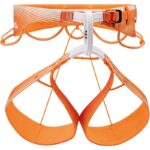 Petzl Sitta: Petzl’s lightweight harness, if saving weight on long routes matters to you.
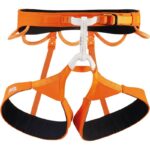 Petzl Hirundos: Petzl’s sport climbing harness.
Not sure what size to get? Jump to the climbing harness fit guide and the size chart by brand below.
My Overall Recommendation: Edelrid Autana Harness
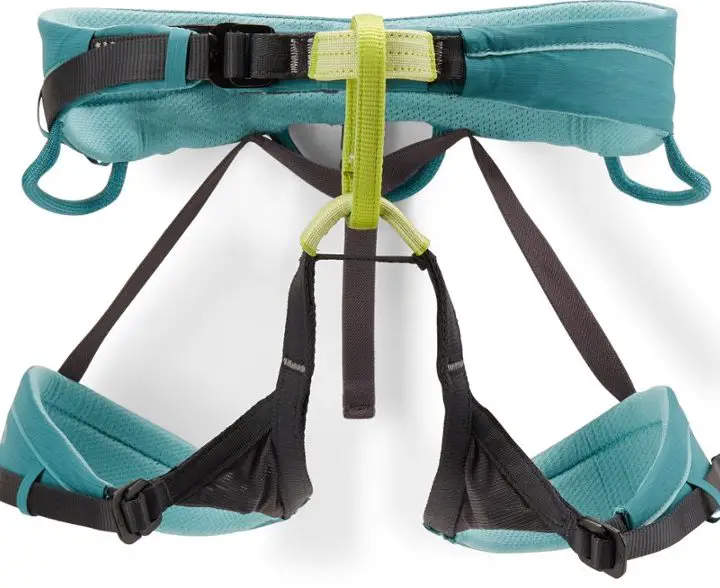
If you just want my pick without reading the whole thing, here it is: I recommend the Edelrid Autana Harness.
Here’s Why:
It has all the basics you need in a harness, like enough gear loops to bring your rack up the route, adjustable leg loops, and padded hips. It also has the premium features I want without a big jump in price:
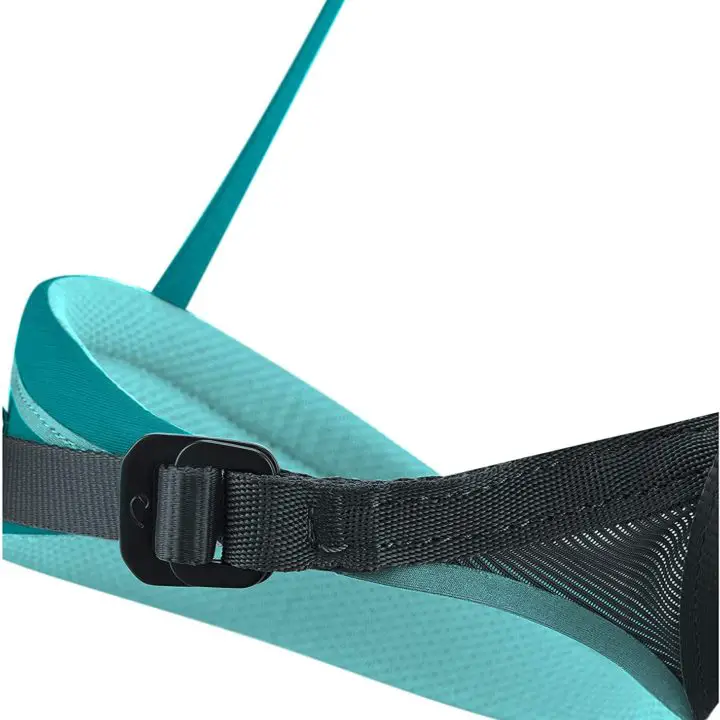
- Metal buckles on the waist and legs
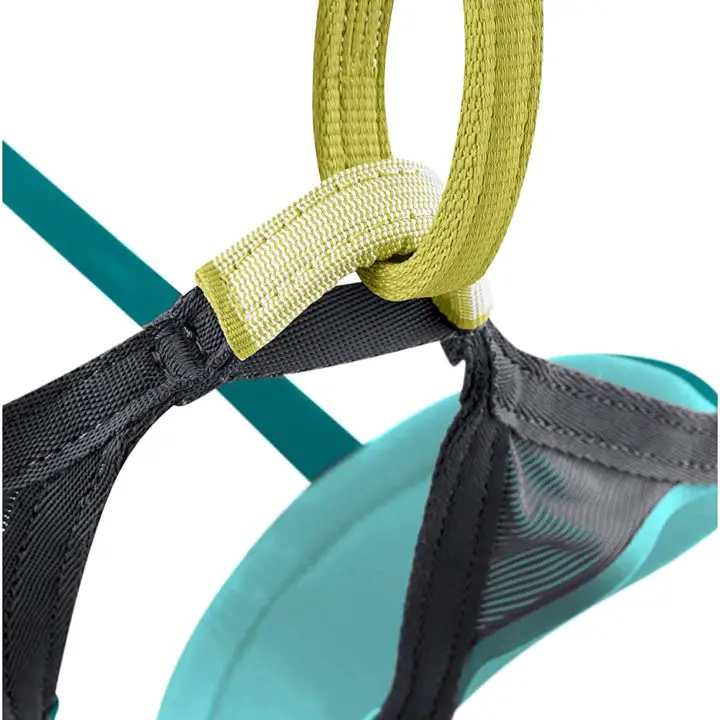
- Tie-in point with a Dyneema wear indicator, which shows internal red threads if abrasion gets bad
- Mesh padding for comfort
- Adjustable leg length so you can sit comfortably when you get lowered
- Detachable leg length for hiking and scrambling without fuss
- Light weight, so you might not even notice you’re wearing it
Climbing Harness Fit Guide
So how should your climbing harness fit? Your harness should sit above your hip, tight enough that it won’t slide down but loose enough to avoid hot spots or pressure points. The leg loops should be tight enough that you can only fit up to four flat fingers between the loop and your leg, but loose enough for full movement.
There are a few parts of the harness to think about when you’re fitting one to your body and the kind of climbing you do. Here are the general guidelines that will help you land on the right size. Once you have it dialed, check out how to put on a harness so you get it on the same way every time.
Waistband Fitting
- The first step in finding the right size waistband (also known as waist belt) is to identify the circumference of your waist.
- You can use the circumference of your waist to identify what size, depending on the brand that is the best fit for you (see harness sizing table below)
- Put on the harness and place the waistband above your hip
- Tighten the waistband so it’s snug enough to keep from sliding down but loose enough that it doesn’t cause pressure points or hot spots
Leg Loop Fitting
The leg loops aren’t really what keeps you from falling out of your harness. They’re more about comfort and spreading the load so you don’t flip upside down. Because of that, you can run your leg loops as tight as feels good to you.
- Measure your leg circumference
- Ensure that the size of your harness includes your leg circumference in the sizing range (see harness sizing table below)
- Put on the harness and adjust the waistband as needed (see above)
- Tighten the leg loops until you can only fit four fingers between you and the leg loop.
- Ensure that you still have full movement in your legs. If you don’t have full movement, identify if it’s the leg loop tightness or the “rise” straps that are preventing you from moving. If it’s your leg loops, loosen them as needed.
Rise Strap Fitting
Most harnesses have fixed rise straps. Those are the straps at the back that connect the leg loops to the waistband.
If yours are adjustable, you can tune the rise straps as described below. If they’re a fixed length and they don’t work for you, it’s worth trying a different harness with a rise that suits your body better.
- After adjusting your waist and leg loops to the appropriate tightness (see above).
- Move your legs around to see if you have a full range of motion.
- If you have limited range of motion, loosen the rise straps (or find a harness with longer rise straps)
- Test the rise straps while hanging in the harness (many climbing outlets have climbing walls or rope to test hanging in the harness).
- If while hanging in the harness, you have to use core strength to keep your body upright and the harness doesn’t force you into a sitting position, tighten/loosen the rise strap or find a harness with a smaller/bigger rise straps until you find a harness that holds you in a sitting position.
Wear What You Plan To Climb In
To make sure the harness actually fits, try it on with whatever you’ll be wearing when you climb. If you’re ice climbing, put on all the layers you plan to wear out there before you judge the fit.
If you’re climbing in the gym in pants and a t-shirt, test the harness in that. Not sure what to bring? Here’s what to wear indoor rock climbing.
The Hang Test
While you’re hanging in a harness, you shouldn’t be able to fit more than a fist between the waistband and your body. If you can, size down or cinch the waistband tighter.
A lot of climbing shops and outdoor stores have a wall or a rope you can hang on to test a harness before you buy it. Use it if you can.
Hanging is the best way to tell if you’ve got the right fit, the right padding, and whether you can reach all the gear on your loops. If your main use is rappelling, take a look at our guide to harnesses for rappelling before you decide.
Harness Sizing For Different Brands
Every brand sizes its harnesses a little differently, and sizing can even change model to model. So here are the most popular harness brands and their sizing. If you’re still deciding which one to buy, here are my favorite harnesses for climbing.
Here is a harness size chart by brand:
| Size | Waist | Thigh/Leg | Brand | Model |
| XS | 24 to 28 | 18.5 to 20.9 | Mammut, Women | NA |
| XS | 25 to 27 | 20.5 to 22 | ARC’TERYX, Women | NA |
| XS | 25.5 to 27.5 | 21.5 to 23 | ARC’TERYX, Women C-QUENCE | NA |
| XS | 25.6-27.8 | 18.1-22 | Petzl | AQUILA, LUNA, |
| XS | 25.6-27.9 | 18.9-20.9 | Petzl | HIRUNDOS, SELENA |
| XS | 26-29 | 18-20 | Black Diamond, Women | NA |
| XS | 27.5 to 29.5 | 20.5 to 22 | ARC’TERYX, Unisex | NA |
| XS | 28 to 30 | 20.5 to 23 | ARC’TERYX, Men | NA |
| XS | 28 to 30 | 21 to 22 | ARC’TERYX, Men C-QUENCE | NA |
| S | 26.4 to 30.3 | 19.3 to 22.4 | Mammut, Men | NA |
| S | 26.4 to 30.3 | 20 to 22.4 | Mammut, Women | NA |
| S | 26.4-30.3 | 18.9-20.9 | Petzl | SITTA |
| S | 27 to 29 | 21.5 to 23 | ARC’TERYX, Women | NA |
| S | 27-30 | 19-21 | Black Diamond, Men | NA |
| S | 27.5 to 29.5 | 23 to 24 | ARC’TERYX, Women C-QUENCE | |
| S | 27.8-30.3 | 18.9-22.8 | Petzl | SELENA, AQUILA |
| S | 28-30 | 18.5-22.4 | Petzl | ADJAMA |
| S | 28-30.3 | 18.9-20.9 | Petzl | SAMA, HIRUNDOS |
| S | 28-30.3 | 20-24 | Petzl | LUNA, |
| S | 28-31 | 20-22 | Black Diamond, Women | NA |
| S | 29.5 to 32 | 22 to 23.5 | ARC’TERYX, Unisex | NA |
| S | 30 to 32 | 21.5 to 23 | ARC’TERYX, Men | NA |
| S | 30 to 32 | 22 to 23 | ARC’TERYX, Men C-QUENCE | NA |
| S/M | 25.2-33.8 | 21.6-26.4 | Petzl | TOUR |
| S/M | 25.2-33.9 | 21.6-26.4 | Petzl | ALTITUDE |
| M | 28.7 to 33.5 | 20.9 to 24 | Mammut, Men | NA |
| M | 28.7 to 33.5 | 21.7 to 24 | Mammut, Women | NA |
| M | 29 to 32 | 23 to 24.5 | ARC’TERYX, Women | NA |
| M | 29.5 to 31.5 | 24 to 25 | ARC’TERYX, Women C-QUENCE | NA |
| M | 30-33 | 21-23 | Black Diamond, Men | NA |
| M | 30-33 | 20-24 | Petzl | ADJAMA, |
| M | 30.3-33 | 20.5-24.4 | Petzl | AQUILA, SITTA |
| M | 30.3-33 | 20.5-22.5 | Petzl | HIRUNDOS |
| M | 30.3-33 | 21.3-25.2 | Petzl | LUNA |
| M | 30.3-33 | 21.6-23.6 | Petzl | SELENA |
| M | 30.3-33.1 | 20.4-22.5 | Petzl | SAMA |
| M | 32 to 34 | 23 to 24.5 | ARC’TERYX, Men C-QUENCE | NA |
| M | 32 to 34.5 | 23.5 to 25 | ARC’TERYX, Unisex | NA |
| M | 32 to 34.5 | 23 to 24. | ARC’TERYX, Men | NA |
| M | 33-36 | 22-24 | Black Diamond, Women | NA |
| M/L | 29.1-37.8 | 23.6-28.7 | Petzl | ALTITUDE, TOUR |
| L | 30.3-33 | 21.6-23.6 | Petzl | SELENA |
| L | 31.5 to 34.5 | 25 to 26.5 | ARC’TERYX, Women C-QUENCE | NA |
| L | 31.5 to 36.2 | 22.4 to 25.6 | Mammut, Men | NA |
| L | 31.5 to 36.2 | 23.2 to 25.6 | Mammut, Women | NA |
| L | 32.5 to 36 | 24.5 to 26 | ARC’TERYX, Women | NA |
| L | 33-36 | 23-25 | Black Diamond, Men | NA |
| L | 33-36.2 | 21.3-25.2 | Petzl | ADJAMA |
| L | 33-36.2 | 21.6-25.6 | Petzl | AQUILA |
| L | 33-36.2 | 21.6-23.6 | Petzl | HIRUNDOS, SITTA |
| L | 33-36.2 | 22-26 | Petzl | LUNA |
| L | 33.1-36.2 | 21.6-23.6 | Petzl | SAMA |
| L | 34 to 37.5 | 24.5 to 26 | ARC’TERYX, Men C-QUENCE | NA |
| L | 34.5 to 38 | 25 to 26.5 | ARC’TERYX, Unisex | NA |
| L | 35 to 38.5 | 24.5 to 26 | ARC’TERYX, Men | NA |
| L | 36-39 | 24-26 | Black Diamond, Women | NA |
| L/XL | 33-42.5 | 26-31.1 | Petzl | ALTITUDE, TOUR |
| XL | 33.9 to 39.4 | 23.6 to 26.7 | Mammut, Men | NA |
| XL | 34.5 to 38.5 | 26.5 to 29 | ARC’TERYX, Women C-QUENCE | NA |
| XL | 36 to 39.5 | 26.5 to 28 | ARC’TERYX, Women | NA |
| XL | 36-39 | 25-27 | Black Diamond, Men | NA |
| XL | 36.2-39.3 | 22-26 | Petzl | ADJAMA |
| XL | 36.2-39.4 | 22.4-26.4 | Petzl | AQUILA |
| XL | 36.2-39.4 | 22.5-24.4 | Petzl | HIRUNDOS |
| XL | 36.2-43 | 22.4-24.4 | Petzl | SAMA |
| XL | 37.5 to 41 | 26 to 28 | ARC’TERYX, Men C-QUENCE | NA |
| XL | 38 to 41 | 25.5 to 28 | ARC’TERYX, Unisex | NA |
| XL | 39 to 42 | 26.5 to 28 | ARC’TERYX, Men | NA |
| XXL | 33 to 42.5 | 24.4 to 28.3 | Mammut, Men | NA |
How long do harnesses last?
Something I didn’t think about when I bought my first harness was how long one actually lasts. After a quick search I assumed I’d be buying a new harness every season or two, and that’s just not the case.
Climbing harnesses can last for years according to the manufacturers, as long as you take care of them. So the harness you buy today can be with you for a long time if you look after it.
If you were like me and figured you’d upgrade in a year or two, that’s unlikely. Sure, you can buy a new harness whenever you want, but once you already have a good one you’ll probably spend that money on quickdraws or new shoes instead.
Hanging Time and Comfort
One of the things that separates a climber’s harness from the rentals at the gym is how it feels when you hang on a route. At the gym you can get away with an uncomfortable rental because you’re only hanging for a few minutes at a time. Sit in that same harness for a while, though, and you’ll feel your circulation start to cut off after just a few minutes.
That happens because the webbing has no padding and the shape is built for standing, not sitting. So where it sits on your legs ends up being really uncomfortable.
Outdoors you spend a lot more time hanging on the route. You might get stuck on a hard section and hang there for 10 to 15 minutes working out the moves. With that in mind, you want a harness that supports you while you sit and hang. If you’re still dialing in sizing, it’s worth reading up on how your climbing harness should fit first.
Leg length is what lets you adjust the seating position. A shorter climber needs very different leg loop length than a tall climber, which makes adjustable leg lengths a must, so don’t get a harness without this feature.
Key features you need for hangtime and comfort:
⭐ Padded leg loops
⭐ Adjustable leg loops
⭐ Adjustable leg lengths
Belaying Comfort
One of the main jobs of a harness is holding your belay device while you belay. Unlike hangtime, where you’re mostly sitting, belaying means you want the harness comfortable while you stand and also when you get pulled or jerked into the air catching a fall. The features that help here are the padded waist and padded leg loops. Once you’ve got the harness sorted, brush up with our belaying 101 guide so your technique matches your gear.
On top of padding, you want a belay loop that sits vertically so it plays nice with any belay device. You can make just about any belay loop work, but the vertical ones found on most modern harnesses work a lot better with carabiners.
Key features you need for belaying comfortably
⭐ Padded leg loops
⭐ Padded waistband
⭐ Vertical belay loop
Walking Comfort and Mobility
Like belaying comfort, you want a harness that’s comfortable to stand in. And if you’re moving between crags, you want one that’s comfortable to walk, hike, and scramble in too. Some harnesses have really uncomfortable leg loops for hiking and scrambling, simply because the loops aren’t adjustable and are built to put you in a sitting position.
To make sure your harness is comfortable hiking from route to route, look for adjustable leg length loops, or even better, detachable ones. A lot of mid-grade harnesses have detachable leg length loops, and almost all of the high-grade ones do. If you’re brand new to gearing up, our walkthrough on how to put on a harness is worth a quick read.
Key features you need for mobility
⭐ Adjustable leg loops
⭐ Adjustable leg lengths
⭐ Detachable leg length loops
Extra Features and Accessories
Gear Loops are the most useful accessory for outdoor climbing since they’re what you use to carry your quickdraws, personal anchor, and anything else up the route. Most mid-range to high-end harnesses have 4 to 5 gear loops. The Edelrid Autana has 5 gear loops plus 2 ice climbing gear loops, so you’ve got some versatility if you need it.
Metal adjustment leg loops are another thing I’d put in the necessary column. A mistake I made with my current harness was thinking the adjustable buckles didn’t matter much because you only tighten loops for comfort. So I got a harness with plastic adjustable leg loops. Two seasons in, one of them broke. Since I don’t tighten the leg loops often it doesn’t bug me all the time, but sometimes the broken plastic digs into my leg, which is no fun. The Edelrid Autana solves that with metal loops.
Abrasion Indicators are a way the manufacturer builds the harness so you have a better sense of when to retire it. Not many harnesses have this feature, but it’s really nice for peace of mind. If something happens between climbs, you know exactly when to replace it. The Edelrid Autana has a Dyneema wear indicator, which reveals internal red threads if abrasion increases.
Versatility
With harnesses, you’re mostly using them for climbing, and versatility comes down to what type of climbing you do, like ice climbing or projecting a hard route outdoors.
If you only climb at the gym, you won’t need gear loops or a spot to clip an ice tool. You may not even need padding on your legs and hips if you’re not planning to hang for long.
But if you’re outdoors projecting a hard route, you’re going to want a harness that’s comfortable to sit and hang in. You’ll also want enough gear loops to hold everything you carry up the route.
For me, I also like rappelling and canyoneering, so I need a harness that’s comfortable to sit in, walk, hike, and scramble. Lightweight is a big plus too, so maybe I’ll even forget I’m wearing it. The Edelrid Autana ticks all of those boxes.
► Best Harness for Rappeling
What to look for in the best harness for climbing
If you take one thing away, it’s this: the best harness for climbing is the one that fits how you actually climb. For most people that means padded and adjustable leg loops, adjustable leg lengths for comfortable hangtime, a padded waistband and vertical belay loop for belaying, and detachable leg loops if you hike between crags. Metal buckles and an abrasion indicator are the extras that push a good harness into great. The Edelrid Autana is my pick because it covers all of that without a big price jump, but any harness that checks those boxes will serve you well. If belaying gear is next on your list, our roundup of the best belay devices for beginner climbers pairs nicely with a new harness.
Good gear gets you on the wall, but movement is what actually sends. If you want to climb stronger without living at the gym, join the free Send Edition newsletter for weekly climbing drills you can do in about 15 minutes. It’s free, and it’s the easiest way to keep leveling up between sessions.
Frequently asked questions
What is the best harness for climbing?
My pick is the Edelrid Autana. It has the basics like plenty of gear loops, adjustable leg loops, and padded hips, plus premium features such as metal buckles and a Dyneema abrasion indicator, all without a big price jump. That said, the best harness for climbing is the one that fits your body and matches the climbing you do.
How long does a climbing harness last?
Longer than most beginners expect. Manufacturers say a harness can last for years as long as you take care of it. So instead of upgrading every season, you’ll likely spend that money on quickdraws or shoes while your harness keeps going.
What features matter most for comfort?
Padded leg loops and a padded waistband, adjustable leg loops, and adjustable leg lengths so you can sit comfortably while hanging. A vertical belay loop helps for belaying, and detachable leg loops make hiking and scrambling between crags a lot easier.
Do I need an expensive harness for the gym?
Not really. If you only climb indoors and don’t hang for long, you can skip gear loops, ice clip points, and heavy padding. Those features earn their keep outdoors, where you carry a rack and spend real time hanging on the route.
Are metal leg loop buckles worth it over plastic?
Yes. I once bought a harness with plastic adjustable leg loops and one broke after two seasons, and the broken plastic can dig into your leg. Metal buckles, like the ones on the Edelrid Autana, hold up far better over time.
How tight should a climbing harness be?
The waistband should sit above your hip and be snug enough that it won’t slide down, but loose enough to avoid hot spots or pressure points. Set the leg loops so you can only fit up to four flat fingers between the loop and your leg while still keeping full movement.
Should a climbing harness sit above or below your hips?
Above your hips. The waistband should ride above your hip bones so it can’t slip off if you end up upside down. If it sits on or below your hips, size down or move it up and re-tighten.
How do I know if my harness is too big?
Do the hang test. While hanging in the harness you shouldn’t be able to fit more than a fist between the waistband and your body. If you can, or if the waistband slides down when you weight it, the harness is too big and you should size down or tighten the waistband.
Do climbing harness sizes differ by brand?
Yes. Each brand, and often each model, uses its own waist and thigh ranges. Measure your waist and leg circumference, then match those numbers to the brand’s sizing (see the size chart above) and don’t assume you’re a medium is a medium everywhere.