
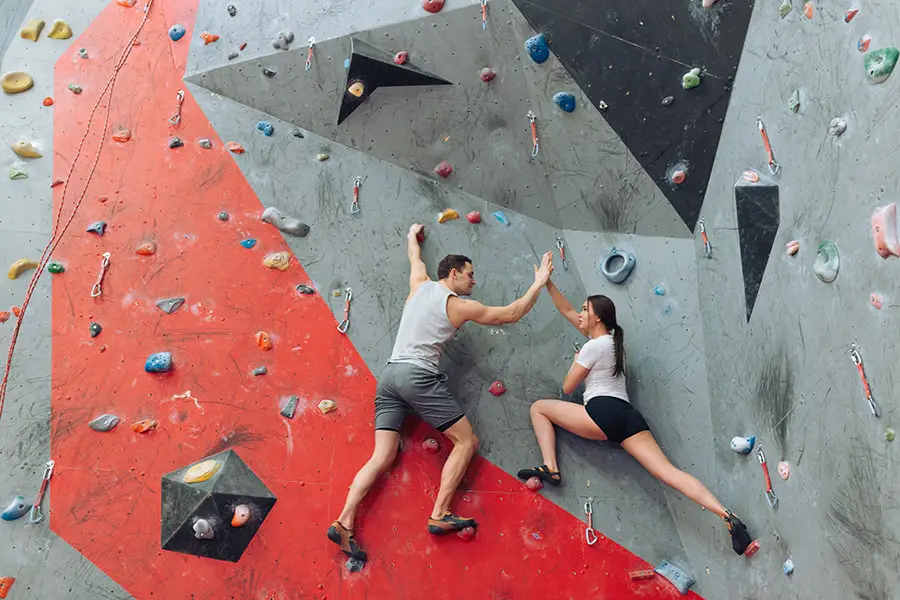
Rock climbing is a super fun sport, and it gets even better when your friends are climbing with you. Plus, you can never really have enough climbing partners.
If you’ve been trying to get your friends on the wall with little luck, this is how to introduce your friends to climbing in 15 steps. I’ve tested every one of these, so try them out and enjoy your new climbing partner.
Decide what kind of climbing to do with your friend
If you prefer bouldering, then you want to hook your friend on bouldering, not big wall climbing. This is something I’ve mistakenly done over and over again. I love bouldering and I wanted friends to go bouldering with me, but the gym nearest my friend’s house was a top-rope gym, so that’s where we went for her first time. She loved being tied into a rope and it was hard to convince her to try bouldering after that.
Learn from me. Decide what kind of climbing you actually want your friend to join you for down the road, and introduce them to that kind first. If you’re still weighing it up, our breakdown of bouldering vs climbing covers the differences in skills, strength, and grades.
Scout climbing gyms
Introducing your friend to climbing in a gym is much easier than out in the wild. There are two main reasons for this. There’s less risk indoors, and it’s easier to know where and how to climb up the wall.
On the safety side, climbing gyms have rope anchored for you and usually have safety monitors walking around making sure everyone’s climbing safely.
As for reading the wall, the holds stick out and are clearly marked by color. Climbing outdoors, you have to feel around and hope it’s the right spot for your hand or foot.
You can’t just pick the gym closest to you, though. Every gym feels different and has different facilities.
Look for a gym with a vibe similar to one you think your friend would enjoy. I’ve been in plenty of climbing gyms that made me feel uncomfortable, just because of how the regulars treated me or the type of music they played.
You don’t have to pay to find out what a gym is like. Just ask the front desk if you can check out the facility, and they’re usually more than happy to show you around. If it helps to know what a beginner walks into, this walkthrough of your first time at the bouldering gym is worth a read before you bring anyone along.
Pro tip: Talk to the employees. The way they make you feel is probably how they’ll make your friend feel too. It’s usually a good reflection of what the people who climb at that gym are like as well.
Identify cost and any discounts
Once you find the right gym, or when you’re comparing which gym to bring your friend to, it’s important to know how much it’s going to cost to climb there.
Think about the cost of entry, shoe rentals, and any gear rental like belay devices or carabiners if needed.
A lot of the time there are days in the week that are discounted, or special discounts for students, military, and so on. One of my favorite questions to ask the staff is whether there’s a ladies night with discounted entry for women.
Learn the best time and day to climb there
Climbing for the first time in an overcrowded gym can be more stressful than fun, especially if you have to wait for climbs or feel rushed to finish one. Find out when the best time and day is to go before bringing your friend along.
For example, some gyms have student nights or special events or tournaments that make them super crowded.
To avoid the crowds, talk to someone at the gym about how busy it gets and the best times to come. Ask climbers and employees both to really get a feel for the quietest window.
Have a couple of times and days in mind so you’ve got options to offer your friend when you invite them to climb.
Invite your friend to join you climbing
Now that you’ve done your homework, you can finally ask your friend to join you. It might even be worth mentioning that you found a gym you think they’d really enjoy.
Give them recommendations for the best days and times to climb to see if they’re available, and let them know roughly how much it’ll cost too.
If they say no
Most people’s first instinct, when invited to something they’ve been taught is dangerous, is to say no. It’s instinct and it probably has nothing to do with you. You’ll find out soon enough whether it’s you or the activity.
If your friend doesn’t want to go, find out why. Here are some common scenarios and possible ways of working through the objection.
- If your friend is afraid of heights: Climbing probably isn’t going to be something they love the first time. Most of my friends who climb and were afraid of heights climb because they thought it would help them get over their fear. That’s usually a decision they make on their own, though, and forcing them to work through their fear isn’t likely to turn out well. It can help to remind them that indoor bouldering is far safer than it looks.
- If it’s the time or day: Ask them what time or day would work better. If they want to go when it’s usually really busy, propose a different week and explain why, so they know you’re trying to give them the best experience possible.
- If it’s cost: Consider paying for them the first time you go. The tricky thing with paying is they might not value the experience as much if they didn’t pay for it themselves. This happened with my brother. I paid for him the first few times and now he enjoys it a lot, I’m told, but he only goes climbing with me if I pay for it.
- If it’s anything else: Think about whether more pressure will get them to the gym or push them away from climbing. Sometimes pressure is good, depending on the person, and sometimes it makes them shy away from you.
If they say yes
Be sure to tell your friend what to expect at the gym. Without overwhelming them, let them know what you recommend they wear, what to bring, and what to expect when you get there.
Most of the friends I invite are women, so I usually recommend leggings and a tank top with a sports bra. For guy friends I usually recommend gym shorts or hiking pants if they have them.
This way they wear clothes they can move freely in, and we don’t have to worry about them showing up in tight leather pants. I’ve seen that before.
Sometimes if my friend is super nervous, I’ll even wear whatever they plan on wearing. Instead of climbing pants, I’ll wear gym shorts so they don’t feel out of place.
As for what to bring, they’ll need money to get in and a water bottle. I always recommend a water bottle because it gives them more energy while they climb, water does that, and it also gives them a way to take a breather with a few swigs if they need an excuse to just chill.
When it comes to what to expect at the gym, I usually tell them on the drive over or when we meet up that they’ll likely need to sign a release form, and then we pay for everything including rental shoes. With rental shoes, I let them know they can try on multiple sizes to make sure they fit right, and it’s ok if they climb a little and need to switch them out.
Some gyms require you to watch a video. If that’s the case, I’ll let them know so they feel confident and comfortable as things move along.
Before you start climbing
Before you start climbing, it’s always a good idea to warm up a little. Since you probably don’t want to scare them, just show them some dynamic shoulder and wrist stretches. This lowers their chances of getting injured on their first session, and it’s a good habit to learn early.
Then take a look around the gym. This gives you a chance to see what routes are available and to explain the general guidelines of climbing.
For example, it helps to show them where to place their hands to start a climb, and which handholds or footholds to use.
If they haven’t climbed before, make sure they understand it’s ok to use any other handholds and footholds, since it’s their first time.
Once they have a general idea of how to get up a climb, find a route you can both do to get started. Without looking like a show-off, it’s all about your attitude, show them how you think they’d get up the route and then let them try it. Steering clear of a few classic common beginner mistakes early on keeps that first session feeling like a win.
Avoid climbing jargon
Avoid climbing jargon and only use words they’d understand, so they feel comfortable and confident. When you use jargon or words you have to stop and explain, they can feel out of place, and that makes them uncomfortable.
If your friend is stuck
If your friend is stuck or doesn’t know how to reach the next hold, a lot of climbers will start spraying beta.
Instead of telling them exactly where to put their foot, try asking if there’s somewhere else they could place it.
Not only does this build their confidence that they can figure climbing out on their own, it also helps them learn how to problem-solve instead of how to follow orders. Climbing is as much a mental sport as a physical one, and letting them work the puzzle is where a lot of the fun lives.
I made the mistake of recommending moves for a friend of mine, and even though she got hooked on climbing, she started to become dependent on my beta. It was like she couldn’t make it up a climb without asking me what to do next.
It took me a long time to learn how to help her without telling her what to do. Years later I read this exact same lesson in Vertical Mind, which made me really wish I’d read it earlier.
Tell them they are awesome
Whether or not they finish a climb, tell them how awesome they are and make them feel good about where their skill is right now, even if it’s rough. I’d even suggest telling them they’re already better at climbing than you were when you first started.
Do whatever you can to make them feel good about climbing and make them feel accomplished, so they’ll want to climb again. Remember, you want them to feel good.
Limit your climbing
Don’t climb too long. Beginners often don’t realize their hands are going to be super sore after a first session, so they climb way too long.
That feeling where you can’t use your hands for hours after climbing is a negative experience you want to avoid.
If you’re climbing a lot with minimal breaks, keep it to about an hour. If you’re taking frequent breaks and chatting for as long as you’re climbing, a max of 2 hours is plenty.
This way your friend’s skin and hands don’t hurt and leave them with a bad taste. Even if they have fun on the wall, the pain afterward can be enough to keep them from wanting to climb again.
Sometimes your friend will suggest you stay and climb a little longer. If they do, encourage them to stop and explain that you don’t want them too sore, so they’ll want to come back.
After climbing
Encourage your friend to wash their hands with cold water after climbing. I’ve found that most new climbers don’t know warm water can be painful on soft skin, so recommend cold.
After they wash up, they’ll have a pretty good idea of how sore their skin is. Even if they say it’s totally fine, let them have some of your climbing salve or lotion just in case.
Pro tip: Recommend your friend drinks a bottle of water within an hour of your session. This helps them recover and feel healthy, even if they’re a little sore.
The follow-up
Follow up with them the next day about how they feel and what they thought of climbing. If they liked it, invite them back to the gym in a couple of days. After they’ve been with you a few times, it’s time to invite them to the crag. You can finally go climbing outdoors with your new climbing partner.
If your friend gets hooked and starts asking how to actually get better between sessions, point them to the free Send Edition newsletter. It’s one short climbing drill a week that takes about 15 minutes, so they can build real skill without burning out their fresh, sore hands.
Final thoughts on how to introduce your friends to climbing
Since you not only want them to enjoy climbing, you also want them to enjoy climbing with you, make sure you’re kind and you make them feel good.
Remember that your goal is to get your friend hooked so they’ll go climbing with you again. The goal isn’t to show off or make yourself feel superior. Avoid teasing or downgrading your friend on their first time climbing.
The best thing you can do is make them feel good about climbing and make them feel like they want to go again, all with positive reinforcement. That’s really the heart of how to introduce your friends to climbing in these 15 steps.

Frequently asked questions
Should I take my friend bouldering or rope climbing first?
Start with whatever you plan to do together most often. If you love bouldering, introduce them to bouldering first, since it’s easy to hook a friend on top-rope and then struggle to pull them over to the boulders later. Match their first session to the future you actually want.
How long should a beginner’s first climbing session be?
Keep it short. If you’re climbing steadily with few breaks, about an hour is plenty. If you’re taking lots of breaks and chatting, a max of 2 hours works. Beginners don’t realize how sore their hands and skin get, and stopping early keeps that first day a good memory.
What should my friend wear and bring to the climbing gym?
Comfortable clothes they can move freely in, like leggings and a tank top or gym shorts. Have them bring money for entry and rentals, plus a water bottle. Most gyms rent shoes and have you sign a release form, and some show a short intro video before you climb.
What if my friend says no to climbing?
Find out why first. If it’s fear of heights, don’t force it. If it’s the day or the cost, offer a quieter time or cover their entry the first visit. If it’s something else, weigh whether a little encouragement helps or just pushes them away.
How do I help my friend without spraying beta?
Instead of telling them exactly where to put a hand or foot, ask if there’s another spot they could try. It builds their confidence and teaches them to problem-solve on their own instead of leaning on you for every move.